







- Ten Toes In: Why Trump Accounts Make Sense for North Carolina's Small Businesses
- Remnant Called -
- Former Moms for Liberty Chairs in South Carolina Address Massive Departure from Organization
- Same Job. Two Résumés. Graham and Norman Make Their Case for the US Senate
- Greenville County Holding Public Meetings on 1% Transportation Sales Tax Referendum
- Beyond the Monuments - Finding the Forgotten Grave of Dicey Langston
- The Myth of Voting for the Lesser of Two Evils
- AIPAC Lobbyists Grip on Congress
- Hunting Island's Lighthouse Was Built to Outsmart the Atlantic's Shifting Shoreline
- South Carolina Gas Tax Climbs From Near Bottom Nationally to 30th in 2026
- Equipping the Persecuted: Weekend Terror Alert Helped Avert Wider Massacre as Slaughter of Christians Continues to Ravage Nigeria Unchecked by Government
- Thurmond and Murkowski Won as Write-Ins. Is This Year’s Senate Race Really the Same?
- Briefing Notes from the Ukraine and Persian Gulf Wars
- Crime Stoppers Luncheon Remembers Greenville’s Fallen While Honoring Those Who Continue to Serve
- Trump Administration Announces $167 Million to Build Rural Care Sites, Upgrade Health Technology, and Strengthen Prevention Across South Carolina
Will Removing Confederate Symbols Promote Social Peace? Of Course Not.
- Details
- By Mike Scruggs
- Category: Mike Scruggs' Column
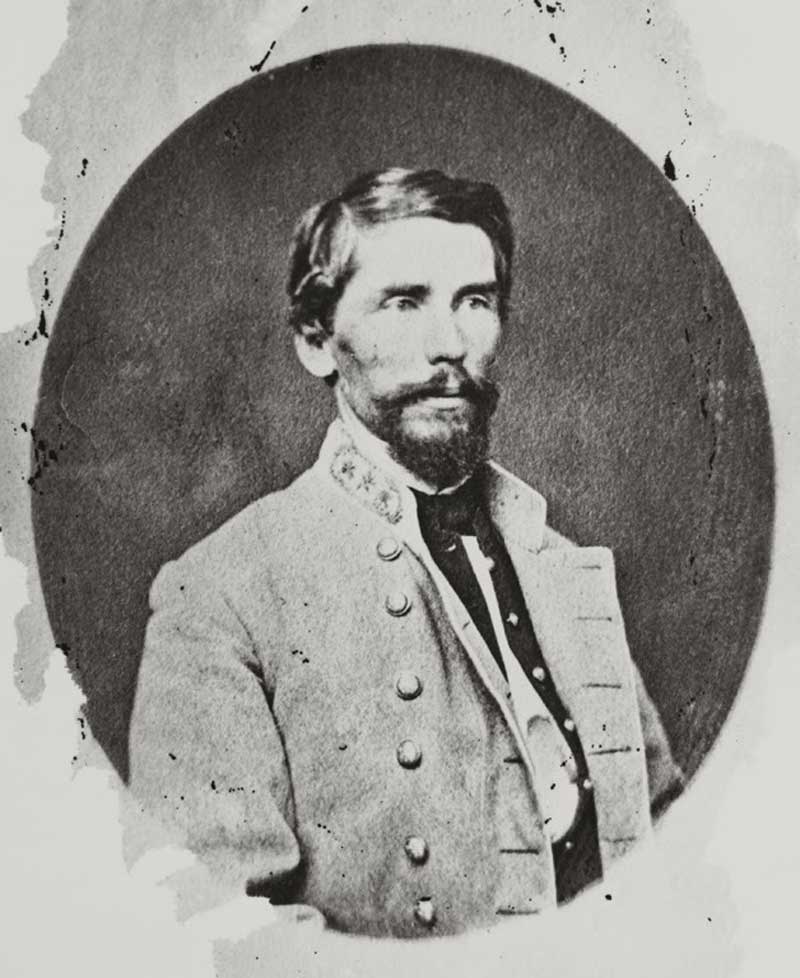
Will removing Confederate flags, monuments, and names promote social peace or racial healing? How long would a peace based on suppression of a people’s cherished heritage last? How long would a peace built upon suppressing the memory, valor, and virtue of the revered forebears of a great number of the Southern people last? What could possibly be a surer cause of immense strife, bitterness, and economic and political turmoil? Does anyone outside of a madhouse believe that peace and prosperity can be achieved by discarding the heritage of a numerous people to gain the political favor of another? It is more likely to shatter all hope of peace. Can a society set itself against tolerance and mutual respect and have peace? No fair-minded person can accept such corrupt reasoning.

Nathan Bedford Forrest and God’s Amazing Grace
- Details
- By Mike Scruggs
- Category: Mike Scruggs' Column
Part 5 of a series on Confederate Cavalry
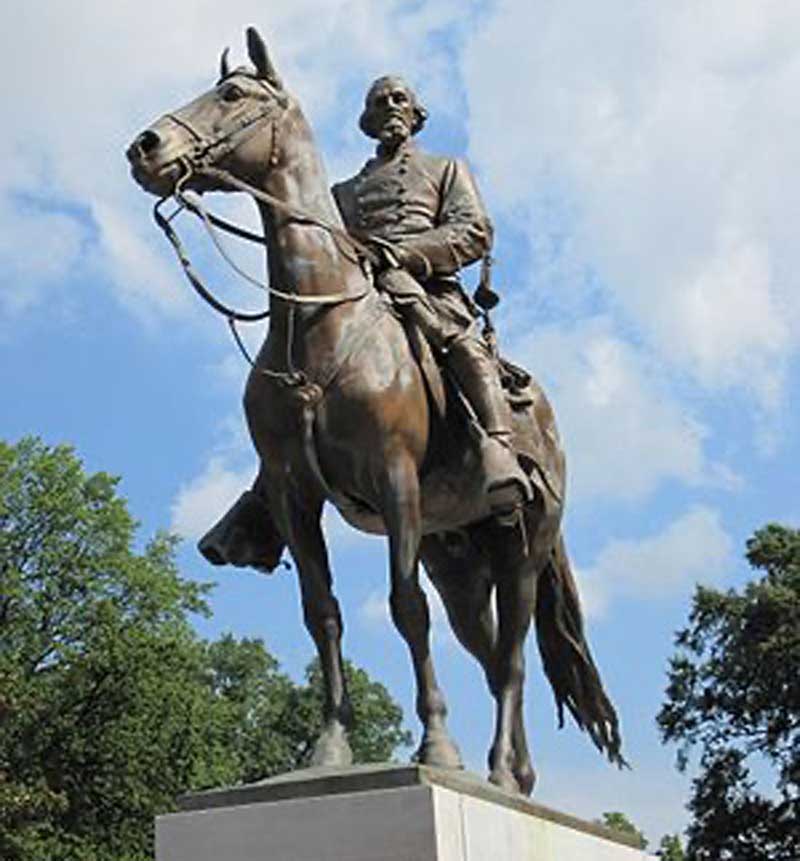
In 2017, Memphis politicians managed to remove the statue of Confederate General Nathan Bedford Forrest from a prominent city park. In the near future, they even plan to move the graves of Bedford Forrest and his wife, Mary Ann. Will removing the memory of Forrest promote social peace or justice in Memphis or in Tennessee? They many not recognize it yet, but they are moving in the wrong direction for truth, social peace, and justice.

Bedford Forrest and the Assault on Fort Pillow
- Details
- By Mike Scruggs
- Category: Mike Scruggs' Column
Reconstructing Truth in a Hurricane of Propaganda
Part 4 of a Series on Confederate Cavalry
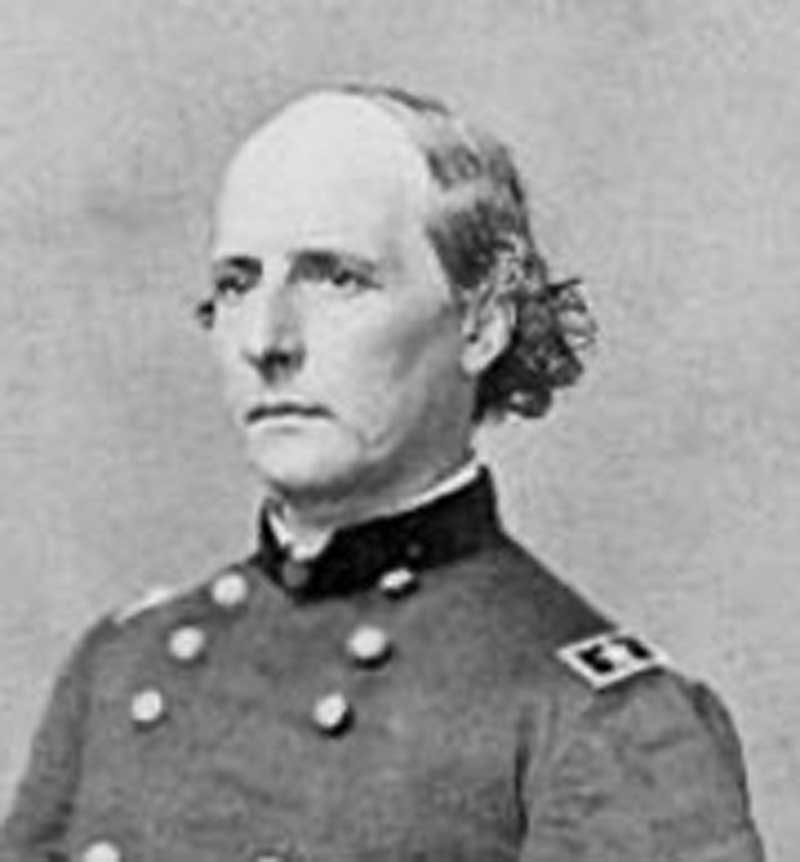
During the morning of April 12, 1864, Forrest had made a reconnaissance of the outer perimeter of earthworks at Fort Pillow. He had found that all but the inner fort was vulnerable to sniper fire from higher terrain. He doubled the line of sharpshooters already placed there by General Chalmers. He was, however, painfully injured falling from his horse, which was shot from under him.

Bedford Forrest and the Fort Pillow “Massacre”
- Details
- By Mike Scruggs
- Category: Mike Scruggs' Column
Context is all Important in Understanding History
Part 3 of a series on Confederate Cavalry
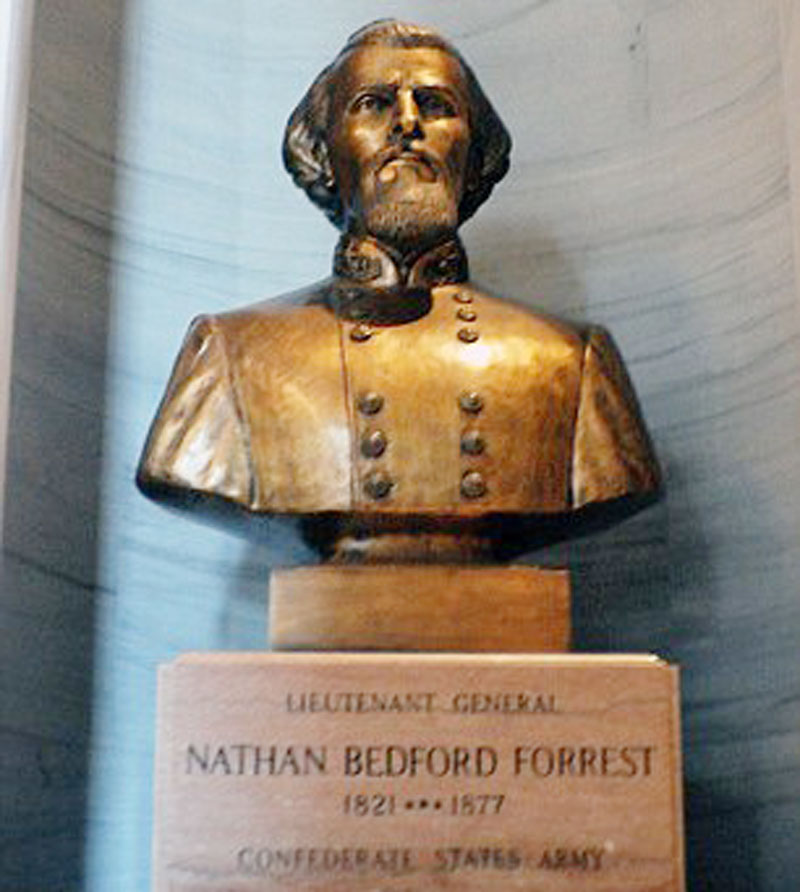
The Battle of Fort Pillow was not militarily significant, but it was called a “massacre” by the New York Times, other Northern newspapers, and the Radical Republican dominated Joint Congressional Committee for the Conduct of the War. More importantly, it became an important propaganda tool to demonize the South and the Confederate cause, which still dominates much of academia, the media, and virtue-signaling American politics.

Nathan Bedford Forrest
- Details
- By Mike Scruggs
- Category: Mike Scruggs' Column
The Confederate Cavalry Leader Most Feared by Union Generals
Part 2 of a Series on Confederate Cavalry
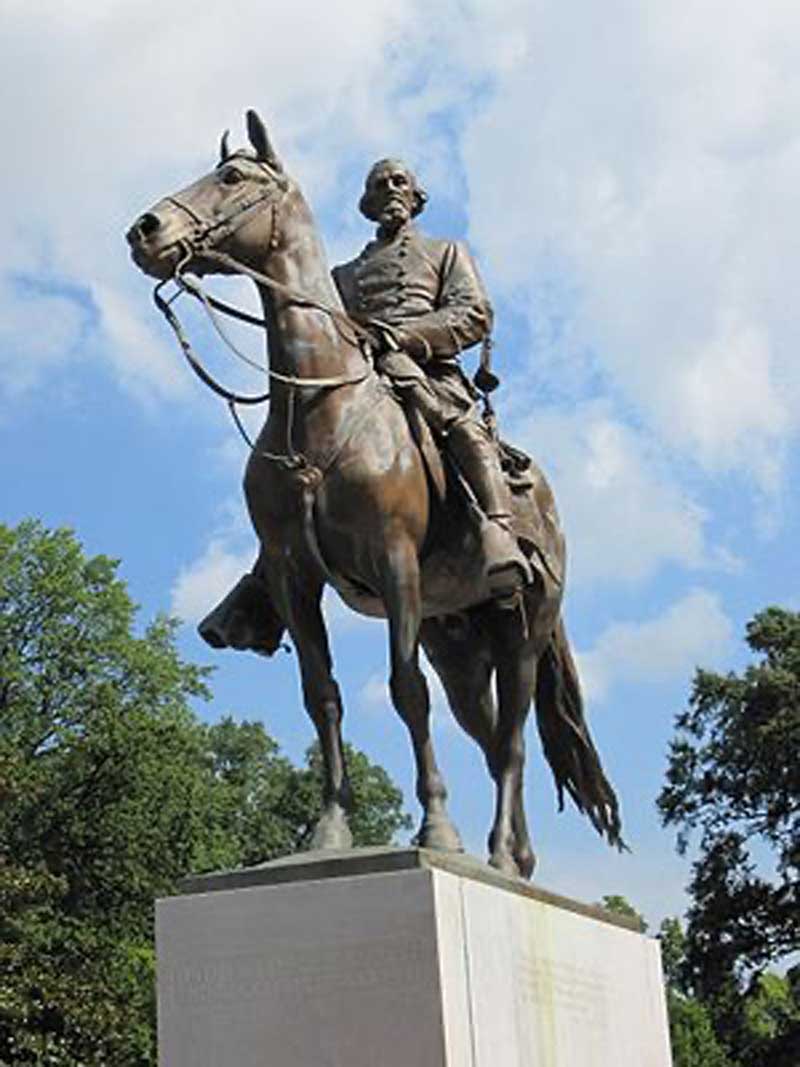
“I’ll be damned if I’ll surrender.”
The battles of Fort Henry and Fort Donelson in February 1862 were the first two significant victories for the Union. They also demonstrated an important Union strategy that many believe was the ultimate key to Union defeat of Confederate resistance. They set out to dominate the water transportation lifelines critical to the Southern economy and military defense. They were eventually able to dominate these critical arteries with a “Brown Water Navy” of gunboats. The South had few such resources to oppose them. Fort Henry was on the Tennessee River in west-middle Tennessee near the Kentucky border. Fort Donelson was about 12 miles to the east on the Cumberland River. The commander of Fort Henry was West Point graduate and engineering inspector Brigadier General Lloyd Tilghman, from Paducah, Kentucky. Tilghman had realized that both forts Henry and Donelson were defective defensive positions but put up a valiant battle before surrendering to a Union siege on February 6, 1862. Meanwhile he had secretly moved most of his of his troops to Fort Donelson.

 Mike Scruggs is the author of two books: The Un-Civil War: Shattering the Historical Myths; and Lessons from the Vietnam War: Truths the Media Never Told You, and over 600 articles on military history, national security, intelligent design, genealogical genetics, immigration, current political affairs, Islam, and the Middle East.
He holds a BS degree from the University of Georgia and an MBA from Stanford University. A former USAF intelligence officer and Air Commando, he is a decorated combat veteran of the Vietnam War, and holds the Distinguished Flying Cross, Purple Heart, and Air Medal. He is a retired First Vice President for a major national financial services firm and former Chairman of the Board of a classical Christian school.
Click the website below to order books. http://www.universalmediainc.org/books.htm.
Browse by the Top Tags ...