







- Ten Toes In: Why Trump Accounts Make Sense for North Carolina's Small Businesses
- Remnant Called -
- Former Moms for Liberty Chairs in South Carolina Address Massive Departure from Organization
- Same Job. Two Résumés. Graham and Norman Make Their Case for the US Senate
- Greenville County Holding Public Meetings on 1% Transportation Sales Tax Referendum
- Beyond the Monuments - Finding the Forgotten Grave of Dicey Langston
- The Myth of Voting for the Lesser of Two Evils
- AIPAC Lobbyists Grip on Congress
- Hunting Island's Lighthouse Was Built to Outsmart the Atlantic's Shifting Shoreline
- South Carolina Gas Tax Climbs From Near Bottom Nationally to 30th in 2026
- Equipping the Persecuted: Weekend Terror Alert Helped Avert Wider Massacre as Slaughter of Christians Continues to Ravage Nigeria Unchecked by Government
- Thurmond and Murkowski Won as Write-Ins. Is This Year’s Senate Race Really the Same?
- Briefing Notes from the Ukraine and Persian Gulf Wars
- Crime Stoppers Luncheon Remembers Greenville’s Fallen While Honoring Those Who Continue to Serve
- Trump Administration Announces $167 Million to Build Rural Care Sites, Upgrade Health Technology, and Strengthen Prevention Across South Carolina
Virginia Governor Northam versus Robert E. Lee
- Details
- By Mike Scruggs
- Category: Mike Scruggs' Column
Advancing Neo-Marxism and Identity Politics by Erasing Southern Heritage
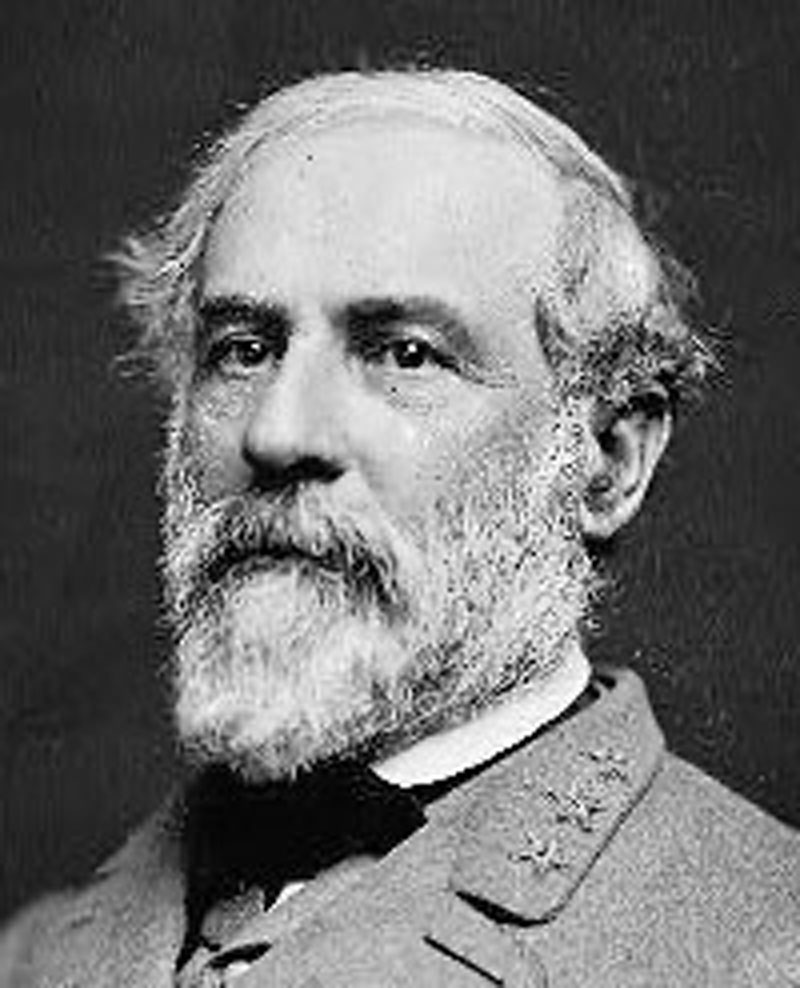
Virginia Democrat Governor Ralph Northam is pushing a bill in the Virginia Legislature to replace Robert E. Lee’s statue in the U.S. Capitol. Each state has two statues in the National Statuary Hall Collection. Virginia’s two statues are of George Washington and Robert E. Lee.
In December, Two Virginia U.S. House Representatives, Jennifer Wexton and Donald McEachin, added momentum to replacing Lee’s statue in the Statuary Hall:

West Virginia in the Un-Civil War
- Details
- By Mike Scruggs
- Category: Mike Scruggs' Column
The Union Annexation of 50 Virginia Counties
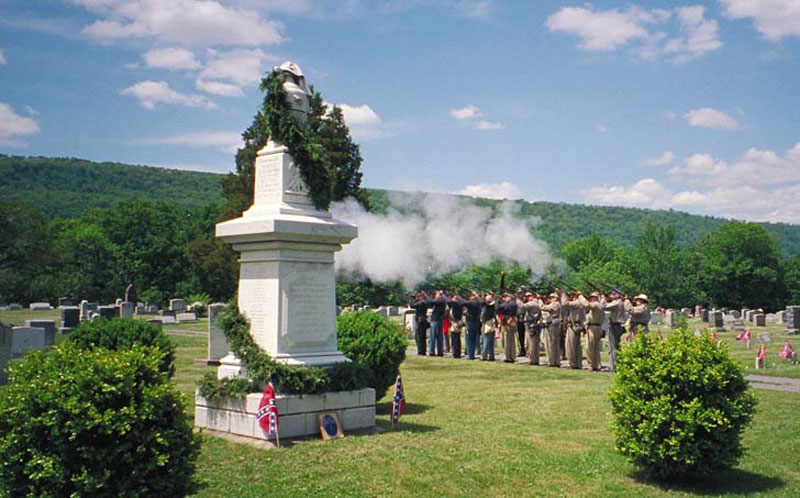
I have no doubt that the great majority of the people of West Virginia today believe they are better off separated from Virginia. They have their own two U.S. senators, and most importantly, they are not ruled by the wacko-leftist, anti-Second Amendment, pro-baby-disposal Democrat Governor Ralph Northam and his slavishly politically correct Neo-Marxist comrades in the Virginia Legislature. “Democrat” was once a virtual synonym for conservative, especially in the South. But that was a far cry from the present madness. The Republican Party during the Civil War and Reconstruction periods was dominated by its big-business-big-government establishment wing. That has been slowly changing since Eisenhower. Reagan was a first peak of pro-worker, pro-middle class, common sense economic and social conservatism. President Trump has been a flowering and aggressive triumph of these same principles, vanquishing titanic errors of globalism and obsequious political fashions. It is a grave mistake to assume Republican and Democrat mean the same thing today as they did in 1860.

Female Genital Mutilation (FGM)
- Details
- By Mike Scruggs
- Category: Mike Scruggs' Column
The Controversy within Islam and the West
According to the United Nations Children’s Fund (UNICEF), female genital mutilation (FGM) refers to “all procedures involving partial or total removal of the female external genitalia or other injury to the female genital organs for non-medical reasons.” FGM is particularly common in about 30 predominantly Muslim countries, but it is uncommon in as many more. Worldwide, about 22 percent of Muslim women and girls have endured FGM. There is no direct reference to FGM in the Koran, and Muhammad did not institute it. However, according to reliable Muslim scholarship, he did speak favorably of it but with a recommendation for moderation. Because Muhammad spoke of it, it has found its way into Sharia Law.

Understanding Islamic Teachings on Treatment of Women
- Details
- By Mike Scruggs
- Category: Mike Scruggs' Column
Submission, Marriage, Sex, FGM, and Civilization Jihad
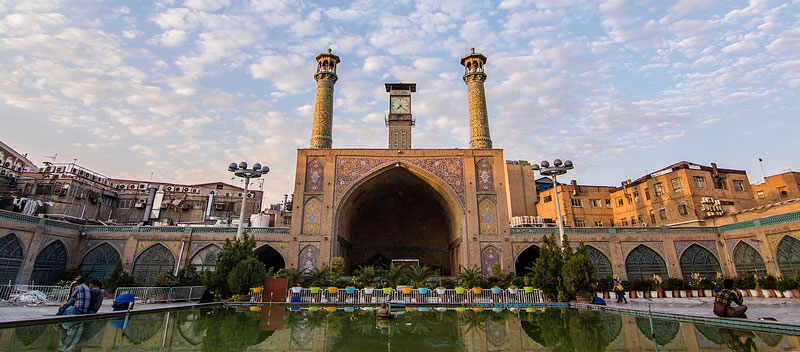
Islamic doctrine governing women is based on the principle of submission. Islam does not mean peace as erroneously stated by several American politicians following 911. It means submission to Islamic Law (Sharia) as revealed by the sacred trilogy of the Koran, the Hadiths (traditions), and Sira (life of Muhammad). All three bear the heavy imprint of Muhammad, who is called the perfect Muslim example 91 times in the Koran. The “Golden Rule of Islam” is essentially to obey the words and example of Muhammad.

Remembering the 1983 Marine Barracks Bombing in Beirut
- Details
- By Mike Scruggs
- Category: Mike Scruggs' Column
241 Americans killed by Iran-backed Hezbollah terrorists
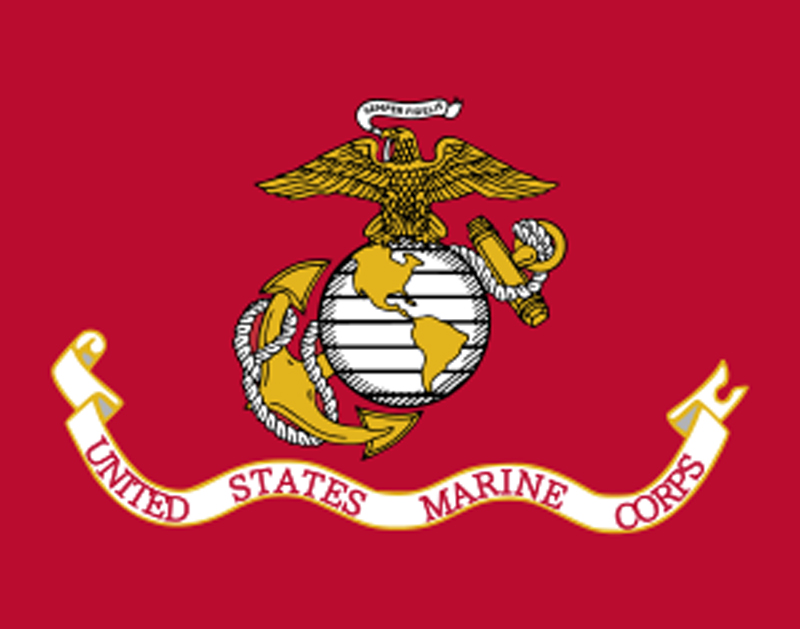
In 1920, following the First World War and the defeat of the Turkish Ottoman Empire, France received a League of Nations Mandate to govern Greater Syria, which included Lebanon. Lebanon had remained predominantly Christian despite early Muslim dominance of Syria following the death of Muhammad in 632 and more than 400 years under the yoke of the Ottoman Empire. The French separated out the predominantly Christian Province of Lebanon, which was about 80 percent Christian, the majority being Maronite Catholic. To placate the ambitions of the highly secular Lebanese merchant class, they added to it the predominantly Muslim agricultural areas east of Mount Lebanon, diluting the Christian population to about 55 percent in the combined area of Greater Lebanon. But France intended to be the protector of Christian Lebanon regardless of its boundaries. A 1932 census indicated that the various Christian denominations constituted about 53 percent of the population of Greater Lebanon. The French withdrew in 1946, after Lebanon became an independent state of the United Nations.

 Mike Scruggs is the author of two books: The Un-Civil War: Shattering the Historical Myths; and Lessons from the Vietnam War: Truths the Media Never Told You, and over 600 articles on military history, national security, intelligent design, genealogical genetics, immigration, current political affairs, Islam, and the Middle East.
He holds a BS degree from the University of Georgia and an MBA from Stanford University. A former USAF intelligence officer and Air Commando, he is a decorated combat veteran of the Vietnam War, and holds the Distinguished Flying Cross, Purple Heart, and Air Medal. He is a retired First Vice President for a major national financial services firm and former Chairman of the Board of a classical Christian school.
Click the website below to order books. http://www.universalmediainc.org/books.htm.
Browse by the Top Tags ...