







- Ten Toes In: Why Trump Accounts Make Sense for North Carolina's Small Businesses
- Remnant Called -
- Former Moms for Liberty Chairs in South Carolina Address Massive Departure from Organization
- Same Job. Two Résumés. Graham and Norman Make Their Case for the US Senate
- Greenville County Holding Public Meetings on 1% Transportation Sales Tax Referendum
- Beyond the Monuments - Finding the Forgotten Grave of Dicey Langston
- The Myth of Voting for the Lesser of Two Evils
- AIPAC Lobbyists Grip on Congress
- Hunting Island's Lighthouse Was Built to Outsmart the Atlantic's Shifting Shoreline
- South Carolina Gas Tax Climbs From Near Bottom Nationally to 30th in 2026
- Equipping the Persecuted: Weekend Terror Alert Helped Avert Wider Massacre as Slaughter of Christians Continues to Ravage Nigeria Unchecked by Government
- Thurmond and Murkowski Won as Write-Ins. Is This Year’s Senate Race Really the Same?
- Briefing Notes from the Ukraine and Persian Gulf Wars
- Crime Stoppers Luncheon Remembers Greenville’s Fallen While Honoring Those Who Continue to Serve
- Trump Administration Announces $167 Million to Build Rural Care Sites, Upgrade Health Technology, and Strengthen Prevention Across South Carolina
A Mighty Fortress Is Our God
- Details
- By Mike Scruggs
- Category: Mike Scruggs' Column
Scriptural Theology Set to Music
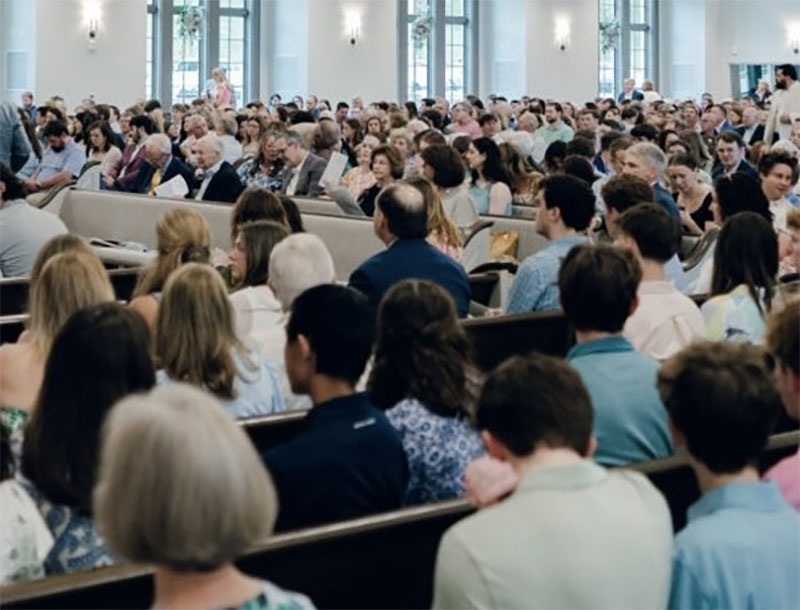
A Mighty Fortress is Our God begins with the stanza:
“A mighty fortress is our God, a bulwark never failing;
Our helper He, amid the flood of mortal ills prevailing:
For still our ancient foe doth seek to work us woe;
His craft and power are great, and, armed with cruel hate,
On earth is not his equal.”
Both the words and melody were written by German Reformer Martin Luther in 1527-1529 under the circumstances of hardship and persecution. The long-revered hymn is a powerful paraphrase of Psalm 46’s eleven verses and a forceful declaration that it is Jesus Christ who is our Defender and Savior.

Putin’s Party Gains in Recent Elections
- Details
- By Mike Scruggs
- Category: Mike Scruggs' Column
Results of September 18-20 Duma Elections
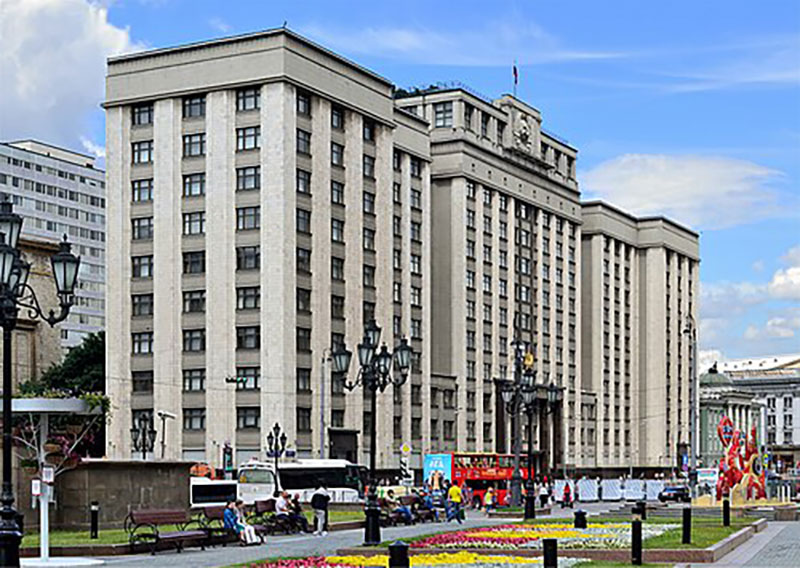
The Russian Duma, the Lower House of the Federal Assembly, is the equivalent of the U.S. House of Representatives. The word “Duma” comes from the Russian word for “thought” or “deliberation.” It consists of 450 Members (Deputies) elected every 5 years. The Russian Duma is elected by a combination of two methods. A Parliamentary style proportion of the popular national vote fills 225 seats, and a Constituency style vote for a single plurality winner in each of 225 districts fills 225 seats. The Parliamentary 225 are elected in the style of many European parliaments, and the Constituency vote closely resembles US Congressional district elections.

The November Election and the Iran and Ukraine Wars
- Details
- By Mike Scruggs
- Category: Mike Scruggs' Column
Including Reports on Conditions and Leadership in Ukraine and Russia
Rich Baris is Director of the Big Data Poll. He is pro-Trump, and Trump is a frequent client. He has the earned reputation of best predicting the Trump vote in State, Congressional District, and National votes. His Big Data Poll is much more detailed than most polls and shows crucial demographic and perceived candidate weaknesses, strengths, and other significant political and social data that allow critical analysis, clarified issues, and sharpened communication and campaign strategy.

Lincoln’s Views on Slavery, Race, and National Unity 1858
- Details
- By Mike Scruggs
- Category: Mike Scruggs' Column
Lincoln-Douglas Debate August 21, 1858, Ottawa, Illinois
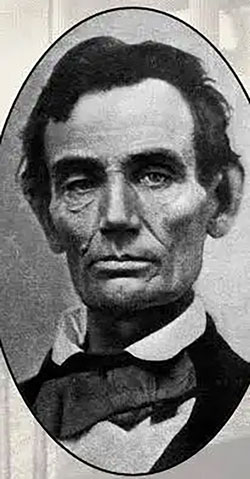
Most Americans know only a politically polished image of Abraham Lincoln. In fact, this shallow and overly-liberalized ideological image has become near mandatory in today’s 1984ish academic and media straight-jacket. Yet the real Lincoln was not shallow, and his debates and writings often demonstrate broad understanding of and comprehensive analysis of issues. Moreover, his ability to debate and communicate was formidable. However, his words and thinking often differed sharply from modern liberal ideology. Much of this can be seen from excerpted quotes from Roy P. Basler’s 1946 collection, Abrham Lincoln: His Speeches and Writings. The quotes in this article can be found on pages 443-447. On June16, 1858, Lincoln had just received the Illinois Republican Party’s nomination for US Senate. The August 21, 1858, Lincoln-Douglas debate in Ottawa, Illinois, was the first of seven that ran through October 1858. The debates were related to the Illinois Legislature choosing a Federal Senator. Steven Douglas was the Democrat incumbent, first elected in 1847. In 1913, the 17th US Amendment to the US Constitution changed the method of election to popular vote in each state.

Correcting Widespread Misconceptions about the Vietnam War
- Details
- By Mike Scruggs
- Category: Mike Scruggs' Column
Part 3 of 3—1969 to 1975 and Beyond
In 1946, following Japanese occupation of Indochina (Vietnam, Cambodia, and Laos) during World War II, Vietnamese Communists ( the Viet Minh) began their revolutionary struggle to deny the French rule of their former colony. The French suffered an embarrassing defeat by the Viet Minh at Dien Bien Phu in May 1954. President Eisenhower supported rescuing the French situation at Dien Bien Phu by using CIA transport aircraft, manned by former Army Air Corp pilots, to drop supplies and Foreign Legion paratroopers to assist French forces. The 1954 Geneva Accords split Norh and South Vietnam at the 17th Parallel. The French Parliament having abandoned Indochina on July 20, 1954, the Geneva Accords shifted primary responsibility for keeping South Vietnam, Cambodia, and Laos free of North Vietnamese Communist aggression to the United States. By 1959, Moscow was directly involved in plans for North Vietnamese “liberation” of South Vietnam and ultimately Cambodia and Laos. They had already infiltrated about 10,000 armed insurgents into South Vietnam by 1962. Following a misguided JFK directed regime change removing South Vietnamese President Ngo Dinh Diem on November 1-2, 1963, resulting in Ngo’s assassination by a junta faction, the South Vietnamese Government and Army were in chaos for two years. Taking advantage of this, more than 240,000 North Vietnamese troops had invaded South Vietnam by 1967. The VC tripled from 10,000 to 30,000 plus.

 Mike Scruggs is the author of two books: The Un-Civil War: Shattering the Historical Myths; and Lessons from the Vietnam War: Truths the Media Never Told You, and over 600 articles on military history, national security, intelligent design, genealogical genetics, immigration, current political affairs, Islam, and the Middle East.
He holds a BS degree from the University of Georgia and an MBA from Stanford University. A former USAF intelligence officer and Air Commando, he is a decorated combat veteran of the Vietnam War, and holds the Distinguished Flying Cross, Purple Heart, and Air Medal. He is a retired First Vice President for a major national financial services firm and former Chairman of the Board of a classical Christian school.
Click the website below to order books. http://www.universalmediainc.org/books.htm.
Browse by the Top Tags ...