








- Leadership - Desperately Needed!
- It’s Getting Late! It’s Now or Never
- Islamic Expansion in Texas
- Republicans Finding Common Ground
- Christopher Columbus - Little Known Part I
- Christopher Columbus - Little Known Part II
- Columbus and Washington Appealed to Heaven
- Woke 2, De-civilizing American Society Through Education
- 2026 Voting Information: Early Voting & Polling Locations
- Greenville County Holding Public Meetings on 1% Transportation Sales Tax Referendum
- Beyond the Monuments - Finding the Forgotten Grave of Dicey Langston
- Thurmond and Murkowski Won as Write-Ins. Is This Year’s Senate Race Really the Same?
- Evert’s Electables - 2026 General Election
- Writing In Ralph Norman Is Writing Off His Own Judgment
- Equipping the Persecuted: Weekend Terror Alert Helped Avert Wider Massacre as Slaughter of Christians Continues to Ravage Nigeria Unchecked by Government
The Red Sea Nations and the Iran War Crisis
- Details
- By Mike Scruggs
- Category: Mike Scruggs' Column
Part 3 of the Persian Gulf and Red Sea Nations
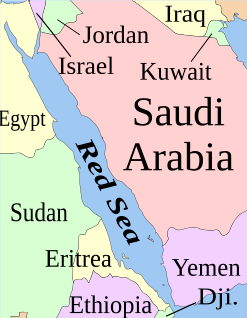
Yemen, Saudi Arabia, Dijbouti, and Eritrea
To see the truth clearly we must understand its context.
Yemen and the Queen of Sheba
Yemen was the legendary land of the Queen of Sheba (or Saba), a seeker of wisdom, who visited Israel’s King Solomon, son of David, during Solomon’s reign estimated to be about 970 to 931 BC. See 1 Kings 10:1-13 or 2 Chronicles 9:1-12. Her capital was probably near Marib, about 75 miles east of Yemen’s modern capital of Sanaa. In ancient times. Marib and the Sabeans were known for their lucrative frankincense and myrrh trade.
Yemen and the Houthi Rebels
Since the beginning of a civil war in September 2014, there have been two governments in Yemen. Both claim to be the legitimate government, but the U.S. and most of its Western and Persian Gulf allies, especially Saudi Arabia, recognize only the Presidential Leadership Coalition (PLC), which was in power before the civil war. Due to political instability, there have been no elections since 2003. The President of Yemen recognized by the U.S. is Rashad al-Alimi. The Supreme Leader of the Houthis is Abdul-Malik al-Houthi.

Briefing on Persian Gulf and Red Sea Nations
- Details
- By Mike Scruggs
- Category: Mike Scruggs' Column
Economic, Energy, Religious, and Military Factors in the Iran War
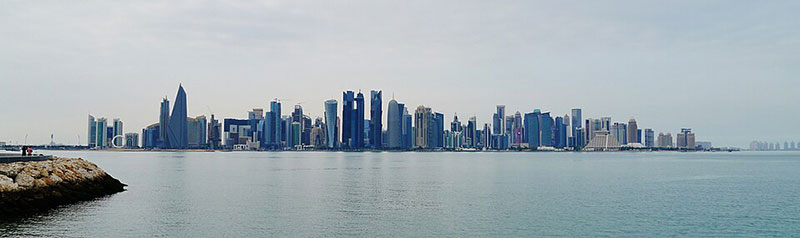
Part 2 – The United Arab Emirates (UAE), Bahrain, and Oman
United Arab Emirates (UAE)
The United Arab Emirates is a country on the southwestern coast of the Persian Gulf near the southeastern end of the Arabian Peninsula. It is bordered on its west by Saudi Arabia and on its southeast by Oman. The UAE consists of seven Emirates and is sometimes referred to as “The Emirates.” These are Abu Dhabi, Dubai, Sharjah, Ajman, Umm Al Quwain, Ras Al Khaimah, and Fujairah. Each is ruled by a hereditary male monarch (Emir or Sheikh). These are united into a Federation. The seven Emirates have complex borders, because several have exclaves in other Emirates. Each Emirate maintains its sovereignty, but functions under the Federal UAE constitution and government. The UAE is one of the most important American allies on the Persian Gulf.

Briefing on Persian Gulf and Red Sea Nations
- Details
- By Mike Scruggs
- Category: Mike Scruggs' Column
Essential Economic, Energy, Religious/Social, and Military Notes
Part 1—Iran, Iraq, Kuwait, Saudi Arabia, and Qatar
The Persian Gulf nations are by region:
The Eastern shore: Iran, which occupies the entire eastern coast of 713 miles. The narrow 24-mile Hormuz Strait lies near the southern end of Iran and connects into the Gulf of Oman, leading into the Indian Ocean.
Western shore: Six Sunni Arab nations: Iraq, Kuwait, Saudi Arabia, Bahrain, Qatar, and the United Arab Emirates, and an exclave of Oman, also a Sunni Arab nation. Bahrain is an island.
The Red Sea nations are by region:
Northern shore: Israel and a narrow strip of Jordan around the Port of Aqaba.
Eastern shore: Saudi Arabia and Yemen.
Western shore: Egypt, including the Suez Canal, Sudan, Eritrea, and Dijbouti.

The Caspian Sea—Iranian Backdoor to Russia
- Details
- By Mike Scruggs
- Category: Mike Scruggs' Column
Plus Comments on Military and Economic Aspects of Iran War
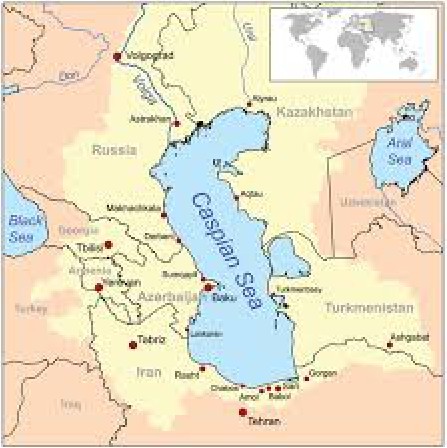
The Caspian Sea is the largest inland waterbody in the world. It is about the size Japan, almost as large as Norway, and larger than Germany. It stretches 750 miles from north to south, almost the distance between Charleston and Boston, and its average width is about 200 miles. It is about the size of Montana, our fourth-largest state, and larger than Georgia, North Carolina, and South Carolina combined. It is nearly five times as large as Lake Superior. Its main freshwater inflow (80%) is from the Russian Volga River, the longest river in Europe. The Volga also has transportational connections to the Russian Don River, the Black Sea, the Baltic Sea, the North Sea, and the White Sea in Northern Russia. The Ural River accounts for most of the other 20% freshwater inflow. The Caspian Sea’s surface is 89 feet below sea-level, and its salinity is about 1.3%, about one-third that of the seawater. Its depth varies, but there are northern and southern basins, with the deeper southern basin bottom at 3,356 feet below sea-level. This is the third deepest inland sea depth in the world. The shallowest area is where the Volga flows into the Caspian.

Finding Truth in a Blizzard of Propaganda
- Details
- By Mike Scruggs
- Category: Mike Scruggs' Column
American Costs and Risks in the Iran War

Unfiltered truth and analysis
In one of retired U.S. Army LCol. Daniel Davis’s YouTube podcasts on April 17, he summarized American costs since the second American and Israeli attack against Iran on February 28. The first attack, called the 12-day war, occurred between June 13-24, 2025, ending with a brokered ceasefire. Davis has established one of the most honest and thorough coverages of both the Ukraine and Iran War. He is a decorated combat veteran of the Iraq War and the Afghanistan War. He became an outspoken critic and “whistleblower” on the conduct of the Afghanistan War. Although he was nominated to be the Deputy Director of National Intelligence under Director Tusi Gabbard early in 2025, his nomination was essentially blocked by pressure from powerful Congressional and Trump donors associated with the American-Israeli Political Action Committee (AIPAC).

 Mike Scruggs is the author of two books: The Un-Civil War: Shattering the Historical Myths; and Lessons from the Vietnam War: Truths the Media Never Told You, and over 600 articles on military history, national security, intelligent design, genealogical genetics, immigration, current political affairs, Islam, and the Middle East.
He holds a BS degree from the University of Georgia and an MBA from Stanford University. A former USAF intelligence officer and Air Commando, he is a decorated combat veteran of the Vietnam War, and holds the Distinguished Flying Cross, Purple Heart, and Air Medal. He is a retired First Vice President for a major national financial services firm and former Chairman of the Board of a classical Christian school.
Click the website below to order books. http://www.universalmediainc.org/books.htm.
Browse by the Top Tags ...