








- Ten Toes In: Why Trump Accounts Make Sense for North Carolina's Small Businesses
- Remnant Called -
- Former Moms for Liberty Chairs in South Carolina Address Massive Departure from Organization
- Same Job. Two Résumés. Graham and Norman Make Their Case for the US Senate
- Back to Basics: Understanding Your Greenville County Property Tax Bill from Start to Finish
- AIPAC Lobbyists Grip on Congress
- The Ukrainian Drone Attacks on Wildberries
- Hunting Island's Lighthouse Was Built to Outsmart the Atlantic's Shifting Shoreline
- Turkish Naval Force Deploys in Eastern Mediterranean
- The Myth of Voting for the Lesser of Two Evils
- Briefing Notes from the Ukraine and Persian Gulf Wars
- South Carolina Gas Tax Climbs From Near Bottom Nationally to 30th in 2026
- Saudi Arabia’s Iran War Dilemma
- Correcting Widespread Misconceptions about the Vietnam War
- 'Trapped Inside Myself' Explores One Man's Journey from Self-Destruction to Hope and Personal Transformation
The U.S. National Strategic Petroleum Reserve
- Details
- By Mike Scruggs
- Category: Mike Scruggs' Column
Disturbing Trends and Implications
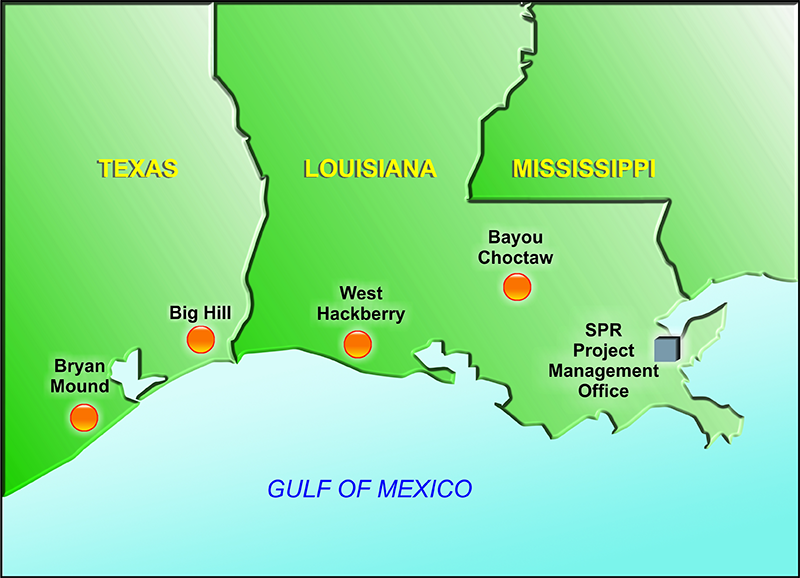
The Strategic Petroleum Reserve (SPR) is the United States’ largest emergency crude oil stockpile, authorized in 1975 to protect against major supply disruptions following the 1973–74 oil embargo by the Organization of Arab Petroleum Exporting Countries (OAPEC) in October 1973 against nations supporting Israel in the Yom Kippur War.
Yom Kippur is the Jewish religious holiday—"Day of Atonement”—emphasizing repentance for sins and seeking God’s forgiveness. The date of Yom Kippur varies beginning on a Sunday evening for 25 hours into Monday. The Yom Kippur War was a surprise attack on Israel primarily by Egypt and Syria and lasted only from October 6-25, 1973. The purpose of the attack was to recover territories lost by Egypt and Syria in the 1967 Six-Day War. The Yom Kippur War was the fourth Arab war against Israel since its 1948 founding. The first was the 1948 Arab-Israeli War and the second was, the 1956 Suez Crisis War. There have been numerous periods of Arab-Israeli conflicts since then. The Hamas attack on Israel from Gaza on October 7, 2023, began the current conflict and escalated into the War with Iran in June 2025, resuming in late February 2026. Actually, Israel has been in conflict with Iran since 1985.

Patrick Henry and the Foundations of American Liberty
- Details
- By Mike Scruggs
- Category: Mike Scruggs' Column
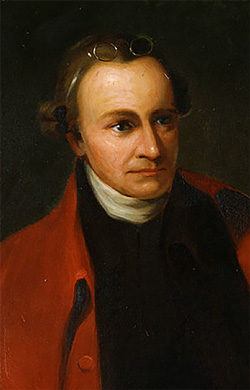
“It is when a people forget God, that tyrants forge their chains.”
Patrick Henry was a “founding father” of American Independence who urged the delegates to the Second Virginia Convention on March 23, 1775, to break away from the rule of the British King and Parliament and resist the increasing tyranny they had borne since 1760. He closed his elegant and fiery plea with: “Give me liberty or give me death.”
Patrick Henry was born in Hanover County, Virginia, in 1736. He was the son of Scottish immigrant Col. John Henry (1703-1773, immigrated 1727) who later became a Judge identified with Colonial Legislative Rights. Patrick attended a local school until age 10 and thereafter was tutored by his father, who had attended King’s College at the University of Aberdeen in Scotland. Patrick became a lawyer by self-study in 1760, becoming known for his elegant and sometimes fiery defense of Colonial Rights. Building that reputation further by opposing the British Parliament’s passage of the 1765 Stamp Act taxation rules, Patrick was elected to the Virginia House of Burgesses in 1765.

The Red Sea Nations and the Iran Crisis
- Details
- By Mike Scruggs
- Category: Mike Scruggs' Column
Part 4 of the Persian Gulf and Red Sea Nations
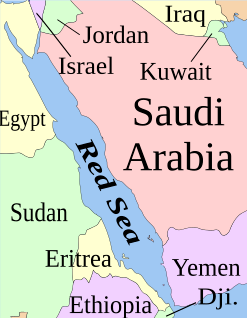
Sudan, Egypt, Jordan, Israel
The Republic of Sudan
Sudan is a country in northeast Africa with 465 miles of coastline on the Red Sea. Sudan’s population was 52 million in 2025. Geographically, it is the third largest nation in Africa. It borders seven countries: the Central African Republic on its southwest, Chad to its west, Libya to the northwest, Egypt to the north, the Red Sea on its east, Eritrea and Ethiopia, to its southeast, and South Sudan on its south. Sudan is 97% Sunni Muslim with a small 3% Christian minority. About 70% of the population are Sudanese Arabs, About 28% are spread over dozens of tribes. The official languages are Arabic and English. Its famous capital of Khartoum has a greater metro population of 7.1 million. Khartoum is at the confluence of the White (western) Nile and the Blue (eastern) Nile and figured prominently in British administrative rule and British-Arab conflicts.

The Red Sea Nations and the Iran War Crisis
- Details
- By Mike Scruggs
- Category: Mike Scruggs' Column
Part 3 of the Persian Gulf and Red Sea Nations
Yemen, Saudi Arabia, Dijbouti, and Eritrea
To see the truth clearly we must understand its context.
Yemen and the Queen of Sheba
Yemen was the legendary land of the Queen of Sheba (or Saba), a seeker of wisdom, who visited Israel’s King Solomon, son of David, during Solomon’s reign estimated to be about 970 to 931 BC. See 1 Kings 10:1-13 or 2 Chronicles 9:1-12. Her capital was probably near Marib, about 75 miles east of Yemen’s modern capital of Sanaa. In ancient times. Marib and the Sabeans were known for their lucrative frankincense and myrrh trade.
Yemen and the Houthi Rebels
Since the beginning of a civil war in September 2014, there have been two governments in Yemen. Both claim to be the legitimate government, but the U.S. and most of its Western and Persian Gulf allies, especially Saudi Arabia, recognize only the Presidential Leadership Coalition (PLC), which was in power before the civil war. Due to political instability, there have been no elections since 2003. The President of Yemen recognized by the U.S. is Rashad al-Alimi. The Supreme Leader of the Houthis is Abdul-Malik al-Houthi.

Briefing on Persian Gulf and Red Sea Nations
- Details
- By Mike Scruggs
- Category: Mike Scruggs' Column
Economic, Energy, Religious, and Military Factors in the Iran War
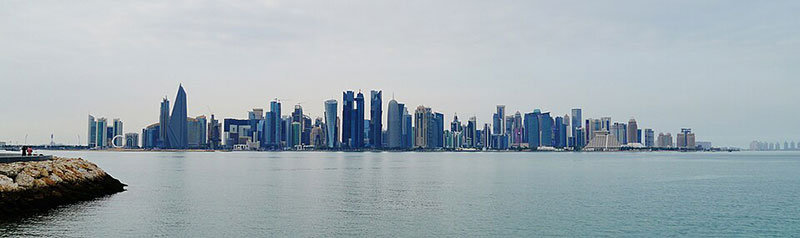
Part 2 – The United Arab Emirates (UAE), Bahrain, and Oman
United Arab Emirates (UAE)
The United Arab Emirates is a country on the southwestern coast of the Persian Gulf near the southeastern end of the Arabian Peninsula. It is bordered on its west by Saudi Arabia and on its southeast by Oman. The UAE consists of seven Emirates and is sometimes referred to as “The Emirates.” These are Abu Dhabi, Dubai, Sharjah, Ajman, Umm Al Quwain, Ras Al Khaimah, and Fujairah. Each is ruled by a hereditary male monarch (Emir or Sheikh). These are united into a Federation. The seven Emirates have complex borders, because several have exclaves in other Emirates. Each Emirate maintains its sovereignty, but functions under the Federal UAE constitution and government. The UAE is one of the most important American allies on the Persian Gulf.

 Mike Scruggs is the author of two books: The Un-Civil War: Shattering the Historical Myths; and Lessons from the Vietnam War: Truths the Media Never Told You, and over 600 articles on military history, national security, intelligent design, genealogical genetics, immigration, current political affairs, Islam, and the Middle East.
He holds a BS degree from the University of Georgia and an MBA from Stanford University. A former USAF intelligence officer and Air Commando, he is a decorated combat veteran of the Vietnam War, and holds the Distinguished Flying Cross, Purple Heart, and Air Medal. He is a retired First Vice President for a major national financial services firm and former Chairman of the Board of a classical Christian school.
Click the website below to order books. http://www.universalmediainc.org/books.htm.
Browse by the Top Tags ...