







A Briefing on NATO’s Second Largest Military Force

Turkey has the second largest armed forces in NATO numbering about 485,000, and its army alone numbers 350,000. The United States, with 1.3 million military personnel, has the largest armed forces of 32 NATO members. Poland is a distant third place with armed forces numbering 216,000.
It is difficult to compare the sizes of armies and armed forces. It is a matter of distinguishing active troops from various levels of reserves. France is presently at 200,000 active military personnel; Germany is at 182,000; Italy 166,000; Greece 143,000; and the UK is eighth largest with only 138,000. Spain is close behind with 133,000, and Romania is in the top ten with just over 81,000. By comparison, the Russians have recently increased from 1.1 million to at least 1.3 million. China has over 2.0 million, and India, now having the largest population in the world, has nearly 1.5 million. Remarkably, with a population of only 26.6 million, North Korea has an army of almost 1.3 million.
The United States has been the principal supplier of advanced military weapons to Turkey. In 2017, an agreement was signed to deliver 100 F-35 stealth fighters to Turkey. However, Turkey also ordered $2.5 billion worth of Russian advanced mobile Surface to Air Missile systems. When in 2019, the first of the Russian S-400 SAMs arrived in Turkey, The United States suspended future delivery of F-35s to Turkey. Meanwhile, the Russian S-400s are arriving, and more are on the way. With them are Russian technicians and military personnel. The issue is in the process of negotiation now, but to deliver F-35s to Turkey now seems a technology risk to the U.S.—especially when Turkey has invited Russian technology experts and military into the country.
Moreover, there are beginning to be more issues of economic leverage. Turkey gets 45 percent of its natural gas from Russia. Russia is going to build Turkey’s first of four nuclear plants, which will be operated by the Russian nuclear company Rosatom and will supply 10 percent of Turkey’s electricity. Russia is also offering financial help for projects up to $7 billion. Russian tourism in Turkey is up to six million per year. Turkey has also shown strong interest in joining BRICS.
According to the CIA Factbook, the population of the newly renamed Republic of Türkiye was just over 84 million in 2024. There are also about 3.6 million Syrian refugees from the Syrian War there. Most Americans still know Turkey as Turkey, so I will continue that practice until Türkiye is more common in print. Turkey has been a member of NATO since 1952. Turkish NATO membership was originally a strategic alliance to prevent Soviet expansion into Europe and the Middle East.
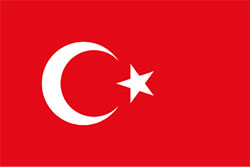
Turkey straddles Europe and Southwestern Asia. East Thrace, which is west of the Bosporus Straight, lies in Europe, bordering Bulgaria. This European part of Turkey has only a little more than three percent of Turkey’s territory, but close to 15 percent of Turkey’s population lives there, which includes the city of Istanbul with more than 16 million people. Istanbul is not only the largest metro-city in Turkey, but also the largest in Europe.
The Southwest Asian part of Turkey, 97 percent, is usually referred to as the Anatolian Peninsula. Turkey’s northern border is the Black Sea stretching 826 miles between Bulgaria and Georgia in the Caucus. Its southwestern border lies on the Aegean Sea across from Greece. Its southern border is the Mediterranea Sea stretching to Syria on its southeastern border. To its northeast and east lie borders with Georgia, Armenia, Azerbaijan, Iran, and Iraq. Moreover, it is not far from Lebanon and Israel.
The Bosporus is the narrow straight including the Sea of Marmara, which is 19 miles long and a little more than two miles wide. Controlled by Turkey, the Bosporus is of immense strategic importance, since it connects the Mediterranean Sea with the Black Sea and borders Istanbul.
Sharing the Black Sea to the west, north, and east of Turkey are Bulgaria; Romania; Ukraine, including its major Russian-speaking port of Odessa; the Russian Federation, including Crimea and the major Russian Navy base at Sevastopol; and Georgia. Moldova is very close to the Romanian and Ukrainian coast of the Black Sea. Hence Turkey is a major strategic power in the Aegean, Mediterranean, and Black Sea regions and the Middle East and Caucus.
The Ottoman Empire, of which Turkey was the dominant geographic and ethnic power, had been a traditional enemy of the Russian Empire since about 1676. The Crimean War of 1853-1856 was the eleventh of 12 Russo-Turkish wars lasting through 1878. During these wars, the Russian Empire expanded its boundaries to the Black Sea. Ukraine’s major seaport on the Black Sea, Odessa, became part of the Russian Empire during the Russo-Turkish War of 1778-1791, under Catherine the Great. Odessa is still 74 percent Russian-ethnic.
Most Americans and Brits are familiar with the Crimean War 1853-1856), in which The British, French, and Turkish Ottoman empires fought against the Russian Empire. It was made famous by British writer Alfred, Lord Tennyson’s famous narrative poem: The Charge of the Light Brigade, about the famous British Cavalry charge at the Battle of Balaclava on October 25, 1854.
“Forward, the Light Brigade!
Charge for the guns!” he said.
Into the valley of Death
Rode the six hundred.”
The British Empire was also a traditional enemy of the Russian Empire.
Also according to the CIA Factbook, Turkey is 99.8 percent Muslim, predominantly Sunni. In
1914, Turkey had a vibrant Christian population of from 20 to 25 percent.
From 1915 to 1917, the Ottoman genocide against Armenian Christians in Turkey resulted in the death of 1.5 million Armenian Christians, 60 percent of 2.5 million there in 1914. From 1917, to 1922, an estimated 700,000 Greek Christians were annihilated including those who died in the burning of Smyrna (now Izmir). About half were able to escape the country. In addition, about 275,000 Assyrian Christians were killed. Altogether nearly 2.5 million Christians were annihilated from 2014 to 1922, with another 2.0 million forced to flee the country. Previous to 1915, from 1890 to 1909, over 350,000 Armenian, Greek, Assyrian, and Maronite Christians had been slaughtered in violent anti-Christian pogroms.
Turkey cultivates an image of itself as both Islamic and modern. However, modern does not necessarily translate into “moderate” Islam. Fundamentalist Islam clothed in Muslim Brotherhood style is growing in popular and political clout. In fact, Turkish President Recep Tayyip Erdogan projects himself as pro-fundamentalist Muslim and de facto leader of the globally powerful and influential Muslim Brotherhood. He has friendly and ideological compatibility with Qatar’s enormous oil wealth.
Turkey’s GDP (PPP) in 2025 was $3.77 trillion, the eleventh largest in the world. Its annual GDP (PPP) per capita was $43,970, ranking 51 among 193 UN members.
Although Turkey is 99.8 percent Muslim, there are many Muslim ethnic minorities in Turkey. According to the CIA Factbook, about 70-75 percent of the population are ethnic Turks. The largest and often most troubling minority are the Kurds, which constitute 19 percent of the population and are most concentrated in eastern Turkey. Thirteen of Turkey’s 81 provinces have Kurdish majorities. There are about 16 million Kurds in Turkey, but there are a total 30 to 35 million Kurds in four nations: Turkey, northern Syria, northern Iraq, and northwestern Iran. These four Kurdish areas have an ambition to unite under a single nation of Kurdistan. Turkey has accused Kurdish political parties of terrorism.
Cyprus is a Mediterranean island that is 72 percent Greek Christian and 25 percent Turkish Muslim. In 1974, a Greek military junta favoring union with Greece precipitated a Turkish invasion and seizure of the northeastern part of the island. About 150,000 Greeks and 50,000 Turks were displaced. In 1984, the northeastern part of Cyprus declared itself the Turkish Republic of Cyprus. This is only recognized by Turkey. The British retain two military bases on Cyprus. The present population of the island is 923,000. Tensions still exist, but Cyprus remains a beautiful and popular place to live, vacation, or retire.
Turkey has had ambitions to become a member of the European Union, but there is strong resistance from several EU member states. This is because liberal EU immigration rules have allowed excessive Turkish settlement in Germany, Austria, France, the Netherlands, Sweden, Belgium, and Italy. In 2019, there were nearly six million Muslims in Germany, predominantly Turks. A recent estimate indicated there may be approximately 7.0 million Turkish ethnics in Germany’s population of about 82 million. They are now a majority in many cities. This has significantly affected the political culture in several political jurisdictions. Moreover, the European population has a lower birthrate indicating a sharp decline in population, while Muslim immigrants are still flooding the country, and have higher birthrates. President Trump recently remarked that several NATO nations “in a few decades at most’ would have non-European majorities and may not have common interests with the U.S. and other NATO members.
The movement of Turkey away from the U.S. and NATO has much to do with the international transition from a single dominant power, the United States, beginning with the fall of the Soviet Union in 1991, and the present emergence of several great powers: the United States, Russia, China, and likely India, of which none are confined to the European continent. American foreign policy has leaned to hanging on to its former position as the only great hegemonic power. This is a source of great international tension, of which Ukraine, Venezuela, increased conflict between Iran and Israel, the rise of BRICS, and concern for the value and stability of the U.S. dollar are manifestations. For its part, the U.S. needs to rethink its foreign policy and methods. Above all, we need a foreign policy built on truth and realism rather than propaganda. We should look after our interests without permanently demonizing our competitors. We have fallen into the error of believing our own most cherished propaganda in order to win elections in the U.S. rather than careful analysis of truth and realistic means to maintain our national security and advance our economic, social, cultural, and moral prosperity. Continued self-delusion in foreign policy analysis could lead to tragedy.
There is much in Turkish history that is both fascinating and profitable wisdom—the Hurrian (Haran) civilization beginning before Abraham; the Hittites; the mysterious references to Gog and Magog in Ezekiel 38: 9-16 and Revelation 20:7-8; post Bronze Age settlement of western Anatolia by Greeks—modern Turkish DNA is much closer to Greeks than central Asia Turkish peoples; Troy; Constantine; the Byzantine Christian civilization; the coming of the Seljuk Turks; the fall of Constantinople in 1453; the Ottoman Empire; and Kamal Ataturk and the birth of the Republic of Turkey in 1923.
“My people are destroyed by a lack of knowledge,,.” Hosea 4:6a
 Mike Scruggs is the author of two books: The Un-Civil War: Shattering the Historical Myths; and Lessons from the Vietnam War: Truths the Media Never Told You, and over 600 articles on military history, national security, intelligent design, genealogical genetics, immigration, current political affairs, Islam, and the Middle East.