








Lincoln-Douglas Debate August 21, 1858, Ottawa, Illinois
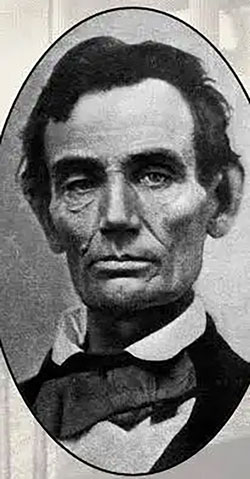
Most Americans know only a politically polished image of Abraham Lincoln. In fact, this shallow and overly-liberalized ideological image has become near mandatory in today’s 1984ish academic and media straight-jacket. Yet the real Lincoln was not shallow, and his debates and writings often demonstrate broad understanding of and comprehensive analysis of issues. Moreover, his ability to debate and communicate was formidable. However, his words and thinking often differed sharply from modern liberal ideology. Much of this can be seen from excerpted quotes from Roy P. Basler’s 1946 collection, Abrham Lincoln: His Speeches and Writings. The quotes in this article can be found on pages 443-447. On June16, 1858, Lincoln had just received the Illinois Republican Party’s nomination for US Senate. The August 21, 1858, Lincoln-Douglas debate in Ottawa, Illinois, was the first of seven that ran through October 1858. The debates were related to the Illinois Legislature choosing a Federal Senator. Steven Douglas was the Democrat incumbent, first elected in 1847. In 1913, the 17th US Amendment to the US Constitution changed the method of election to popular vote in each state.
Born in Vermont, Steven A. Douglas (1813-1861) was a leading Democrat and US Senator from Illinois (1847-1861), who had also served in Congress and as an Illinois Supreme Court Judge and other state legislative and constitutional offices. He favored popular sovereignty voting to determine whether slavery would be legal in new states. He had favored the Missouri Compromise of 1850 and was a champion of the Kansas-Nebraska Act of 1854, both leaning to popular sovereignty solutions to the slavery issue.
In the 1860 Presidential Election, there were two major issues: Tariffs and whether to allow new territories and states to have slavery. Note that the slavery issue on the Republican side was not to abolish slavery but to limit it to existing states and prohibit it to new territories and states. The 1860 Republican Platform did not call for abolition of slavery, only limiting it to its present boundaries and prohibiting it in new states. Southerners saw this as blocking the Democrat Party from future Senate and House majorities and a violation of both economic and political fairness.
Lincoln won the Republican nomination for President because of his strong stance for high tariffs and especially the newly proposed Morrill Tariff. During the General Election, Thaddeus Stevens, the most powerful Republican in the US House, told a New York City audience on September 27, that the two most important issues of the Presidential campaign were preventing the spread of slavery to new states and an increase in the Tariff, but the most important of the two was increasing the Tariff. In 1860, 95% of Federal Revenue came from tariffs. The Morrill Tariff would increase the average tariff from 15% to 37% immediately and to 47% within three years. The South had been fighting against high tariffs for over 40 years. The South paid 87% of the tariffs, and the North received 80% of Federal Government spending. Many consider 40 years of tariff wars and the Morrill Tariff to be the principal motive for Southern Secession and thus a major cause of the war. Political Correctness, however, has enshrined slavery, meaning freeing the slaves, as the only real cause of the war.
Some of the background for the quotes below concerned references to the Kansas-Nebraska Act governing slavery. Another issue in the background was Northern State policies on returning escaped slaves to Southern owners.
Lincoln Quotes from the August 21, 1858, Lincoln-Douglas Debate
“Before proceeding, let me say I think I have no prejudice against the Sothern people. They are just what we would be in their situation. If slavery did not now exist among them. they would not introduce it. If it did now exist among us, we should not instantly give it up. This I believe of the masses North and South. Doubtless there are individuals on both sides who would not hold slaves under any circumstances; and others who would gladly introduce slavery anew, if it were out of existence. We know that some Southern men do free their slaves, go North and become tip-top Abolitionists; while some Northern ones go South and become most cruel slave-masters.”
“When Southern people tell us they are not more responsible for the origin of slavery then we, I acknowledge the fact. When it is said that the institution exists, and it is very difficult to get rid of, in any satisfactory way, I can understand and appreciate the saying. I surely will not blame them for not doing what I should not know how to do myself. If all earthly power were given to me, I should not know what to do as to the existing institution. My first impulse would be free all the slaves, and send them to Liberia—to their own native land. But a moment’s reflection would convince me that whatever of high hope (as I think there is) there may be in this, in the long run, its sudden execution is impossible. If they were all landed there in a day, they would all perish in the next ten days; and there are not surplus shipping and surplus money enough in the world to carry them there many times ten days.”
“ What then? Free them all and keep them among us as underlings? Is it quite certain that this betters their condition? I think I would not hold one in slavery, at any rate; yet the point is not clear enough to me to denounce people upon.”
“What next? Free them and make them politically and socially our equals? My own feelings will not admit of this; and if mine would, we well know that those of the great mass of white people will not. Whether this feeling accords with justice and sound judgment is not the sole question, if indeed, it is any part of it. A universal feeling, whether well or ill-founded , cannot be safely disregarded. We cannot, then, make them equals. It does seem to me that systems of gradual emancipation might be adopted; but for their tardiness in this, I will not undertake to judge our brethren in the South.”
“Now, gentlemen, I don’t want to read at any greater length, but this is the true complexion of all I have ever said in regard to the institution of slavery and the black race. This is the whole of it, and anything that argues me into the idea of perfect social and political equality with the negro is but a specious and fantastic arrangement of words, by which a man can prove a horse-chestnut to be a chestnut horse.”
“I will say here, while upon this subject, that I have no purpose, directly or indirectly, to interfere with the institution of slavery in the States where it exists. I believe I have no lawful right to do so, and I have no inclination to do so. I have no purpose to introduce political and social equality between the white and black races. There is a physical difference between the two, which, in my judgment, will probably forever forbid their living together upon the footing of perfect equality; and inasmuch as it becomes a necessity that there must be a difference, I, as well as Judge Douglas , am in favor of the race to which I belong having the superior position.”
“I have never said anything to the contrary, but I hold that, notwithstanding all this, there is no reason in the world why the negro is not entitled to all the natural rights enumerated in the Declaration of Independence—the right to life, liberty, and the pursuit of happiness. I hold that he is as much entitled to these as a white man. I agree with Judge Douglas he is not my equal in many respects—certainly not in color, perhaps not in moral and intellectual endowment: But in the right to eat bread, without the leave of anybody else, which his own hand earns, he is my equal, and the equal of Judge Douglas, and the equal of every living man.”
“When he [Judge Douglas] undertakes to say that because I think the nation so far as the question of slavery is concerned will become one thing or all the other, I am in favor of bringing about a dead uniformity in the various States in all their institutions, he argues erroneously. The great variety of the local institutions in the States, springing from differences in the soil, differences in the face of the country, and in the climate, are bonds of union. They do not make ‘a house divided against itself,” but they make a house united. If they produce in one section of the country what is called for by the wants of another section, and this other section can supply the wants of the first, they are not matters of discord, but bonds of union, true bonds of union.”
“…In regard to this question, the Union is a house divided against itself, and when the Judge reminds me that I have often said to him that the institution of slavery has existed for eighty years in some States, and yet it does not exist in some others, I agree to the fact, and I account for it by looking at the position in which our fathers originally placed it—restricting it from the new Territories where it had not gone, and legislating to cut off its source by the abrogation of the slave-trade, this putting the seal of legislation against its spread.”
The Illinois Legislature reelected Steven Douglas to the US Senate.
These above quotes represent the opinions of Lincoln in 1858. Under different circumstances near the end of the War, he began to modify some of them. However, these passages give us insight into the best breadth and depth of Lincoln’s thinking on slaveryand race issues.
Conclusion
One thing that stood out about the Lincoln-Douglas Debates is how different they were from modern political debates. The issues were discussed in depth, and there was little if any limit or inhibition on subject, reasoning, or proposal. Moreover, despite their disagreements, the debates were notably civil. Modern political communication and debates tend to be crowded with virtue-signaling slogans with a shameful lack of depth and more avoidance of than attention to truth.
A nation’s foundations and the history of its foundations need to be based on truth. Without sound and solid foundations, nations cannot maintain their virtues or their strengths. Truth often needs to be administered with sensitivity and grace, but we must not yield to the very human tendency to replace truth with anesthetic lies. Lies, however anesthetic, strangle virtue, reason, and hope. They are dangerously addictive and blind us even to common sense. Truth is always the high ground and most durable foundation.
“One of the most cowardly things ordinary people do is to shut their eyes to facts.”
—C.S. Lewis
 Mike Scruggs is the author of two books: The Un-Civil War: Shattering the Historical Myths; and Lessons from the Vietnam War: Truths the Media Never Told You, and over 600 articles on military history, national security, intelligent design, genealogical genetics, immigration, current political affairs, Islam, and the Middle East.