











As Dicey Langston is honored across the Upstate, her Greenville County burial ground still faces an uncertain future.
Thousands of people travel through northern Greenville County every week without realizing how close they are to one of the county's most remarkable pieces of history. Along Tigerville Road stands a monument erected more than 90 years ago to Laodicea “Dicey” Langston Springfield. In Travelers Rest, her likeness now stands in bronze. Across the Upstate, her name remains part of the landscape, and her Revolutionary War story continues to be told more than two centuries after a young backcountry girl risked her life for the cause of Patriot freedom.
But if you want to find Dicey herself, you have to leave the monuments behind.
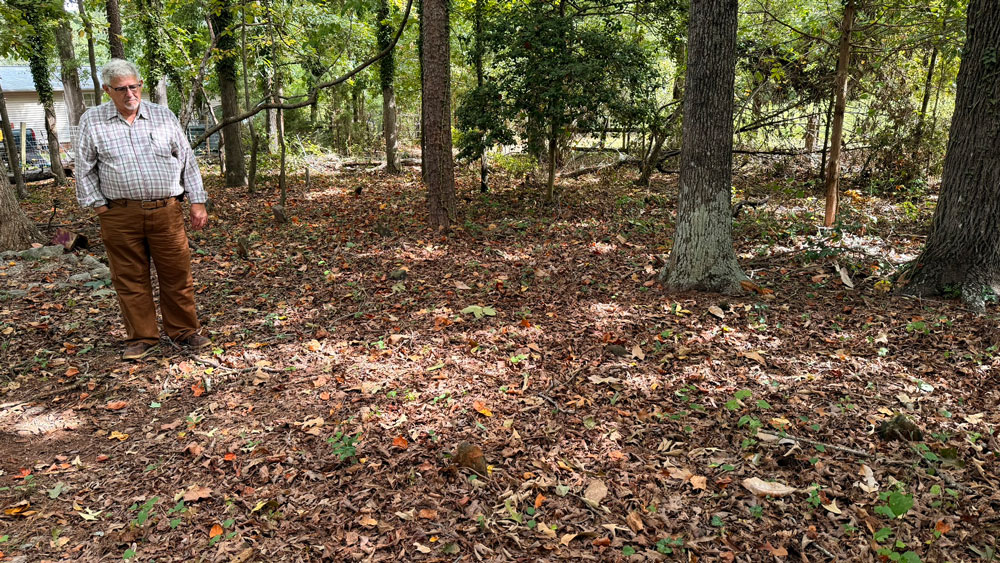
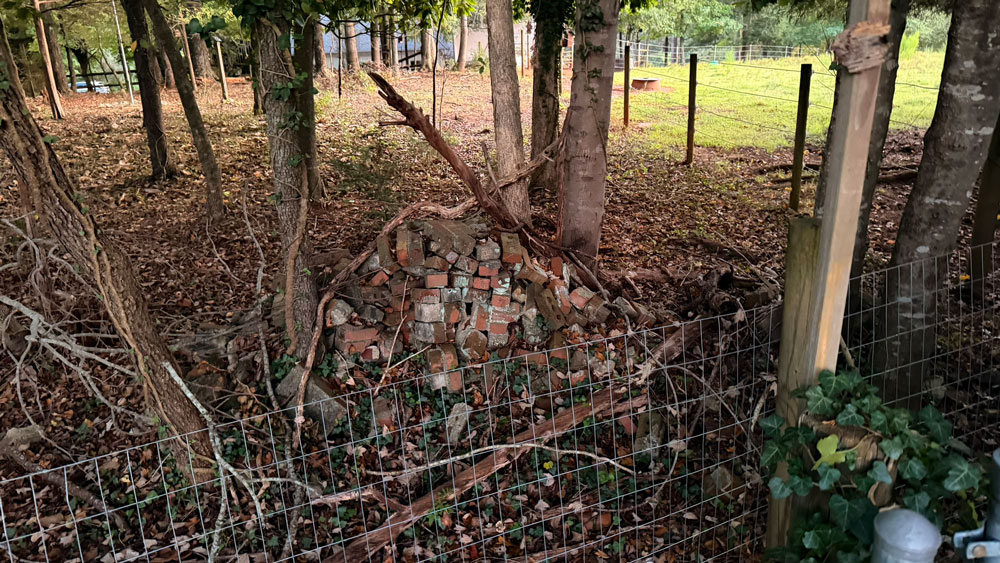
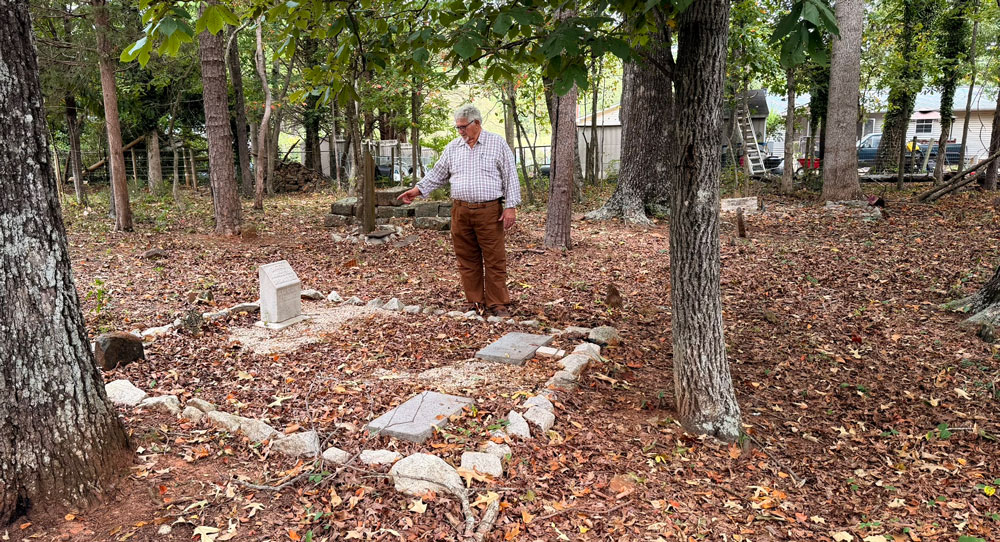
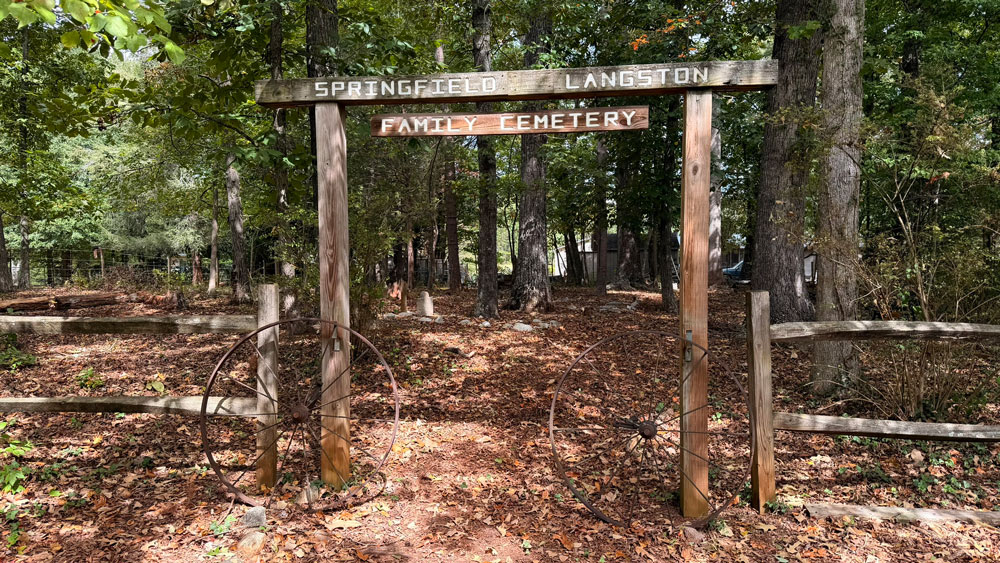
Not far away, beyond the familiar roads and largely out of public view, is an old family cemetery. There are no crowds there, no bronze statue and no public parking lot inviting visitors to stop. Among fallen leaves, branches and weathered stones is the grave of Dicey Langston Springfield, with her husband, Thomas Springfield, resting beside her. Other members of the Springfield family are buried nearby, along with smaller fieldstones that appear to mark additional graves. Local accounts have long associated some of those unmarked burials with enslaved people and Confederate soldiers, although those identities have not yet been documented.
That is where former County Councilman and current Republican candidate Joe Dill recently took me.
Dill knew the cemetery from his earlier years on Greenville County Council, after nearby residents brought it to his attention. Standing there today presents a striking contrast. Greenville County and Travelers Rest have found ways to remember Dicey publicly, yet the place containing her remains has continued through cycles of attention, cleanup and neglect.
“This needs to be preserved for our children and our grandchildren,” Dill said as we stood among the graves. “It’s not just local history; it is American history.”
That distinction is what brought us here. This is not a story arguing that Greenville County needs another monument to Dicey Langston. We already have monuments. It is a story about the one historic place connected to her that cannot be replaced if it is lost, and whether the time has come to find a permanent way to protect it.
Why Dicey Matters
Understanding why this cemetery deserves attention requires knowing something about the young woman buried there. Dicey Langston was born in 1766 and grew up in the South Carolina backcountry during the American Revolution. Accounts passed down through generations describe a teenage Dicey carrying information through the moonless night across miles of woods, marshes and swollen waterways to warn her brother James and other Patriots of an impending Loyalist attack.
Another well-known account tells of Dicey placing herself between her father and a Loyalist who threatened to shoot him, one of several stories that helped earn her the enduring nickname “Daring Dicey.”
After the Revolution, Dicey married Thomas Springfield, and the couple eventually settled in northern Greenville County near Travelers Rest. When Dicey died on May 23, 1837, an obituary attributed to the Greenville Mountaineer remembered both her Revolutionary service and her life as a wife, mother and neighbor. It reported that she had been the mother of 22 children and left approximately 140 grandchildren and great-grandchildren.
Thomas died in 1845 and was buried beside her in the Springfield family cemetery, where other members of the family would also be laid to rest. For all the public attention given to Dicey's story, however, her actual burial place remains considerably less familiar, even among local residents.
A Cemetery That Keeps Being Rediscovered
Our research shows that Dicey's grave was never truly lost. Descendants knew where it was. Neighbors directed visitors to it. Genealogists published directions to it, and historical organizations periodically returned to care for it, sometimes decades apart. Even the roads surrounding the cemetery preserve intriguing traces of the families who lived here. Langston, Batson and Hawkins are names associated with Dicey's descendants, and Langston Road itself once provided a way toward the cemetery. Nearby names such as Tigerville Road, Enoree Road and Enoree Baptist Church invite questions of their own when placed alongside the geography and stories of Dicey's life. Whether all these names are historically connected remains a question for another day, but they offer a reminder of how local history can survive in the landscape long after its origins have been forgotten.
John and Linda Galloway, longtime neighbors of the cemetery, remember visitors coming from both South Carolina and other states specifically to see Dicey's grave. Among the papers they have preserved is a 1999 letter from a descendant planning a trip to visit Thomas and Dicey in the Springfield Cemetery behind the Galloways' property. An older genealogy website similarly provided directions to the grave by way of Langston Road, clearly distinguishing the cemetery from the more visible DAR monument marking Dicey's former homesite.
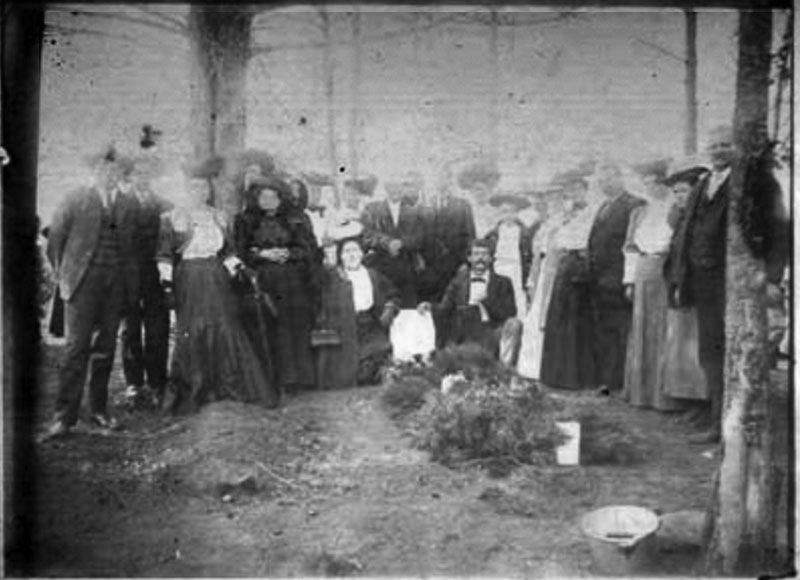
An old photograph provides an even earlier glimpse of people gathered around Dicey's grave. More than 20 men and women appear in the image, many identified by name in information preserved with it. Questions remain about when the photograph was actually taken, but its importance to this story is simpler: previous generations knew where Dicey rested and gathered there to remember her.
Twenty years ago, The Times Examiner founder and former publisher Bob Dill was among those who returned attention to Dicey's story. In July 2006, he visited the Springfield cemetery and documented her grave, descendants and preservation efforts in his article, “Daring ‘Dicey’ Langston: Revolutionary War Heroine.” His brother, Joe Dill, then serving on Greenville County Council, was also involved as descendants, volunteers and historical organizations renewed attention to the site.
“And then it has fallen by the wayside since,” Joe Dill said.
That is the pattern this cemetery has experienced for generations. It has been remembered, cleaned and rediscovered repeatedly. What it has never had is permanent stewardship.
Questions Among the Graves
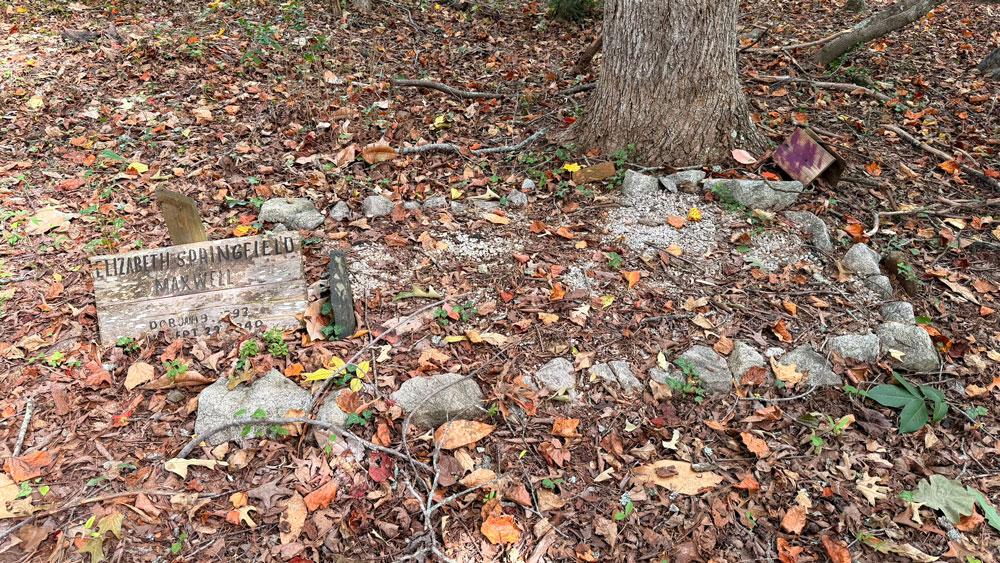
Walking through the cemetery today shows why permanent documentation and preservation matter. Dicey's and Thomas's graves can be identified, along with several other family burials, but smaller fieldstones are scattered throughout the cemetery. Some appear in rows consistent with graves. Oral accounts suggest that some may mark other historic burials, but their identities have not been sufficiently documented.
Nearby residents have also told The Times Examiner that stones they remember as possible grave markers are no longer where they once saw them. We have not independently established what happened to those stones, whether they were actually grave markers, or when any changes may have occurred. But the concern deserves attention. South Carolina law takes the protection of burial grounds seriously. Under S.C. Code §16-17-600, it is unlawful to willfully and knowingly, without proper legal authority, deface, injure or remove a gravestone or other memorial marker.
State law also recognizes that a cemetery on private property does not simply erase the interests of those whose families are buried there. S.C. Code §27-43-310 provides a process through which family members, descendants, cemetery plot owners and certain others may obtain reasonable access to cemeteries located on private property, subject to the conditions established in the statute.
But there is a larger point that does not depend upon resolving those concerns or debating the law. Without a professional survey and permanent record, how will anyone know what is there 20 years from now?
A professional cemetery assessment could establish its boundaries, photograph and map existing markers, compare historic photographs with present conditions and use appropriate non-invasive methods to identify possible unmarked burials. Deeds, wills, plats and family records could help complete that record.
The purpose is not to disturb the cemetery, but to document and protect it before more of its history disappears one stone at a time.
An Opportunity for Greenville County
The question, then, is what Greenville County can actually do. South Carolina law provides a place to begin.
S.C. Code §6-1-35 authorizes counties and municipalities to preserve and protect cemeteries within their jurisdictions when they determine those cemeteries have been abandoned or are not being maintained. The law permits public funds to be used for preservation and specifically provides for signs, markers, fencing, other appropriate protective features and reasonable access.
That does not make the Springfield cemetery county property, nor does it resolve questions involving private property rights, access or cemetery boundaries. Any permanent solution would require cooperation among Greenville County, the property owner, descendants and appropriate preservation and legal professionals.
But it does mean Greenville County can ask a more substantial question than who will organize the next cleanup.
What might permanent preservation look like? Greenville County could explore whether a preservation agreement, easement, donated property or other limited property interest might provide lasting protection and appropriate access. A professional survey could establish what is actually there before improvements are considered, while a modest access area outside the burial ground could allow descendants and visitors to reach the cemetery without disturbing graves or unnecessarily burdening surrounding property.
The result would not necessarily need to be a conventional park, although that could be among the options Greenville County considers. Perhaps the best outcome is much simpler: a protected historic cemetery with appropriate access, interpretation and a permanent maintenance plan.
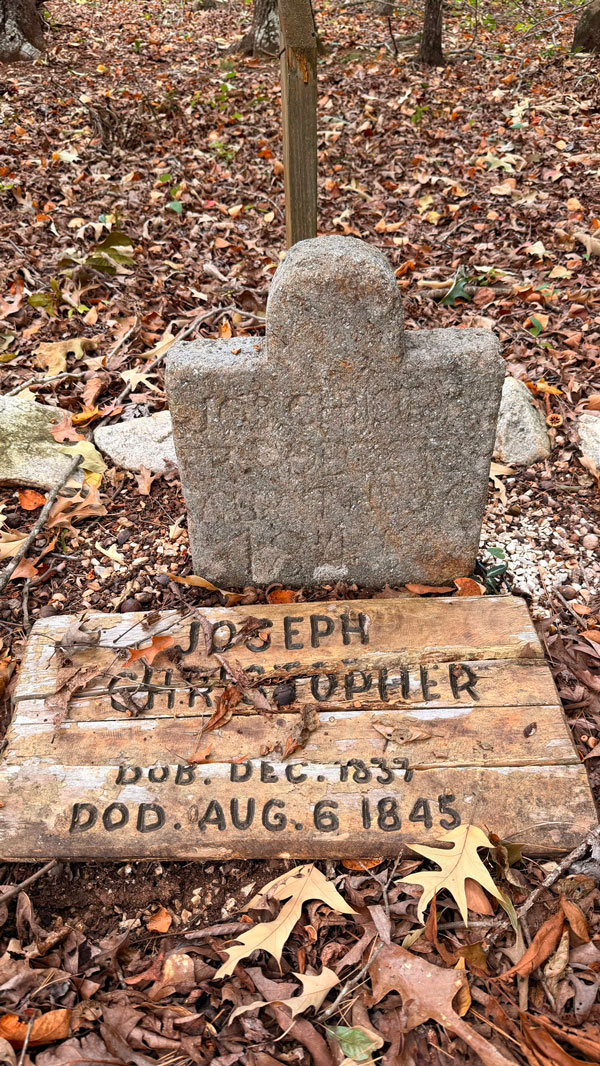
- Photo by James Spurck -
Help Beyond the County
Some will reasonably ask whether preserving an old family cemetery is an appropriate use of taxpayer resources, particularly amid recent concerns about increasing taxes. That question deserves an answer, not dismissal. South Carolina law already gives counties authority under certain circumstances to spend public funds protecting abandoned or unmaintained cemeteries, and state and federal historic-preservation programs may provide additional avenues for assistance.
The question before Greenville County, therefore, is not simply whether taxpayers should be handed another expense. It is whether existing authority, preservation resources, partnerships and available funding can be brought together to protect a historically significant place before more of it is lost.
Greenville County could begin by consulting the South Carolina State Historic Preservation Office and other preservation professionals to determine whether the Springfield cemetery qualifies for historic designation, what documentation would be required and what state, federal or private assistance might be available. The National Park Service has administered preservation grants associated with the nation's 250th anniversary, although eligibility for the Springfield cemetery has not been established and no particular source of funding should be assumed.
The timing nevertheless matters. Communities across South Carolina are commemorating the 250th anniversary of American independence. Dicey's Revolutionary story is part of that history. The place where her story ended deserves to be part of the conversation about how that history will be preserved.
Beyond the Monument
For Joe Dill, the issue has come full circle. Years ago, nearby residents brought the cemetery to his attention while he served on Greenville County Council. Now, as he prepares to return to Council, Dill says he intends to raise the issue again. But he sees no reason for preservation efforts to wait until then. The conversation could begin now, and Dill says that would be all the better.
This time, another cleanup should not be confused with a long-term solution. The larger opportunity is to bring the property owner, descendants, preservation professionals, historical organizations and appropriate public agencies together to determine whether a permanent plan is possible.
Greenville County has already demonstrated that Dicey Langston is worth remembering. Her former homesite has been marked in stone. Her likeness has been cast in bronze. More than two centuries later, her Revolutionary story is still being told. Yet the most irreplaceable memorial of all is not a monument someone built. It is the ground where Dicey herself was laid to rest.
A monument can be repaired. A plaque can be replaced. A statue can be recast. A cemetery, once lost, cannot be rebuilt.
Monuments commemorate history. The Springfield cemetery IS history. It is our history!