












Ralph Norman has publicly stated his support for Darline Graham in November. His write-in supporters are asking voters to do the opposite.
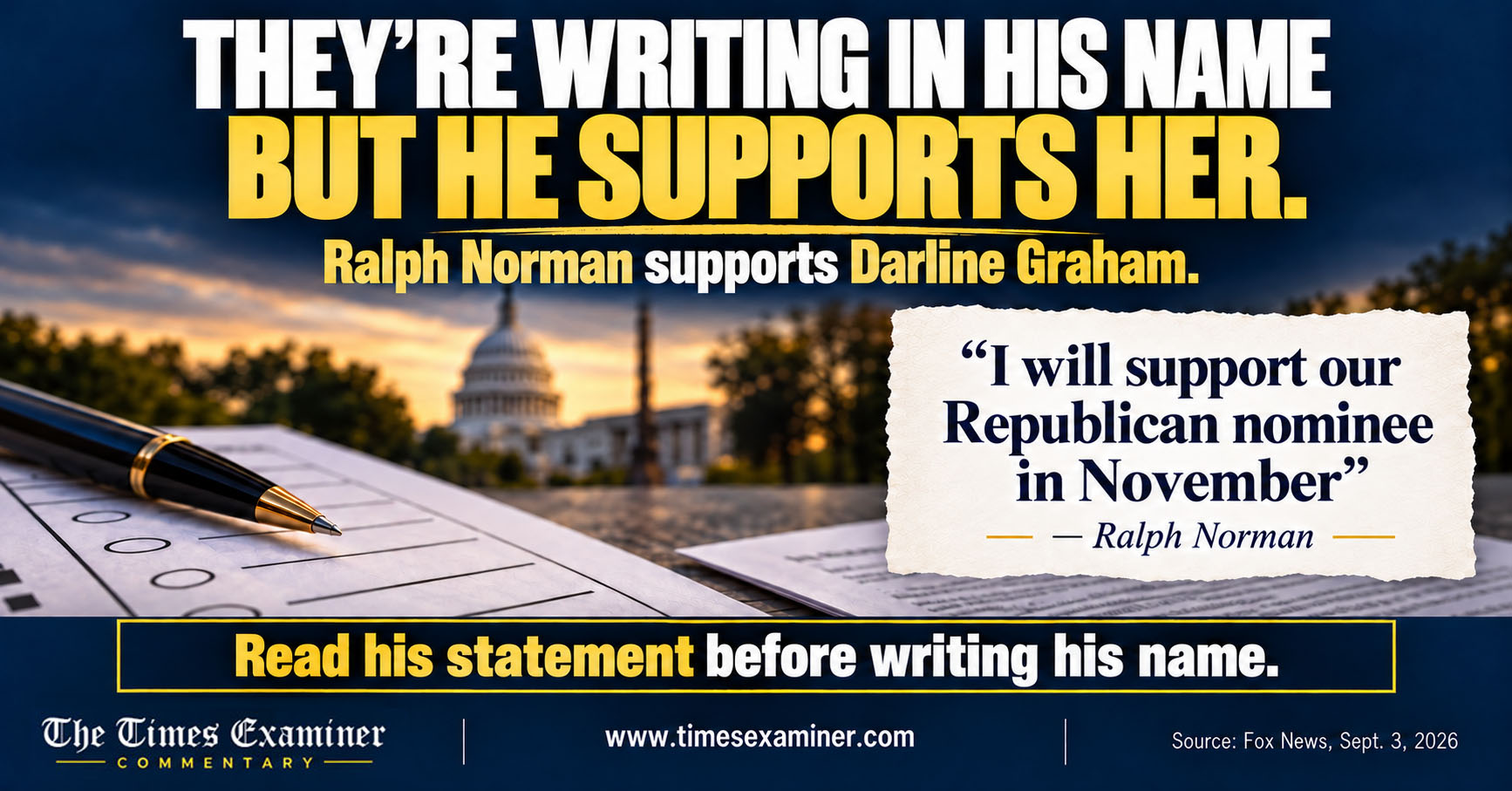
The campaign to write in Ralph Norman has a Ralph Norman problem.
Those pushing his name want conservatives to reject Darline Graham in November. Yet the very man they want us to write in has publicly pledged to support her. They are campaigning against his stated choice while campaigning in his name.
In his September 2 statement on X, Norman recognized Darline’s nomination and pledged support for the Republican nominee. His stated priority included “defeating the Democrats and protecting our conservative values.”
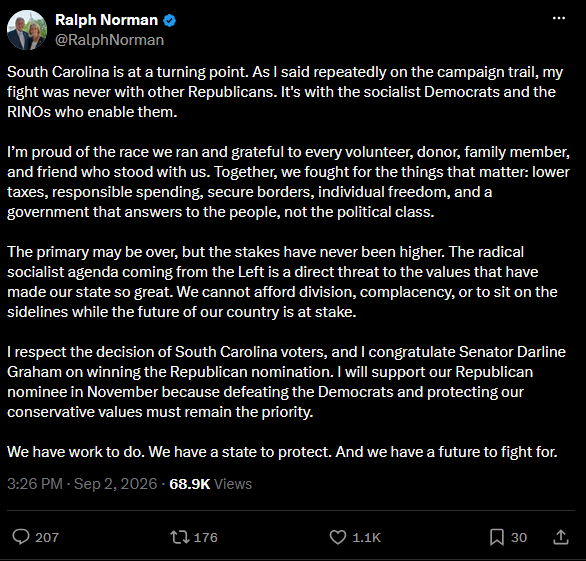
That support was reported by Fox News and placed in fuller context by the Greenville News. Norman had earlier told a reporter, “Vote for Ralph Norman.” Yes, that remark deserves acknowledgment, but so does his subsequent statement supporting Darline. We cannot stop the story at the words we prefer and ignore what he made clear.
The candidate they are promoting has chosen to support the candidate they are asking us to reject.
A Different Kind of Write-In
As I explained in my earlier article, Strom Thurmond and Lisa Murkowski won Senate seats through write-in campaigns. But those comparisons carry a distinction that matters here: Thurmond and Murkowski actively campaigned for voters to write in their names. They actively sought those write-in victories themselves, rather than merely having supporters promote their names.
We recognize that South Carolina law requires primary candidates to pledge that they will not offer or campaign as write-in candidates against their party’s nominee. But that restriction does not require Norman to publicly announce his support for Darline or explain why conservatives should support her. He went beyond declining to campaign for himself. He publicly pledged his support to her and identified protecting conservative values as his reason.
The Clear Distinction
Supporting Darline at the ballot box and formally endorsing her are different decisions. Norman can stop short of an endorsement while still concluding that voting for her is the prudent way to protect his conservative principles. The argument here concerns his stated choice for November, not whether he gives her an unqualified endorsement.
That is the point these write-in advocates must address. Norman has done more than refrain from promoting a campaign bearing his name. He has publicly supported the candidate they are asking us to reject.
Convictions Beyond the Primary
I voted for Ralph Norman in the primary, so I understand the disappointment of those now considering a write-in. Norman had a conservative voting record we could examine. Darline did not have a comparable legislative record. His record as a consistent conservative gave me reason to support him.
But Norman’s conservative convictions did not expire when the primary ended. His stated reason for supporting Darline in November includes protecting conservative values. That is the prudence of his convictions at work, carrying principles beyond the primary and considering what the general election will determine.
Those promoting his name may disagree with that judgment. But they cannot fairly ignore it while asking the rest of us to trust his conservative convictions.
That is the argument I have been making. My prudence carries principles, not personalities.
Write-in advocates have every right to vote their convictions, including casting a write-in ballot. But they should own their disagreement with Norman. They are asking voters to reject his judgment concerning November while presenting his name as the answer.
If his conservative convictions made him worthy of their support in the primary, surely his stated reason for supporting Darline deserves more than being brushed aside in the general election.
Before asking us to write in Ralph Norman, they ought to explain why we should write off what Ralph Norman has made clear.