











Defiant, Courageous, Fearless, Teenage Freedom Fighter and Spy
Editor’s Note: This article was written 20 years ago by Bob Dill, founder and former publisher of The Times Examiner, and originally published July 5, 2006. We are republishing it as it appeared at the time because Dill’s reporting documented not only the remarkable story of Laodicea “Dicey” Langston Springfield, but also the Springfield family cemetery where she rests. Two decades later, that cemetery and its future have once again become a matter of public interest. The article reflects the historical information and terminology available to the author at the time of its original publication.
--------------------------
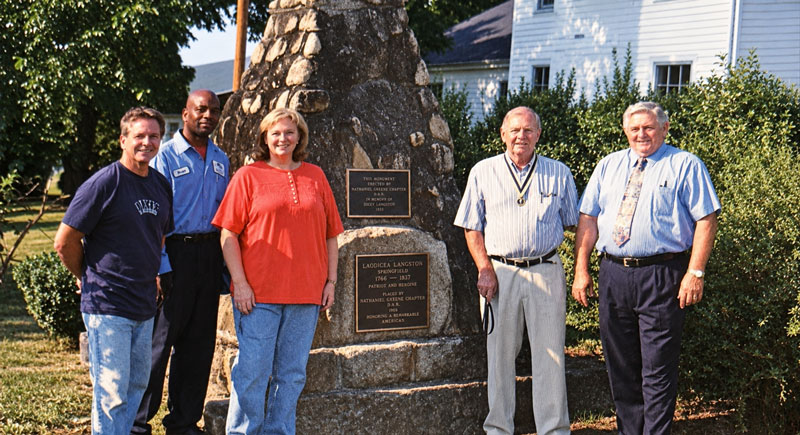
Heading east from Travelers Rest on Tigerville Road, one may see the monument honoring a heroic teenager who, during the American Revolution, earned the title of Patriot, Heroine, and “Rebel for the cause of Freedom.” She was Miss Laodicea Langston, better known as “Daring Dicey.”
The monument is located across the road from Enoree Baptist Church and was erected by the Nathaniel Greene Chapter of the Daughters of the American Revolution (DAR) in 1933. A new plaque was added in 1966, correcting her birth date.
Incorporated in the monument are stones from the property where she lived, including the hearthstone from her home.
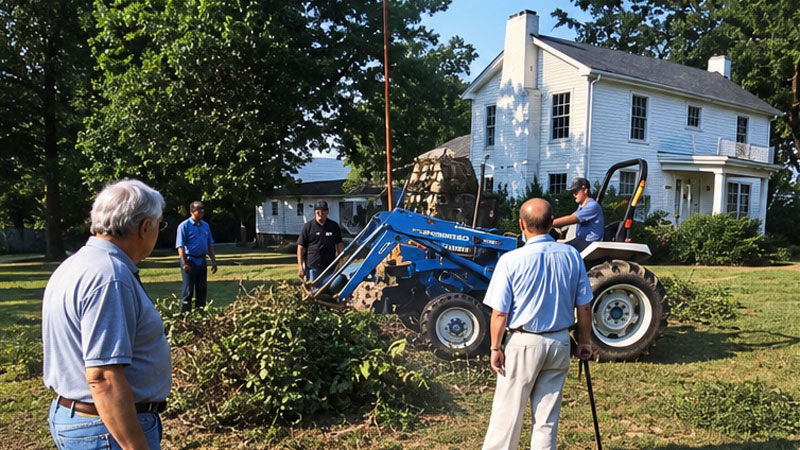
It was fitting that her memory was honored during Independence Day by the DAR chapter that erected the monument and the Colonel Robert Anderson Chapter of the Sons of the American Revolution (SAR). They were joined by volunteers from Woodlawn Memorial Park and Greenville Memorial Gardens, who cheerfully and carefully cleaned the monument and groomed the surrounding shrubs.
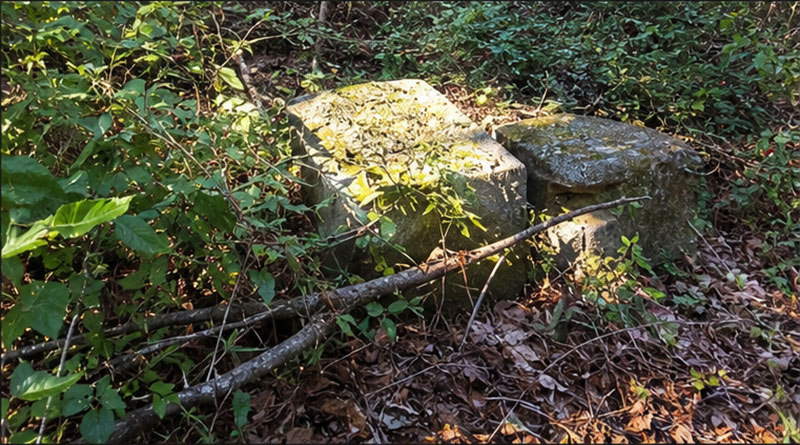
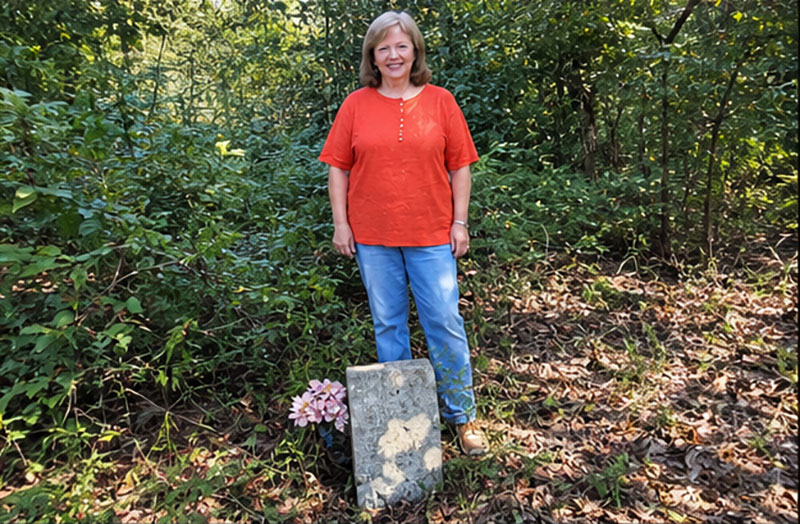
The monument is located on property that was originally a land grant for her husband, a veteran of the Revolutionary War. She is buried a short distance away in a family cemetery. Property holding both the family cemetery and the memorial is no longer owned by family members.
Newcomers to Upstate, South Carolina may be surprised to learn that the history of this region did not begin with Joel Poinsett and Richard Pearis sitting on a park bench on the bank of the Reedy River drawing up the charter for the Chamber of Commerce. Both of these individuals eventually made their contributions and received their monetary rewards, but others paid the price for freedom and made the sacrifices to win independence from the British. Notably among the patriots was Dicey Langston and her family.
Laodicea “Dicey” Langston was born in Laurens District in 1766 to Solomon and Sarah Bennett Langston. She was one of eight children.
Her aging father and brothers were actively involved in the war effort, while many of their neighbors and family members remained loyal to the British Crown and fought against the independence movement.
The role of women in the Revolution was rarely recorded in military journals. However, a few were too incredible to ignore. Dicey Langston was one of those.
Dicey was barely 14 when the war actively commenced in Upstate, South Carolina. Her father, Solomon Langston, although too old and feeble to take an active part in battle, was a strong supporter of liberty and a devoted patriot. His son, James, however, was actively involved in military engagements.
Dicey Langston became very effective at overhearing information regarding the intentions of loyalist activities and reporting information to patriot leaders. Her father was threatened by the loyalists and informed that he would be held responsible for his daughter's actions.
She was instructed by her father to refrain from her patriotic treachery, and for a time she obeyed the instructions.
Then one day she overheard a conversation about a ruthless group led by Bloody Bill Cunningham and his company of loyalists planning a raid on the “Elder settlement” some 20 miles away where her brother James and some Patriot friends were living. She decided to warn them.
Leaving her father's home in the middle of the night, she walked and ran many miles, crossing swollen streams and marshes on foot as there were no bridges on the route she was taking.
Dicey crossed the Tyger River swollen from recent rains, and finally reached her brother's house and warned him of the overheard plans to raid and destroy the settlement.
Wading through the icy waters of swift streams, she arrived at her destination, finding the morale of the troops low. Seeing that they were also hungry, she had boards torn from the building to make a fire, and she baked hoecakes for each of the troops, leaving them with a full stomach and lifted spirits.
James Langston and his friends rushed to warn everyone and, the next day, Cunningham's troops arrived and found the area deserted. Thanks to Dicey, there was no one there.
Dicey returned home in time to cook breakfast for her father, never telling him that she was gone all night.
Weeks later, forces loyal to the British Crown paid a visit to the elder Mr. Langston, angry for the sons and daughter were causing them much grief. Their intention was to put to death all the adult men of the family.
All of the sons were absent, but the feeble old man was in their power except for the presence of his daughter Dicey.
One of the company drew a pistol and leveled it at the breast of Solomon Langston.
Suddenly a scream was heard, and Dicey sprang between her aged father and the weapon aimed at his heart. The soldier ordered her to get out of the way, or the pistol bullet would be lodged in her own heart.
She ignored the threat and clasped her arms tightly around her father's neck and declared that her own body should first receive the ball aimed at her father. The sight of this young woman, so fearless, so determined to shield her father's life by the sacrifice of her own, touched the heart of a member of the company assigned to perform the assassination, and Langston was spared. The enemy soldiers left the house filled with admiration at the affection and devotion they had witnessed.
Dicey's disregard of personal danger when defending her family or fighting for liberty was remarkable. On one occasion, when returning from a visit to a Patriot community in Spartanburg, she was met by a company of Loyalists who ordered her to give them some information they desired regarding those she had just left. Dicey refused. Therefore, the captain of the company held a pistol to her breast and ordered her instantly to make the disclosures, or she should “die in your tracks.” Her response was: “Shoot me if you dare! I will not tell you.” In a further act of defiance, she lifted up her handkerchief that covered her neck and breast, as if offering a place to receive the contents of the weapon. Before the gun was fired, another officer interceded and saved the courageous girl's life.
Another act of courage would impact on Dicey's life following the war as well as generations to come.
Her brother James had left a rifle with her to hide until he sent for it. Weeks later, a company of her brother's men passed by their father's home, and the leader asked for the gun. Dicey went immediately and brought it, but forgot to ask for the agreed-upon countersign between her brother and herself.
Suddenly remembering the password and countersign, she demanded the countersign to be sure the men were really acting on behalf of her brother.
The leader of the group indicated that it was too late to ask for the countersign. “We have the gun now.”
“Do you think so,” Dicey said. “No you don't. And you won't unless you give me the sign!” she said, cocking the gun and aiming the muzzle toward the leader. “If the gun is in your possession, take charge of it,” she added.
There was no doubt that she meant business. The countersign was given promptly and the men, laughing heartily, pronounced her worthy of being the sister of James Langston.
As the men left, the leader lingered and looked back at Dicey and smiled. She returned the smile. The leader was Thomas Springfield and would become her husband after the war.
What is now Greenville County was a favorite hunting ground for the Cherokee Nation before the arrival of the white man. A treaty between the Governor of South Carolina and the Cherokee Nation in 1775 reserved what is now Greenville, Pickens, Oconee, and Anderson Counties. Over the next few years, the Indians were driven out of Greenville County, and the land became part of South Carolina.
During 1784, many land grants were made in northern Greenville County, with priority going to those who participated in the Revolution.
Those receiving land grants along the Reedy, Enoree, Tyger, and Pacolet Rivers included Dicey's husband, Thomas Springfield.
Other early settlers receiving grants in the late 1700's included several family names still in the area: Howard, Dill, Earle, Winn, Hopkins, Goodlett, Langston, Anderson, Stiles, Benson, Coleman, Smith, Bradley, Montgomery, Roe, Watson, Williams, Morgan, McElhaney, Cleveland, Edwards, McCauley, Batson, Price, Center, Tubbs and others.
The Patriots had won the Revolution before either Dicey or her husband-to-be, Thomas Springfield, celebrated their sixteenth birthday. On 9 January 1783, the couple, still “sweet sixteen,” were married. A decade later, Thomas received his land grant in the vicinity of Travelers Rest, where the couple would raise 22 children, enjoy the fruits of their labor, and in the early fall be laid to rest.
Dicey Langston Springfield died May 23, 1837, at age 71. Thomas died March 21, 1845, at age 79.
A formal rededication of the refurbished monument to Dicey Langston Springfield will be held.