












With roads crowded, rural land under pressure, and public services stretched, candidates debated how County Council should respond to Greenville County’s rapid expansion.
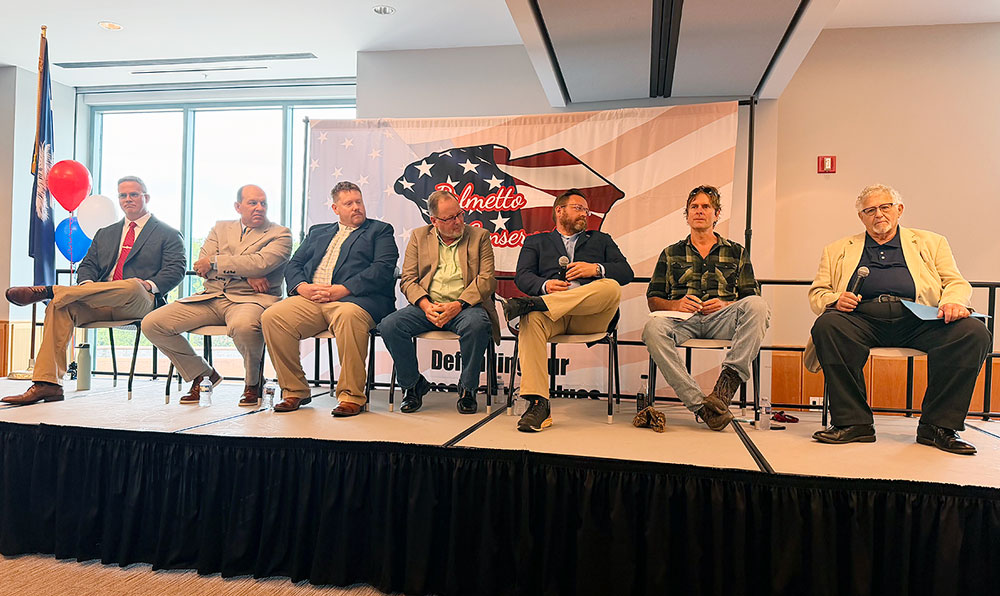
Greenville County Council candidates gathered at the Hughes Main Library in downtown Greenville on June 1 for a forum hosted by the Palmetto Conservative Fund and moderated by 98.9 WORD Talk Show Host Joey Hudson.
Yet the evening kept circling back to one issue. Growth!
More specifically, the candidates wrestled with a question increasingly asked by residents across the county: Has Greenville County’s growth become out of control?
The candidates did not agree on every proposed remedy. Some favored zoning and stronger land development rules. Others cautioned against blanket zoning and argued for conservation districts or targeted restrictions. Some supported impact fees on new development. Others warned that impact fees could become another tax or simply raise the cost of housing.
But across the three County Council races represented at the forum, there was broad agreement that Greenville County’s roads, public services, and rural communities are under pressure.
The participating candidates included District 17 candidates former County Councilman Joe Dill, John Ehlers, and James Hoard; District 26 incumbent Rick Bradley and challenger Daniel Rumfelt; and District 28 candidates Allen Kellett and Kyle Long.
District 17 candidate Travis Forrester is also on the June 9 Republican primary ballot but was unable to participate in the forum because of an out-of-state scheduling conflict.
Growth as the Common Thread
The most revealing moment of the forum may not have been a single proposal. It was the repeated recognition that nearly every county issue is connected to out-of-control growth.
When candidates discussed traffic congestion, the conversation returned to subdivision approvals and road capacity. When the subject turned to property taxes, candidates debated whether new development generates enough revenue to cover the cost of infrastructure. When public safety came up, the discussion shifted to population growth, deputy retention, response times, and the growing demands placed on county services.
Joe Dill repeatedly argued that the county’s problems cannot be separated from the pace of development. John Ehlers made a similar point, contending that the county cannot afford the infrastructure costs created by continued development while also promising residents lower taxes.
Daniel Rumfelt said the county must adapt to growth and manage it more effectively. Kyle Long also framed slowing growth and addressing roads and bridges as priorities.
That theme offers a useful way to understand the forum. The candidates were not simply debating whether Greenville County is growing. They were debating what County Council can realistically do about it.
Zoning Divided the Candidates
Zoning produced some of the clearest differences.
“Zoning is not a magic pill, but it’s long past time to bring that conversation in.” – James Hoard, District 17
James Hoard argued that District 17’s largely unzoned landscape leaves rural communities vulnerable to unwanted development. He said zoning is not a cure for every problem, but described it as one of the tools available to control where subdivisions, industrial uses, and other projects can be located.
Rick Bradley said portions of District 26 face similar challenges. He pointed to the county’s one-and-a-half-acre minimum lot-size requirement for subdivisions creating 10 or more lots served by septic systems in unzoned areas, which he described as a measure to protect water quality. Bradley also discussed an open-space approach intended to direct housing toward areas where roads, sewer, and other infrastructure already exist. He said the county should give its comprehensive plan more practical effect through land-development regulations and zoning.
Daniel Rumfelt opposed blanket zoning across the county.
“When you zone, your property is forever zoned,” Rumfelt said.
He argued that property owners could lose flexibility if future land-use decisions are placed too heavily in the hands of the Planning Commission and County Council. Rumfelt instead discussed conservation districts and improved land-development regulations as ways to protect rural areas while respecting property rights.
“When you zone, your property is forever zoned.” – Daniel Rumfelt, District 26
John Ehlers proposed a more aggressive response. He supported acreage requirements for developers and suggested that impact fees would need to be large enough to change developers’ calculations if the county expects them to slow new construction.
Dill cautioned that zoning should not be treated as a permanent solution. He noted that land can later be rezoned when property changes hands, and a developer seeks a different use. His position emphasized the limits of zoning unless surrounding property owners remain committed to preserving the existing character of an area.
Roads and Taxes Became the Practical Test
The candidates’ positions became more concrete when moderator Joey Hudson asked about traffic, road funding, and infrastructure.
Dill said the scale of unchecked development is already visible across the region. Referencing a presentation by Save Our Saluda, he compared a projected 74-acre daily loss of rural land to the footprint of Haywood Mall.
Dill later clarified that the figure was not a measurement of current daily development in Greenville County. It was a projection for the 10-county Upstate: If low-density sprawl continues unchecked, the region could collectively lose up to 74 acres of rural land each day by 2040.
“We simply can’t afford the development that we’ve got.” – John Ehlers, District 17
Dill used the projection to illustrate his broader argument that Greenville County cannot build its way out of congestion if development continues at the present pace.
Ehlers argued that many of Greenville County’s roads were designed for a more rural community. He questioned how the county could afford major improvements without increasing taxes if development continues unabated.
Hoard described roads, bridges, and infrastructure as core functions of government. He argued that the county should prioritize those responsibilities before funding programs that are not essential.
Bradley pointed to recent road funding and said District 26 is receiving additional paving work. He also emphasized the need to address congested intersections and traffic signals.
Rumfelt questioned whether impact fees are the best county-level solution. He described them as a substitute tax and argued that a broader consumption-based approach deserves consideration. Rumfelt said visitors and others who eat, shop, and spend money in Greenville County should help carry more of the infrastructure burden.
Kellett argued that the county should review its existing budget and redirect money toward roads before asking taxpayers for more. He also discussed turn lanes and other traffic-flow improvements, including the possible use of traffic circles.
Long supported impact fees and said the county should consider an ordinance-based system that would take infrastructure capacity into account before additional development is approved.
The discussion exposed a central tension. Residents want roads repaired and public services strengthened, but many candidates also promised to resist higher taxes.
“As everybody says on social media, we’re full. I believe that.” – Allen Kellett, District 28
The forum therefore raised an important question for voters: Can Greenville County fund the cost of out-of-control growth without placing more of the burden on longtime residents?
Business Recruitment Raised Another Question
The candidates also debated whether Greenville County should continue offering incentives to attract employers.
Bradley defended the Greenville Area Development Corporation, commonly known as GADC, and the use of fee in lieu of taxes arrangements. He argued that Greenville County must remain competitive while ensuring that businesses contribute toward the public services they use.
“I do not believe we could absorb another BMW. That would be too much for our current area to hold.” – Kyle Long, District 28
Rumfelt also supported attracting businesses, but he said the county should pay more attention to the challenges facing small businesses. He pointed to local regulations that can create unnecessary barriers for entrepreneurs.
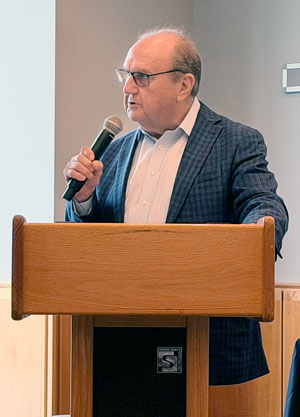
Kellett spoke favorably of economic recruitment but said the county should be more deliberate about where different types of development are placed. He argued that Greenville County needs a more orderly approach to business districts, warehouse districts, and distribution areas.
Long offered a caution. He said Greenville County may not be able to absorb another employer on the scale of BMW without first addressing infrastructure capacity. He said the county should focus on attracting jobs that are likely to remain valuable as technology changes, including what he described as artificial intelligence proof jobs.
Dill questioned whether incentives remain necessary when Greenville County is already a desirable destination for businesses. He argued that the county should not give developers or large companies tax advantages while longtime mom and pop businesses continue to struggle.
Ehlers questioned whether the county can credibly promise to slow residential development while continuing to recruit large numbers of new jobs. He suggested that GADC should focus more on maintaining the county’s employment base rather than simply pursuing additional growth.
Hoard drew a distinction between incentives and subsidies. He said he supports creating a fair environment for businesses to compete, but he opposed arrangements that he believes amount to public subsidies for private development.
That exchange sharpened the central issue of the evening. Greenville County’s economic success has made it attractive. But success also brings consequences. New jobs, new homes, new traffic, and new public service demands arrive together.
Public Safety Is Part of the Growth Debate
The discussion of the Greenville County Sheriff’s Office followed the same pattern.
The candidates generally agreed that deputies and first responders deserve serious attention. They differed on the best funding approach and on how the county should evaluate salary requests.
Ehlers said public safety is a core function of government. He argued that County Council should identify money for deputies and first responders by cutting programs that are less essential.
Hoard said deputies deserve fair pay, but he called for a detailed wage study to compare salaries, benefits, and compensation accurately. He argued that the county should establish the facts before imposing a significant tax increase.
“Once you get the deputies into six and seven, eight years, they’re invested and they intend to stay on longer.” – Rick Bradley, District 26
Bradley focused on retention. He said the county should examine why deputies leave after several years of service and look for ways to encourage experienced deputies to remain with the department.
Rumfelt described public safety as an urgent priority. He said the county should examine whether a portion of its available fund balance could be used to address the Sheriff’s Office request while also protecting the county’s financial standing.
Kellett said public safety, schools, and roads should rank among the county’s top priorities. He argued that the county should address the loss of deputies who receive training in Greenville County and later leave for higher-paying jurisdictions. He also connected the problem to housing costs, noting that deputies and other working residents face difficulty affording homes in the county.
Long said the county should fund public safety responsibly while carefully comparing base salaries with total compensation. Drawing from his military experience, he suggested exploring whether deputies who receive taxpayer-funded training should make a service commitment to remain with the department for a defined period.
Dill tied the entire public-safety debate directly to out-of-control growth. He said deputies face a rising workload, the jail needs additional personnel, and the court system is under pressure. Dill cited a backlog of 20,891 warrants.
Dill’s argument brought the discussion back to the theme of the evening. Public safety is not separate from the growth debate. It is one of the places where the consequences become visible.
“We’ve got too much growth. And when you come to law enforcement, that’s exactly what the problem is.” – Joe Dill, District 17
Transparency Drew Broad Agreement
The candidates found more common ground on government transparency.
Rumfelt said the county administrator should answer questions more directly when residents or council members raise concerns about the budget. He argued that clearer explanations would help residents better understand how county government works.
Kellett praised the usefulness of council newsletters and suggested that each council member should regularly communicate with constituents about council meetings, committee activity, and upcoming decisions.
Long supported regular town halls. He also said residents should be able to hear County Council livestreams clearly and attend meetings at times that are reasonably accessible to working people.
Dill emphasized the continued importance of in-person communication. He said that during his previous service on County Council, he held community meetings at fire departments, answered residents’ telephone calls, and sometimes visited constituents in their homes to discuss proposed ordinances.
Ehlers supported social media, livestreaming, and local town halls. He said county government should make information easier to access and more clearly explain what is happening before decisions become final.
This portion of the forum was less confrontational, but it was important. County growth decisions often occur through technical processes involving zoning, planning, land development regulations, and committee meetings. Better communication would help residents understand those decisions before the consequences arrive at the end of their roads.
A County at a Crossroads
The June 9 Republican primary will determine which candidates advance in these County Council races. A runoff, if needed, is scheduled for June 23.
The candidates offered different answers, but the forum clarified the question facing voters.
Greenville County has become a desirable place to live, work, and invest. The challenge is deciding how much growth the county can absorb, how to manage it, where that growth should occur, and who should bear the cost.
That is not a single-issue debate. It is the issue behind nearly every other county issue in this election and beyond.
Greenville County has reached the point where growth is no longer something happening in the distance. It is sitting in traffic beside us, crowding our classrooms, straining our public services, showing up in our tax bills, pressing against our rural communities, and demanding answers from those asking for our votes as well as those who have already received them.