








Dien Bien Phu to Tet to Soviet Financing of US Antiwar Movement - Part 2 of 3
Part 1 of 3 of this short series on the Vietnam War began with some initial facts about US involvement following the French Parliament decision to withdraw from Indochina—Vietnam, Laos, and Cambodia—on July 20, 1954. Part 1 also contained a short summary of the North Vietnamese and Viet Cong Tet Holiday offensive in early 1968. The1968 Tet offensive was one of the largest and most significant but most misunderstood events of the Vietnam War. That misunderstanding has unfortunately been perpetuated and further distorted by media and academia. Part 2 will therefore start with greater elaboration and detail on the background of US involvement, which is also widely misunderstood, and the Tet Offensive.
The French Indochina Background—Dien Bien Phu
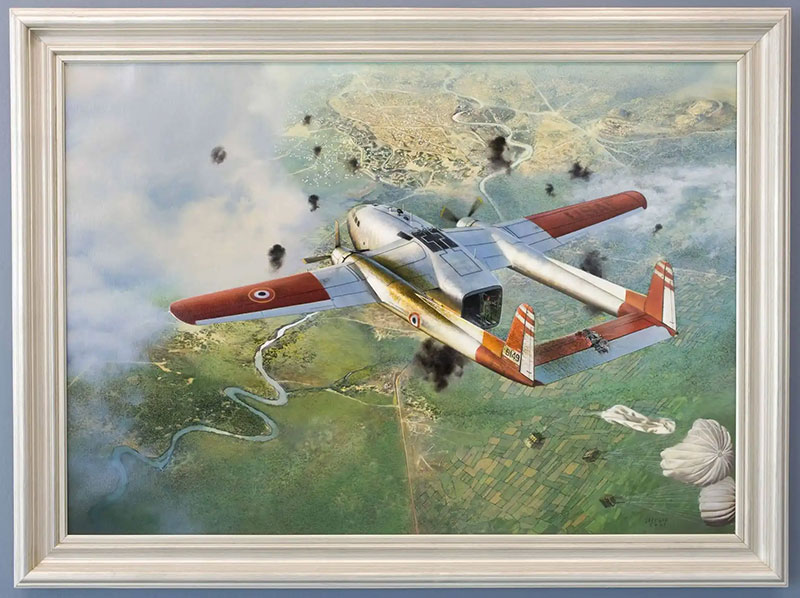
French Indochina was occupied by Japan from September 1940 to March 1945 during World War II. In attempting to recover its Indochina colonies in 1946, the French found they were opposed by the Communist Viet Minh. This struggle culminated with a major defeat of French Foreign Legion and French Union forces at the 57-day Battle of Dien Bien Phu from March 13 to May 7, 1954, in northwestern Vietnam near the Laotian border. The French had invested about 16,000 Legion and Union troops there to clean out Viet Minh resistance. The rugged and mountainous terrain there isolated them from quick and easy logistical supplies except by air, which with some US support, they were confident in maintaining. At least three of the field grade officers in my intelligence organization in 1963 had served as transport pilots parachuting supplies, arms, and Legionnaires into Dien Bien Phu in 1954.
However, the French were unaware that the Viet Minh had managed an undetected and impressively difficult movement of 65,000 combat and logistical troops into the mountains surrounding the French post at Dien Bien Phu. The number had reached 80,000 by May 7. Furthermore, the Viet Minh had accomplished quite a logistical feat in bringing more than 200 disassembled and reassembled Chinese 105 mm and 75mm artillery pieces and many mortar assemblies. Moreover, the French were unpleasantly surprised that the Viet Minh had also brought anti-aircraft guns. The Legionnaires, many of whom were parachuted into the desperate situation, fought with remarkable tenacity and valor, but they were vastly outnumbered and outgunned by the Viet Minh. On May 7, Approximately 4,300 of the French and Legion forces were listed as killed or missing. Of nearly 12,000 taken prisoner, about 4,400 were wounded. Many prisoners died on the 370-mile march to prison camps. Four months later only 3,300 were repatriated. The Red Cross and removed 858 earlier, and more than 200 had escaped. Only about 4,400 of 12,000 POWs survived. Viet Minh casualties were estimated at 8,000 dead and 15,000 wounded.
Dien Bien Phu was a classic case of underestimating enemy capabilities, often associated with blind hubris. The same blind hubris is also frequently associated with overestimating your own capabilities.
Eisenhower and the 1954 Geneva Accords
The Geneva Conference on Indochina from May 8 to July 21, 1954, is often referred to as the Geneva Accords, which consists of several documents. These Accords split North Vietnam from South Vietnam at the 17th Parallel. They were rightly interpretated by President Eisenhower and Secretary of State John Foster Dulles as a mandate to limit the spread of Communism from North Vietnam, and establishing the US as the primary enforcer. Eisenhower had used the term “Domino Theory” as further justification in April 1954. President Truman, however, was first to use the term in aiding Greece against Communist takeover of Greece. The Domino Theory is routinely dismissed by liberal media, academia, and leftist propaganda as invalid, but is a self-evident factor in most major-nation power struggles both military and economic. On October 23, 1954, President Eisenhower wrote a letter to then South Vietnam Prime Minister Ngo Dinh Diem promising support against North Vietnamese infiltration or military action against South Vietnam.
North Vietnamese actions to overthrow the South Vietnamese government began with Soviet approval in 1959. Following encouragement from Soviet Premier Nikita Khruscchev, on November 24, 1960, the North Vietnamese Communist Party announced the launch of a National Liberation Front to bring down the government of South Vietnam. President Eisenhower had informed President Kennedy of these matters before Kennedy’s January 20, 1961, Inauguration, in which Kennedy promised to “support any friend,” and “oppose any foe to assure the survival and success of liberty” However, by the end of 1961, North Vietnam had infiltrated 10,000 armed agitators into South Vietnam.
Disastrous 1963 Regime Change Expands Chaos and War
There were only 900 military advisers in Vietnam when Kennedy took office However, President Kennedy approved a coup replacing Ngo Dinh Diem on November 1, 1963. Ngo Dinh Diem and his brother were assassinated by a Junta faction the next day. This South Vietnamese regime change led to more than two years of unstable government and military leadership in South Vietnam. North Vietnam’s Communist leaders could not believe their good fortune. North Vietnam put over 240,000 troops into South Vietnam between 1964 and 1967.
Before Kennedy himself was assassinated on November 22, 1963, there were only 16,000 US military advisers in Vietnam. Declining to use strategic air and naval power recommended by the JCS in April 1965, President Johnson and Defense Secretary McNamara responded to North Vietnam’s stepped up invasion of South Vietnam in 1964 by increasing US forces to 150,000 by the end of 1965. Without Johnson/McNamara approval of JCS strategic air and naval use, General William Westmoreland indicated a need for 300,000 more troops. American forces would peak in 1968 at 536,000. But President Nixon will start listening to the JCS in 1969.
Facts that Upend the Entrenched Media and Academia False Tet Offensive Narrative
By mid-1967, North Vietnamese Army (NVA) casualties were escalating to the point where available replacements were not sufficient to maintain strength. Trained manpower was in a state of constant decline without hope of recovery. NVA logistics were in a similar state. More weapons and supplies were being destroyed than could be replaced. Manpower and material were in a constant state of attrition. NVA General Vo Nguyen Giap realized that North Vietnam was running out of time to wear down American public, Congressional, and Presidential support for the war. A spectacular and relatively quick victory like Dien Bien Phu was needed to reverse their declining manpower, material, and military fortunes, and destroy South Vietnam resistance over a time span of just 7 weeks.
The NVA Tet Plan was to dedicate 80,000 NVA and VC troops to simultaneously attack over 100 city and town population centers in every province of South Vietnam. The NVA used the siege of Khe San as a bloody diversion to draw US and South Vietnamese forces away from targeted population centers. Despite careful logistical and stealth troop movements, NVA leaders made colossal miscalculations on the morale of the South Vietnamese Army and civilian population. NVA leaders expected the South Vietnamese Army to desert or join NVA forces and the people to join the VC as liberators. Moreover, they expected their offensive to be a surprise. NVA plans had been captured in November 1967, and US General Weyand had briefed journalists on it in the US Embassy in early January 1968. The only questions were the exact timing and some locations. Only the US media stateside thought it was a surprise and is still calling it a surprise. This was an astonishing miscalculation on the part of North Vietnamese leaders. The South Vietnamese Army turned with a vengeance destroying NVA and VC units. The people did not join the revolt; they joined in strong resistance. The vast majority of over 100 attacks were put down within two days. Only in the city of Hue was their tremendous NVA resistance for 26 days. NVA and especially VC casualties were enormous—45,000 dead within weeks, building to more than 60,000 by the end of March, the bloodiest NVA defeat in the history of the war. Yet this tremendous allied victory was squandered by dithering over misinformed media hysteria.
The VC attack on the American Embassy got spectacular coverage on stateside television. However, owever,although 19 VC were able to get into the Embassy compound, they were all killed within hours with none able to enter the Embassy itself.
The media, academia, and the anti-war movement succeeded in turning the allied Tet victory into a propaganda victory for North Vietnam and its Soviet backers. CBS veteran newscaster Walter Cronkite advanced the cause of North Vietnamese aggression by his February 27, 1968, editorial against the war, calling for a negotiated peace. This deeply discouraged President Johnson, although Johnson’s objective was not to win the war, but to negotiate a peace.
The media also led in the shallow and erroneous interpretation of public polls during the Tet period. When Tet began, 54% of Americans disapproved of Johnson’s conduct of the War, but they were not against the war; they disapproved of Johnson’s not letting US military forces win the war. Johnson and McNamara’s objective was not driving the North Vietnamese out of South Vietnam; it was to negotiate a peace with North Vietnam on accommodative terms. Johnson and McNamara’s approach to air warfare was the absurdly timid and limited but costly Operation Rolling Thunder from 1965 through 1968. Pacific Commander Admiral Grant Sharp called this “Powder Puff Air Warfare. ” Operation Rolling Thunder shackled JCS strong recommendations for strategic use of air and naval power on vital North Vietnamese military, shipping, industrial, and petroleum targets. A February 1968 Gallup poll indicated that only 24% of Americans identified themselves as anti-war. Yet the media and academia constantly claim that Tet turned the American people against the war. But as in France in 1954, propaganda and agitation turned significant numbers in Congress against resisting Soviet-backed North Vietnamese aggression.
The Two Front War—The American Front—Soviet Financing of the Anti-War Movement
In my book, Lessons from the Vietnam War (2009), I have two chapters dealing with the US Antiwar Movement: The American Front, and Political Betrayal. Some of the more important references are 1) US House Committee on Internal Security: “Subversive Involvement in the Origin, Leadership, and Activities of the New Mobilization Committee to End the War in Vietnam and its Predecessor Organizations,” 1970; 2) Losing the War for US Public Opinion During the Vietnam War, LCD Marco P. Giorgi, USN, 2005; and 3) Betrayal in Vietnam, Dr. Louis A Fanning, 1976, former Army intelligence officer, historian, and college professor.
However, much more detail of Vietnam era Soviet financing of the US anti-war became available when Russian GRU Intelligence officer, Col. Stanislav Lunev, defected to the US in 1997. Col. Lunev is the highest ranking Russian or Soviet intelligence officer ever to defect to the US. Moreover, he wrote a book, “Through the Eyes of the Enemy”, in 1998. Included are some amazing revelations on GRU and KGB financial influences on the American front.
The GRU (Main Intelligence Directorate) is the largest Russian intelligence agency and like the CIA, specializes in foreign intelligence. It reports to the Russian Military General Staff and the Minister of Defense. It also includes the 25,000 Spetsnaz (Special Operations) troops made famous by Ian Flemming’s James Bond books. The former KGB (Committee for State Security) was responsible for homeland security, counter-intelligence, secret police, and shared some foreign intelligence and influencing activities with the GRU. The KGB is now the SVR (Foreign Intelligence Service), reporting directly to the President with more concentrated intelligence and influencing responsibilities.
According to Col. Lunev, the GRU spent a great deal of time studying the Vietnam War as it progressed and afterwards to study its lessons. According to Lunev, GRU leaders frequently stated that the GRU was responsible for creating the political climate in the US that resulted in ultimate triumph for North Vietnam and Soviet objectives in Southeast Asia.
“The GRU and KGB helped to fund just about every antiwar movement and organization in America and abroad.”
Funding was provided by undercover operatives or front organizations. These would fund other groups and student organizations. The GRU also helped North Vietnam organize its propaganda campaigns.
“The GRU and the KGB had a larger budget for antiwar propaganda in the United States than it did for economic and military support for the Vietnamese.” [North Vietnam and the VC]
“The antiwar propaganda cost the GRU more than $1 billion…” [per year in peak years]
This is apparently an annual budget figure. The annual Soviet budget for military and economic aid in 1972 was $1.02 billion. The combined Russian and Chinese military and economic budget for North Vietnam in 1972 was $1.5 billion.
Referring to the $1.0 billion propaganda budget, probably in 1972, Lunev remarked:
“But history shows, it was a hugely successful campaign and well worth the cost. The antiwar sentiment created an incredible momentum that greatly weakened the U.S. military.”
In another chapter of the book, Lunev commented;
“The Vietnam War was considered a major GRU success. In fact, the GRU believes it won the war. The GRU funded every major antiwar group….Of course the support often came from third parties or was otherwise disguised, but the Soviet Union pumped more than twice as much money into the antiwar campaign as it did to North Vietnamese military and economic support.”
“The success for the GRU was that not only did their influence help win the Vietnam War, but they tore apart the entire social fabric of the United States and made military service a mark of shame.”
The general magnitude of Soviet annual propaganda budgets during the war coincides with available data on Soviet military and economic budgets. It appears that propaganda budgets may have been more consistent than military and economic aid to North Vietnam. It is also probable that propaganda successes tended to increase propaganda verses military and economic budgets.
A CIA report on Soviet propaganda budgets in the 1980s estimated they were $3.5 to $4.0 billion annually and that initial propaganda successes occurred during the Vietnam War.
The US inflation factor between 1972 and 2026 (54 years) is almost 8 to 1 (7.93)—thanks big spending politicos! This means that the Soviet antiwar propaganda campaign spending in peak years was equivalent to more than $8 billion in 2026 dollars. The Trump 2024 Presidential campaign cost including independent spending PACs was enormous at approximately $2.0 billion.
Conclusion: Enormous Soviet antiwar propaganda spending during the Vietnam War had an enormous influence on the American antiwar movement, the media, Congress, and the outcome of the war.
“…By setting forth the truth plainly we commend ourselves to every man’s conscience.”—2 Corinthians 4: 2.
 Mike Scruggs is the author of two books: The Un-Civil War: Shattering the Historical Myths; and Lessons from the Vietnam War: Truths the Media Never Told You, and over 600 articles on military history, national security, intelligent design, genealogical genetics, immigration, current political affairs, Islam, and the Middle East.