







Correcting Widespread Misconceptions about the Vietnam War - Part 1 of 2
First of all, I want to give readers a brief summary of the experiences that have shaped my perspectives of both wars. I served as an intelligence officer, navigator, and what is now called a combat systems officer (CSO) in the USAF from Octobers 1961 to June 1969. This included heading a photo intelligence team during the Cuban Missile Crisis and flying combat missions in Laos and North Vietnam with the 606th Air Commando Squadron. On February 22, 1967, I survived bailing out of a burning A-26k attack-bomber at night and at low altitude—about 700 feet above ground. During several months of hospitalization, I was able to talk with wounded Army, Marine, and Air Force combat casualties about their experiences. I wrote a book, Lessons from the Vietnam War: Truths the Media Never Told You, published in 2009 and 2018. I have written other articles on the Vietnam War and numerous articles on the Ukraine War, the Middle East, Islam, the Afghan War, the U.S. “Civil” War, the Iran War, Immigration, and a wide variety of political, military, and historical subjects. Many of these can be found on my Times Examiner archive. Mike Scruggs - The Times Examiner
My AFROTC commission and BS combination Math-Physics-Psychology degree were received in June 1961. I received an MBA degree from Stanford University in June 1971. My civilian career included positions in organization analysis, operations analysis, manufacturing management, and multi-plant and multi-national personnel oversight. I spent over 20 years as an investment adviser, “stock broker,” with a large national firm. I have also served as a founding board member and Chairman of the Board of a Christian Classical School.
On January 20, 1961, a white blanket of snow covered the nation’s capital as a young and vigorous new president, John F. Kennedy, delivered a stirring inaugural address. He declared:
“Let the word go forth…to friend and foe alike, that the torch has been passed to a new generation of Americans…unwilling to witness or permit the slow undoing of those human rights to which this nation has always been committed, and which are committed today at home and around the world.”
“Let every nation know, whether it wishes us well or ill, that we shall pay any price, bear any burden, meet any hardship, support any friend, oppose any foe to assure the survival and success of liberty.”
These noble words and aspirations may seem beyond practical and affordable national economic and security interests today. Moreover, imperialistically inclined leaders, including democratically elected ones, often use such phrases such as “saving democracy” to advance power and excuse military aggression and economic exploitation.
However, Kennedy was not speaking in a rhetorical vacuum. In Moscow, less than a week earlier, Soviet Premier Nikita Khrushchev was pledging to advance Soviet support for “wars of national liberation.” Ominously, Khrushchev specified South Vietnam as a prototype for Soviet “liberation.” Within days, Radio Hanoi in North Vietnam announced the formation of a new “National Liberation Front.” The initial cadre would be Marxist political organizers and armed insurgents, of which the core leadership was North Vietnamese. In this “liberation” of South Vietnam, 36,700 South Vietnamese officials, village chiefs, anti-communist influencers, and school teachers and family members were assassinated.
The Vietnam War was a Soviet Union proxy war against the United States, using North Vietnam and South Vietnamese Communists (The Viet Cong) in the “liberation” (conquest) of South Vietnam and defeat of American supporting forces.
According to Lt. General Dave Richard Palmer, USA, author of Summons of the Trumpet, 1978, and former Superintendent of the USMA, major decisions for North Vietnam’s war strategy were orchestrated of approved step by step by the Soviet Union. This was according to Allied Intelligence (probably British MI6) since 1959.
According to the Southeast Asia Treaty Organization (SEATO) in 1955, following the defeat of French forces at Dien Bien Phu in 1954 and the French Parliament’s decision to withdraw from French Indochina (Vietnam, Laos, and Cambodia), the US had primary responsibility, supported by SEATO members—the UK, Australia, New Zealand, Thailand, the Philippines, and France—to protect South Vietnam and Laos from Communists takeover. This protection was also available to Cambodia.
It is important to recognize that four Presidents presided over American actions in the Vietnam War: Kennedy, Lyndon Johnson, Nixon, and Ford. Poor analogies of the Vietnam War to more recent conflicts or potential wars usually result from applying the Lyndon Johnson policies and actions of 1964 through 1968 in the analysis. This results in some faulty and misleading analogies that hinder wise and useful conclusions.
It is also important to remember that the Vietnam War was a two-front war: Southeast Asia—primarily Vietnam, Laos, and Cambodia—and the home front, including public opinion, and influences on Congress.
The French did not lose because of Dien Bien Phu; The French Parliament under a combination public discouragement and leftist influences and agitation gave up Indochina and turned to other issues. In 1954-1955, over 1.0 million people, especially Catholic Christians, fled North Vietnam to the safety of South Vietnam. The US situation in 1975 was very similar, with Congress reducing its promised support to South Vietnam in the January 1973 Paris Peace Accords to near zero. Cutting off promised support for South Vietnam resulted in the fall of South Vietnam and Cambodia and the deaths of 3.5 million South Vietnamese and Cambodian civilians. This is a truth Congress has never admitted and the media never told you.
A few years ago I published a series of articles on the “Thirteen Major Mistakes of the Vietnam War. There were also major victories. Some of these should give readers a better understanding of the war and the difficulty of using Vietnam as slam-dunk analogy.
The first big mistake was before the active war began. Kennedy had agreed to a 1962 Geneva Treaty to make Laos neutral. North Vietnam, however, violated the treaty and moved 80,000 troops into Laos to build the Ho Chi Minh Trail that would supply war materials to North Vietnamese and Viet Cong insurgents into South Vietnam and Cambodia. Kennedy failed to challenge this North Vietnamese violation making South Vietnam vulnerable to aggressive invasion.
The second big mistake was also made by Kennedy. Both Johnson and Nixon thought it was among the top 3 mistakes of the war, perhaps the worst mistake of the war. In May 1963, the Kennedy Administration began to encourage and abet a military overthrow of South Vietnamese President Ngo Dinh Diem. Kennedy was reacting to the negative media coverage Diem was receiving in the New York Times and other liberal media regarding Buddhist protests, including self-immolation by fire, over alleged discrimination. The discrimination charges were a political fabrication, and the demonstrations were orchestrated by leftist Buddhists connected with North Vietnam. Vice President Johnson, CIA Director John McCone, JCS Chief General Maxwell Taylor, and former SVN Ambassador Frederick Nolting opposed any regime change, but Kennedy was more influenced by liberal reporters and media reports.
The coup occurred on November 1, 1963, and Diem and his brother and chief adviser, Ngo Dinh Nhu, were killed by the military junta the next day. Kennedy was shocked that the brothers, who had agreed to leave the country, were shot instead. President Kennedy was himself assassinated on November 22. The South Vietnamese regime change led to more than two years of unstable government and military leadership in South Vietnam. The South Vietnamese presidency became a revolving door with 10 changes in government in two years. North Vietnam’s Communist leaders could not believe their good fortune. North Vietnam put over 240,000 troops into South Vietnam between 1964 and 1967. Viet Cong auxiliaries increased threefold to 120,000. This led to more extensive commitments of American manpower to save South Vietnam. The US had only 23,000 advisory troops in South Vietnam in 1964, but the massive North Vietnamese invasion that followed Diem’s assassination and two years of chaos in the South Vietnamese Government and Army required massive and urgent US military response. US troop strength peaked at 543,000 in April 1969, because President Johnson and Defense Secretary McNamara refused to use massive USAF and Navy air superiority to crush North Vietnamese forces and supply lines.
President Johnson made a third serious mistake by allowing North Vietnam to use Laos and Cambodia as sanctuaries for huge North Vietnamese Army buildups along the South Vietnamese borders. The terrible military consequences of these sanctuaries was that the South Vietnamese and US armies had to defend against 640 miles of Lao and Cambodian border versus the narrow 40-mile border between North and South Vietnam. Behind these borders large enemy concentrations of troops and supply depots were secure from attack. This also gave the enemy considerable freedom of action and strong possibilities for military and guerilla initiatives against South Vietnam. Giving your enemies the initiative in war is Russian Roulette with five bullets in a six bullet cylinder
President Lyndon Johnson and Secretary of Defense McNamara followed a military strategy called “Graduated Escalation” or just “Gradualism. This gave the North Vietnamese time to build up their troops, weapons, and supplies, while US air attacks were very restricted.
Lyndon Johnson’s Operation Rolling Thunder
According Pacific Area Commander Admiral Grant Sharp, failure to fully use our most powerful military assets—our overwhelming superiority in Air and Naval Power—early in the conflict was the greatest mistake in the war. Beginning on March 2, 1965, President Johnson’s “Operation Rolling Thunder” was an exercise of the timid gradualism theory of warfare applied to air warfare. We lost 922 aircraft over North Vietnam, making highly restricted attacks against non-strategic, mostly lower priority targets. We lost 398 of the 833 F-105s ever made playing what Admiral Sharp called “Powder-Puff” Air warfare. More than 2,000 aircraft were lost in Southeast Asia playing this timid game, while North Vietnam built its air defenses around Hanoi and Haiphong from almost nothing in 1965 to 5,795 AA guns, most with radar, 250 SAM sites, and 101 fighter aircraft later in the war.
Admiral Sharp and the JCS had six major confrontations with Secretary McNamara largely over the timid but costly use of air and naval power.
This is NOT a comparable situation to Iran, where the US joined Israel in a full scale attack on Iran, when peace negotiations were going on. University of Chicago Professor John Mearsheimer, a West Point graduate, former Air Force officer, and primary academic proponent of Offensive Realism in Big Power international politics, recently remarked that the US attack on Iran may be the most disastrous foreign policy and military mistake in US history. Mearsheimer is the author of several acclaimed books on foreign policy strategy, including The Great Delusion: Liberal Dreams and International Realities (2018). The JCS and American Intelligence cautioned against attacking Iran, but Trump followed contradictory intelligence from Israeli Mossad intelligence.
Another huge related mistake in the Vietnam War was that President Johnson and Secretary of Defense McNamara continually refused to listen to the experience and accumulated wisdom of military chiefs and micromanaged military operations. From the beginning of Rolling Thunder to late 1967, all the planning for air strikes was done at a Tuesday luncheon in Washington. Those attending were Johnson, McNamara, Secretary of State Rusk, Presidential Assistant Walt Rostow, the Presidential Press Secretary, initially Bill Moyers. and Assistant Secretary of Defense John McNaughton, a former Harvard faculty member and mathematical game theorist who wielded enormous influence on McNamara. No military or naval officer was included in the planning, not even the Chairman of the JCS, until late 1967. The targets, the dates, the hour, the number and type of aircraft, the bomb loads, and many of the tactics were specified in Washington and passed through each intermediate headquarters to the USAF squadrons and Navy carriers affected. Thus, Johnson super-centralized even tactical decisions and micromanaged the air war.
Unfortunately, there is an analogy to President Trump’s present mode of management of the Iran war. Although Trump generally admires military people, he has disregarded serious senior military advice on intelligence, military capabilities, and risks and relied on Israel’s Prime Minister and Mossad Intelligence to direct US strategy. So far it is widening the war, creating economic chaos, and endangering the very existence of our Persian Gulf allies. The economic and political consequences for the American people are fast drawing near.
The North Vietnamese and Viet Cong Tet Holiday Offensive—February 1968
The North Vietnamese planned and initiated Tet Holliday Offensive in February 1968 is often described as by mainstream media and academics as a decisive North Vietnamese victory. It was a highly significant propaganda victory in the US home front, but it was the worst and bloodiest defeat of North Vietnamese Army (NVA) and Viet Cong (VC) forces during the war. Of the 85,000 NVA and VC troops involved over 45,000 were killed in February and early March, nearly wiping out the VC, mostly at the hands of the South Vietnamese Army. Allied military dead totaled about 9,000. The Communists, however, executed about 3,000 civilians in Hue. Total NVA and VC dead extended over April and May came to over 60,000 (Statista). More of this will be covered in Part 2. Also click the AVVBA 47-minute video near end of article.
Part 2 of this series will cover President Nixon’s Vietnam strategy, which was relatively successful. Vietnamization of the War through upgrading the South Vietnamese Army reduced US military presence to 24,000 by end of 1972. Nixon listened to the JCS and Pacific commanders and launched B-52 and other Air Force and Navy aircraft bombing of strategic targets in North Vietnam. This brought the North Vietnamese to earnest negotiations and resulted in the Paris Peace Accords of January 1973. The Treaty could have been stronger had Congress been more supportive. In 1975, North Vietnam ignored the 1973 Treaty and launched a massive invasion of South Vietnam. The huge Watergate Democrat majority of the 1974 Election, however, reduced promised military support to South Vietnam to levels making South Vietnam’s survival impossible. President Ford attempted to mitigate this, but the Democrat Congress was intent on abandoning South Vietnam. The South Vietnamese and Cambodians literally ran out of ammunition. This resulted in the death of 3.5 million South Vietnamese and Cambodian civilians. Part 2 will also cover more on the Two-Front War and the leftist infiltration and financial support for the anti-war movement, which was heavily funded by Soviet Foreign intelligence.
Meanwhile, click below for the Atlanta Vietnam Veterans Business Association ((AVVBA) 47-minute video, introduced by award-winning actor and patriot Sam Elliot that sets forth the truth and explodes the myths and propaganda that plague public understanding of the Vietnam War:
https://vimeo.com/897032209/a60982cc7b?share=copy
Please feel free to share this article and video.
“Truth will always be truth, regardless of lack of understanding, disbelief or ignorance.”
—W. Clement Stone
“I never did give anybody hell. I just told the truth and they thought it was hell.” —Harry S. Truman
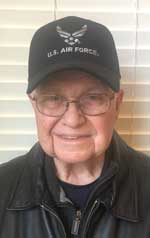 Mike Scruggs is the author of two books: The Un-Civil War: Shattering the Historical Myths; and Lessons from the Vietnam War: Truths the Media Never Told You, and over 600 articles on military history, national security, intelligent design, genealogical genetics, immigration, current political affairs, Islam, and the Middle East.