












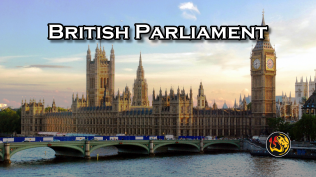
LONDON/JERUSALEM (Worthy News) – Britain announced a ban on imports from Israeli settlements in Judea and Samaria, commonly known as the West Bank, on Tuesday, September 8, prompting Israel to announce the closure of Britain’s Jerusalem consulate and its exclusion from a U.S.-led Gaza coordination mission.
The confrontation puts trade, diplomacy and security cooperation under fresh strain, with U.S. Ambassador to Israel Mike Huckabee warning that London’s decision could cost British companies.
Britain Targets Settlement Trade
Addressing Parliament, Foreign Secretary Ed Miliband said preserving a two-state solution remained the guiding principle of British policy. He distinguished his government’s dispute with Israel’s leadership from its relationship with the Israeli people.
Miliband opened by recalling the refuge Israel provided his grandmother after the Holocaust. He affirmed Israel’s right to exist and defend itself, condemned Hamas’s October 7 massacre, and announced sanctions against Hezbollah’s financing arm, Al-Qard Al-Hassan, alongside renewed economic sanctions on Iran.
He then turned to the E1 settlement project, warning that construction would sever connections between East Jerusalem and the West Bank and make a viable Palestinian state impossible. British government statement
Britain’s package includes an import ban, restrictions targeting services that facilitate settlement expansion, and tighter export licensing. The broader sanctions framework is expected to take effect within six to nine months. Miliband said Britain would continue trading with Israel within the Green Line and opposing the wider Boycott, Divestment and Sanctions movement.
He also accused violent settlers of forcibly displacing Palestinians with support from some members of Israel’s government—allegations Israel sharply rejected.
Israel Announces Countermeasures
Foreign Minister Gideon Sa’ar said he and Prime Minister Benjamin Netanyahu had agreed to close the British Consulate in Jerusalem and remove British representatives from the U.S.-backed Gaza coordination center in Kiryat Gat. Israel would also terminate the British team training Palestinian Authority security forces in Ramallah.
Sa’ar rejected Miliband’s accusations as false and argued that the sanctions would punish law-abiding Israelis and Palestinian workers whose livelihoods depend on settlement businesses.
The Foreign Ministry subsequently named 12 people for entry bans, including 11 British lawmakers and lawyer Fahad Ansari. Those listed included Jeremy Corbyn and Zarah Sultana. The ministry accused the group collectively of anti-Israel and antisemitic activity without providing individual explanations for each ban. Ansari disputed its description of him as British. The Times of Israel
Huckabee’s BBC Warning—and the Biblical Connection
Speaking to the BBC on Tuesday before Britain’s announcement, Huckabee predicted an American response, including possible action by individual states. He warned that restrictions on doing business in those states could create a “huge economic impact on British businesses.” His remarks were a warning, rather than an announcement of enacted American countermeasures.
Separately, during a September 5 visit to Turmus Ayya, Huckabee explained why he uses the names Judea and Samaria: they reflect the land’s Biblical history. The ambassador, who is also an ordained Baptist minister, has long linked his support for Israel to his Christian faith.
That same faith, he said, demands accountability for violence against Palestinians. Invoking Scripture’s prohibitions against stealing, killing, and coveting, he called for serious consequences for offenders. His defense of Jewish ties to the land came with a clear insistence that those ties do not excuse crimes against neighbors.