










- Ten Toes In: Why Trump Accounts Make Sense for North Carolina's Small Businesses
- Remnant Called -
- It’s Getting Late! It’s Now or Never
- Leadership - Desperately Needed!
- Islamic Expansion in Texas
- Former Moms for Liberty Chairs in South Carolina Address Massive Departure from Organization
- Greenville County Holding Public Meetings on 1% Transportation Sales Tax Referendum
- Same Job. Two Résumés. Graham and Norman Make Their Case for the US Senate
- Beyond the Monuments - Finding the Forgotten Grave of Dicey Langston
- The Myth of Voting for the Lesser of Two Evils
- AIPAC Lobbyists Grip on Congress
- Equipping the Persecuted: Weekend Terror Alert Helped Avert Wider Massacre as Slaughter of Christians Continues to Ravage Nigeria Unchecked by Government
- South Carolina Gas Tax Climbs From Near Bottom Nationally to 30th in 2026
- Thurmond and Murkowski Won as Write-Ins. Is This Year’s Senate Race Really the Same?
- Hunting Island's Lighthouse Was Built to Outsmart the Atlantic's Shifting Shoreline
Walter Williams
A More or Less Perfect Union
- Details
- By Walter Williams
"A More or Less Perfect Union" is a three-part series, produced by Free to Choose Network, that will air on various PBS stations across the nation starting in February. The documentary is a personal exploration of the U.S. Constitution by Justice Douglas Ginsburg, who served on the U.S. Court of Appeals D.C. Circuit and is now a senior justice on the court. Ginsburg explores the U.S. Constitution and features interviews with and gains the perspectives from constitutional experts of all political views -- liberal, conservative and libertarian. He examines the key issues of liberty in the U.S. both from a historical and contemporary perspective. Among those issues are freedom of the press and religion, slavery and civil rights, the Second Amendment, separation of powers and the number of ways that the Constitution's framers sought to limit the power of the federal government.
Economics Reality
- Details
- By Walter Williams
I have been teaching economics since 1967 -- 40 years of it at George Mason University in Fairfax, Virginia. During that interval, economic reality has not changed. Just as Galileo's law about the independent influence of gravity on falling objects has not changed, neither have the fundamental principles of economics. Economics is fun and simple. It's made complicated by some economics professors -- fortunately, not by my colleagues at George Mason University. Let's apply some simple tools of economics to reveal outright myths, lies and tricks.
Democracy and Tyranny
- Details
- By Walter Williams
During President Donald J. Trump's impeachment trial, we'll hear a lot of talk about our rules for governing. One frequent claim is that our nation is a democracy. If we've become a democracy, it would represent a deep betrayal of our founders, who saw democracy as another form of tyranny. In fact, the word democracy appears nowhere in our nation's two most fundamental documents, the Declaration of Independence and the U.S. Constitution. The founders laid the ground rules for a republic as written in the Constitution's Article IV, Section 4, which guarantees "to every State in this Union a Republican Form of Government."
Diversity and Inclusion Insanity
- Details
- By Walter Williams
It's nearly impossible to have even a short conversation with a college administrator, politician or chief executive without the words diversity and inclusion dropping from their lips. Diversity and inclusion appear to be the end-all and be-all of their existence. So, I thought I'd begin this discussion by first looking up the definition of diversity.
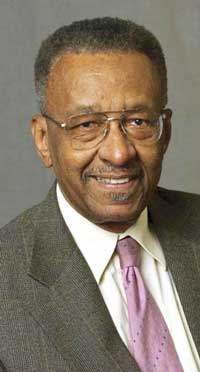 Walter E. Williams is a professor of economics at George Mason University. To find out more about Walter E. Williams and read features by other Creators Syndicate writers and cartoonists, visit the Creators Syndicate webpage at www.creators.com.
COPYRIGHT 2018 CREATORS.COM
Browse by the Top Tags ...