








War and Political Updates on Russia, Iran, Ukraine, Israel, and US
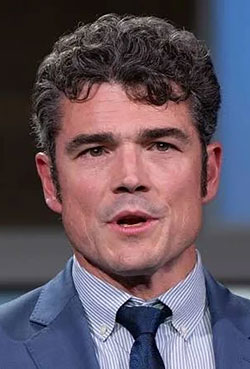
Protest by resignation
Propaganda Journalism
A March 27 Bloomberg News article featured this headline: Russians’ Trust in Putin Hits Wartime Low as Fatigue Grows
Here are the three main takeaways in the Bloomberg article:
“Trust in Russian President fell to its lowest since before the start of the invasion of Ukraine, due to a slowing economy and deepening war fatigue.”
“The share of people saying they trust in Putin slipped to 75% and his job performance stood at 70.1%, the weakest for both indicators since February 20, 2022.” [4 days before the Russian intrusion began.]
“A separate survey [independent Lavada Center] showed that 67% of those polled say the country should move toward peace negotiations, as public fatigue and economic pressures intensify amid the war’s fifth year.”
The title and major takeaways of the Bloomberg article seem extremely misleading considering that no other European leader has an approval rating anywhere near 75%. Moreover, Russia’s economic position is quite strong compared to its debt-ridden Western economic competitors.
The most recent Rasmussen Daily Approval Survey for Donald Trump on March 28 was only 44% approval and 55% disapproval. Statistica’s world leader approval surveys show that India’s Narenda Modi comes closest to Putin with 67%. Statistica has only 40% approval for Trump with 6% undecided and 54% disapproving. Emmanual Macron of France has an approval rating of only 16%. German Chancellor Friederick Merz is at 21% approval, and UK Prime Minister Keir Starmer 23%.
Canada’s Mark Carney is riding a wave of popularity standing up against Trump tariffs with 54% approval and 36% disapproval.
According to RBC-Ukraine, Putin’s trust level fell from 76.7% in 2022 to 75% in 2026. This is easily in the range of statistical error. Approval dropped from 72% to 70.1% in four years, again well within the range of statistical error.
The larger and far more well-known independent polling firm Levada Center had an 82 percent approval rating for Putin in February 2026. This poll is done from outside Russia and had over 1600 respondents in Russia. Putin’s approval rating has exceeded 80 percent for most of the last 4 years, rising from about 60-65% just before the war. You can see the record of Levada’s polling on Putin at https://www.levada.ru/en/ratings/
Recently, there has been more political, media, talk-show, and social website criticism of Putin in Russia. But Americans need to realize that most of this criticism has been of Putin’s moderation in pursuing war against what is now left of Ukraine. There is growing widespread sympathy for aggressively crushing the remainder of NATO-backed Ukrainian forces.
There are a number of reasons Putin has progressed on a relatively slow timetable. First of all, in early 2022, the Russians actually had a smaller army than Ukraine—the Ukrainian Army was larger than that of any European NATO power except Turkey—and the Russian Army was spread across the largest country in the world. Putin’s intrusion into Ukraine was made urgent by Ukrainian Army artillery bombardment of civilian areas of the predominantly Russian ethnic states of Donetsk and Lugansk. The larger Ukrainian Army was also massing for an invasion of Donetsk. Putin’s “invasion” was largely a bluff until the Russians could build up and train a larger army. Second, the Russians chose to fight a war of attrition against the Ukrainians rather than a rapid movement war. The attrition strategy wears down the manpower, weapons, and materials of its opponent and advances only when the opponent is so weak it cannot resist advancement. This slow attrition strategy results in lower casualties. Third, as the war became dominated by drones, large concentrations of troops became extremely dangerous—almost prohibitive. Fourth, and this was always very important to Putin, they considered that the Ukrainians were brother Orthodox Christian Slavs. Fifth, Putin also thought that the present anti-Russian and pro-war leaders of Germany, France, and the UK would soon be thrown out of office, making reasonable peace negotiations possible.
What most Americans and even a majority of the U.S. Congress do not realize or will not admit is that the Ukraine war has its origins in the U.S. and UK backed regime change of 2014. This U.S. State Department, CIA, and British MI6 backed coup replaced the elected president of Ukraine with an American-picked government that would use Ukraine to weaken and destroy Russia in an American-backed proxy war. The “Maidan Revolution” of 2014 may have seemed like a successful regime change at the time. However, in 2026, with Ukraine almost destroyed, its tragedy is becoming visibly obvious.
A June 2025 survey by Pew Research Center indicated 85 percent of Americans have an unfavorable opinion of Putin. However, they are poorly informed on both Putin and Russia. Putin has been the subject of a CIA demonization campaign intensifying in 2007—nearly 20 years. Hillary Clinton’s campaign against Trump escalated the demonization propaganda. The first thing the CIA does in a regime change campaign is to demonize targeted leaders. This technique reminds me of the orchestrated hatred of George Orwell’s 1949 novel, 1984. Following the Ukrainian Maidan Revolution, the U.S. backed government of Ukraine commenced an orchestrated hatred campaign, also using discriminatory legislation, against its 38% Russian ethnic minority with the objective of ethnic cleansing. That minority is a substantial majority in southern and eastern Ukraine—Donetsk, Lugansk, Crimea, Odessa, etc.
Iran War
The Iran regime change now looks like an oil-driven serious rupture in the global economy, and if we double down on gun-boat foreign policy—using bombs as negotiation—a high risk of a nuclear World War III.
Western media has been filled with articles forecasting grim economic prospects for Russia. This was doubtful in the first place. Russia’s debt to GDP ratio in less than 20%, while the U.S. is trying to manage a debt to GDP ratio close to 120%. The recent closing of Iran’s Hormuz Strait is benefiting Russia at the rate of $24 billion per month—$288 billion per year, and more if oil rates go higher. With Israeli and Iranian targeting of oil production and refining, the numbers will go higher and continue 3-5 years in the rebuilding process.
U.S. and Israeli bombing of Iran has also tightened the relationship between Iran, Russia, and China. This already includes sharp increases in Iranian offensive and defensive missile capabilities.
Viewing LCol (ret) Daniel Davis’s 50-minute You-Tube interview of Joe Kent, former Deputy Director of the National Intelligence and Director of the Counterterrorism Center, is essential to understanding the situation. Kent recently resigned in protest of U.S. policy. There is a major conflict between U.S. and Israeli policy agendas. This is not the only issue of the war, but it is extremely important.
Joe Kent: The Truth of the Iran War
Trump has been under pressure by the negotiation-by-bombing or Neocon imperialist factions of government and politics—Senator Lindsey Graham of South Carolina, Mike Pompeo, retired General Keith Kellogg, retired General Jack Keane of the defense industry funded Institute for the Study of War, Fox News, etc. to dominate or destroy Iran by massive force. This includes, of course, Israeli Prime Minister Benjamon Netanyahu and a dominant faction of the CIA.
The minority opposition within the Cabinet includes Vice President J.D. Vance and DNI Tulsi Gabbard. The Joint Chiefs of Staff have cautioned Trump on the high risks involved in attacking Iran.
Trump keeps backing the aggressive approach with:
“We’re the most powerful country in the history of the world.”
We may have overall the most military firepower in the world, but there are areas in which we have fallen behind Russia, China, and even Iran. Hypersonic missiles, conventional artillery, electronic countermeasures, defensive missiles, and drones are possible exceptions that could prove humiliating. Iran’s granite mountains and Persian Gulf coastline make it a natural fortress, granite being much harder to penetrate or destroy than concrete.
Christian Religious Controversy
The Iran War has recently led to controversy over Biblical End Time Prophesy interpretations. Dispensational interpretations, originating in England in the 1830s, tend to favor hardline total victory over Iran. Conservative Covenantal Protestants and traditional Roman Catholic and Orthodox interpretations tend to favor peaceful resolutions if possible. Some liberal Christians, skeptical of conservative Biblical interpretations and especially the Old Testament tend to favor peaceful resolutions but are attacking the very presence of Christian orthodoxy in the Armed Forces. This is much too complex to handle in a paragraph. Research Millenium views, Rapture views, John Nelson Darby Dispensationalism, and Scofield Bible notes. Evaluate with humility and charity.
Hormuz and Persian Gulf Strategies
I have no idea what Trump plans with 11,000 Marines and Airborne troops. It might be more for security than for attack. However, if it involves the Strait of Hormuz, it reminds knowledgeable old soldiers and historians of the British Gallipoli campaign in 1915-1916 during World War I.
Gallipoli Analogy: Dardanelles Strait 1915 and Hormuz Strait 2026
The narrow 38-mile Dardanelles Strait, also called the Gallipoli Strait, connecting the Mediterranean and Aegean Seas eventually with the Black Sea, was thought to be key to defeating the Ottoman Turks. Winston Chruchill, Lord of the Admiralty at the time, was highly confident that a magnificent victory could be won. There were furious bombardments by British battleships and courageous but poorly planned amphibious landings by British and Allied Entente troops. In the end, 7 British battleships were lost, and there were 57,000 Allied dead and 57,000 Turkish dead. It was essentially a draw but generally considered a humiliating Allied failure and Turkish victory. The dead included 8,700 Australian and 2,700 New Zealand soldiers. From this courageous but ultimately futile campaign, the Australian song, Waltzing Matilda, written in 1898, became an unofficial national anthem. Research Waltzing Matilda translation. The most popular and moving Australian folksong commemorating the costly Gallipoli Campaign is:
“And the Band Played Waltzing Matilda.”
The Band Played Waltzing Matilda - The Dubliners featuring Ronnie Drew
Peace Hopes
On a more hopeful note, President Trump recently asked Vice President J. D Vance to approach Israeli Prime Minister Benjamin Netanahyu to reconcile Israeli objectives to a peaceful solution. The Israeli Iron Dome is essentially too low on defensive missiles to prevent at will penetration by powerful Iranian missiles, and the U.S. is also in short supply and unable to supply timely replacements. According to British attorney and intelligence podcaster Alexander Mercouris, the initial conversation between Vance and Netanyahu was rough-edged. However, it is an indication that President Trump would like to de-escalate and resolve a costly and extremely dangerous situation.
If you have an hour and 26 minutes of patience, this Saturday afternoon Alexander Mercouris broadcast has essential and deep insight into the situation.
Houthis Join War; Strike Israel; Medvedev Warns Big Nuclear Risks; Massive Russian Donbass Buildup
“Without Truth, there is no freedom.”—a paraphrase of Pope Saint John Paul II, based on the words of Jesus in John 8:32. “The Truth shall make you free.”
“Blessed are the peacemakers, for they shall be called the sons of God.”
—Matthew 5:9.
 Mike Scruggs is the author of two books: The Un-Civil War: Shattering the Historical Myths; and Lessons from the Vietnam War: Truths the Media Never Told You, and over 600 articles on military history, national security, intelligent design, genealogical genetics, immigration, current political affairs, Islam, and the Middle East.