







- Ten Toes In: Why Trump Accounts Make Sense for North Carolina's Small Businesses
- Remnant Called -
- Former Moms for Liberty Chairs in South Carolina Address Massive Departure from Organization
- Same Job. Two Résumés. Graham and Norman Make Their Case for the US Senate
- Greenville County Holding Public Meetings on 1% Transportation Sales Tax Referendum
- Beyond the Monuments - Finding the Forgotten Grave of Dicey Langston
- The Myth of Voting for the Lesser of Two Evils
- AIPAC Lobbyists Grip on Congress
- Hunting Island's Lighthouse Was Built to Outsmart the Atlantic's Shifting Shoreline
- South Carolina Gas Tax Climbs From Near Bottom Nationally to 30th in 2026
- Equipping the Persecuted: Weekend Terror Alert Helped Avert Wider Massacre as Slaughter of Christians Continues to Ravage Nigeria Unchecked by Government
- Thurmond and Murkowski Won as Write-Ins. Is This Year’s Senate Race Really the Same?
- Briefing Notes from the Ukraine and Persian Gulf Wars
- Crime Stoppers Luncheon Remembers Greenville’s Fallen While Honoring Those Who Continue to Serve
- Trump Administration Announces $167 Million to Build Rural Care Sites, Upgrade Health Technology, and Strengthen Prevention Across South Carolina
The Last Days of Camp Douglas
- Details
- By Mike Scruggs
- Category: Mike Scruggs' Column
Confederate POWs Marched Out Singing “Dixie”
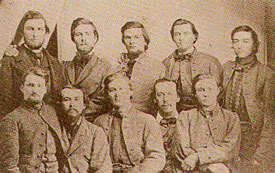
Captain Tom Quirk and nine Morgan scouts.
Official records of POW deaths during the Civil War on both sides indicated that about 49,000 Union and Confederate soldiers died in 150 Prisoner of War camps. The major statistics are broken down in last week’s article, Union and Confederate POW camps in the Civil War.
Author Lonnie R Speer, however, in his 1997 book, Portals to Hell: Military Prisons of the Civil War; covering statistics from 96 Union and 117 Confederate facilities which housed POWs during the war, found 30,218 Confederate deaths and 25,796 Union deaths, bringing the total to just over 56,000. According to Speer, 15.5 percent of the Confederates prisoners died, a ratio 29 percent higher than the slightly more than 12 percent of Union prisoners that died. Speer’s statistics may even be conservative. Speer has only the 4,454 official deaths for Camp Douglas, but historical on-site estimates from Confederate prisoners in the last days of Camp Douglas and modern counts indicate there are at least 5,600 Confederate graves at or near Camp Douglas. In addition, about 400 bodies of Confederate soldiers were recorded as shipped to their families at home. George Levy in his 1999 book, To Die in Chicago; Confederate Prisoners at Camp Douglas 1862-1865, has a whole chapter, “Lost in Chicago,” on the missing Confederate dead.
Union and Confederate POW Camps in the Civil War
- Details
- By Mike Scruggs
- Category: Mike Scruggs' Column
Uncovering the Reality of American History
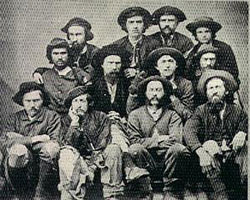
Some Morgan Cavalry POWs at Camp Douglas - Probably 1863
During the American Civil War from 1861 to 1865, 270,000 Union soldiers were held in Confederate POW camps. Of these, 22,576 died, about 8.4 percent of the total. More than half of these, 12,919 died in just one of three major Confederate POW camps, Andersonville, about 59 miles east of Columbus, Georgia. This was portrayed as a war crime by the Northern press and many Northern politicians, but the causes of these deaths were neither mistreatment nor deliberate negligence. However, its commandant, Swiss immigrant, Captain Henry Wirz, was hanged after the war on November 10, 1865. According to a University of Missouri Law School study, he was convicted on the basis of bribed false testimony and rules of evidence, testimony, and fairness that were blatantly and shamefully biased and distorted. His trial was probably one of the greatest miscarriages of justice in American history.

Slavery in Biblical Perspective
- Details
- By Mike Scruggs
- Category: Mike Scruggs' Column
The Dangers of Uninformed Virtue-signaling
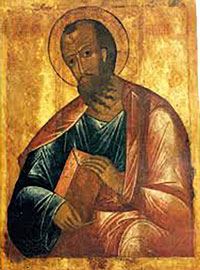
A couple years ago, researching an article, I ran across a Christian website where the author harshly condemned slavery as the most grievous evil imaginable and said that slavery was condemned throughout the Bible. This has been a popular American view since the end of the Civil War, but it is astonishingly misinformed and blatantly unbiblical considering numerous contradictory passages and verses in both the Old and New Testament.
The purpose of this article is not Civil War history, but it is necessary to know how our ideas about slavery have been influenced by the war and distorted by post-war propaganda. The most common American narrative of the Civil War is that it was only about slavery, but while that view has become almost obligatory in an era of woke political correctness, it is considerably misinformed. Campaigning for Abraham Lincoln on September 27, 1860, at a New York City auditorium, Thaddaeus Stevens, who became Chairman of the powerful U.S. House Ways and Means Committee from March 1861 to March 1865, told a huge audience that the two most important issues in the coming November election were preventing slavery from spreading to new states and raising the Tariff [by about 67%], but of the two, passing the Morrill Tariff was the most important. Neither Lincoln nor the 1860 Republican Platform called for abolishing slavery.

The American Republic and the American Empire
- Details
- By Mike Scruggs
- Category: Mike Scruggs' Column
The Empire Advances by Marginalizing the Truth
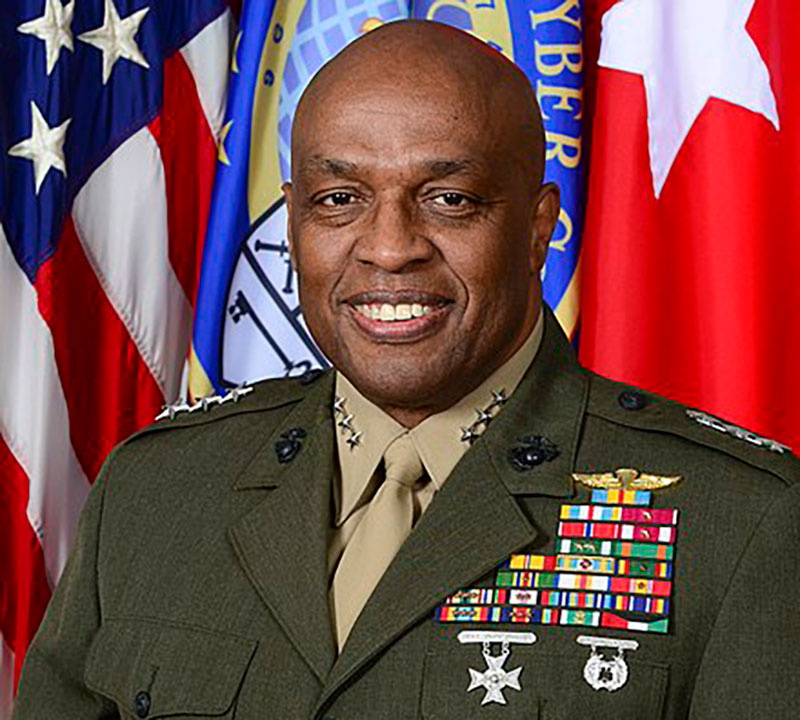
Lt. Gen. Vincent Stewart (1958-2023), Semper Fi!
The Constitutional American Republic is still strong, and many still stand strong in their faith, but a domestic secular drive to become an American Empire has become politically, economically, and culturally dominant and is straining every nerve to maintain its dominance. As usual, power tends to corrupt and creates false narratives to sustain its power. The American Empire is advancing by marginalizing fundamental reality and truth. This pertains to many aspects of American life and culture but also extends to a morally bent foreign policy.

The Reign of Anti-Christian Terror in the Soviet Union
- Details
- By Mike Scruggs
- Category: Mike Scruggs' Column
The Amazing Survival of Russian Christianity
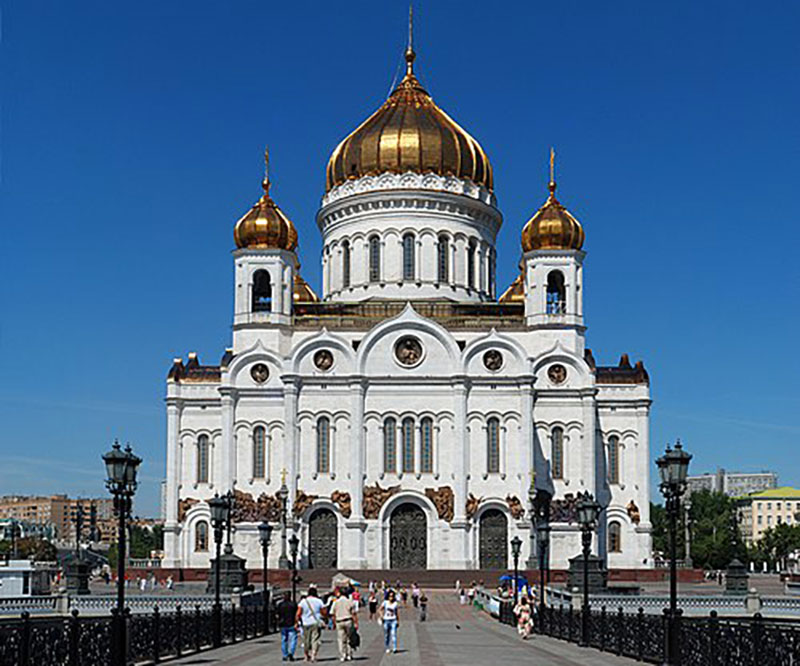
Cathedral of Christ the Savior in Moscow was Consecrated in 2000.
As early as 867 AD, there were probably Christian missions and churches in the Kievan-Rus State, the predecessor of the Russian Empire. We know that the Kievan-Rus had considerable contact with Byzantine Christians in Constantinople. Vladimir the Great (958-1015) was raised as a pagan, but his grandmother, Olga, was a Christian and had considerable influence on her grandson. After much study and negotiation, Vladimir became a Christian. Many of his subjects were already enthusiastic Christians, when he became the Ruling Prince of the Kievan-Rus in 980 and called all his subjects to baptism in the Dnieper River. This 980 date is generally considered the formal beginning of Christianity in Russia.

 Mike Scruggs is the author of two books: The Un-Civil War: Shattering the Historical Myths; and Lessons from the Vietnam War: Truths the Media Never Told You, and over 600 articles on military history, national security, intelligent design, genealogical genetics, immigration, current political affairs, Islam, and the Middle East.
He holds a BS degree from the University of Georgia and an MBA from Stanford University. A former USAF intelligence officer and Air Commando, he is a decorated combat veteran of the Vietnam War, and holds the Distinguished Flying Cross, Purple Heart, and Air Medal. He is a retired First Vice President for a major national financial services firm and former Chairman of the Board of a classical Christian school.
Click the website below to order books. http://www.universalmediainc.org/books.htm.
Browse by the Top Tags ...