












A congressman and an agriculture commissioner candidate focused on practical government, accountability, and the everyday impact of public policy.
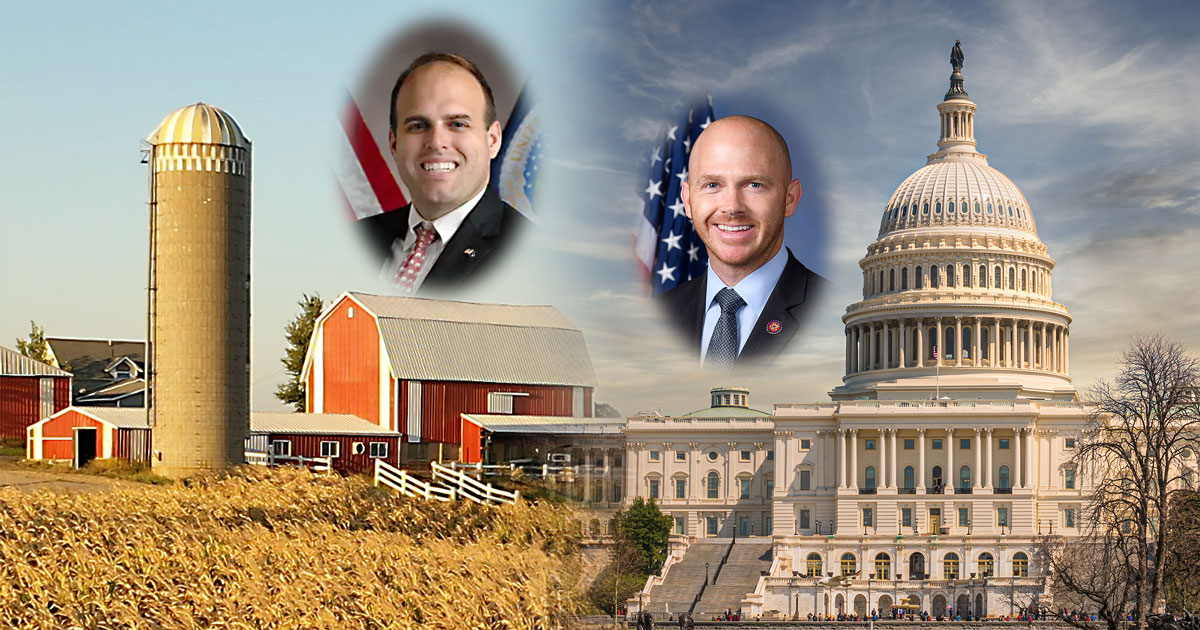
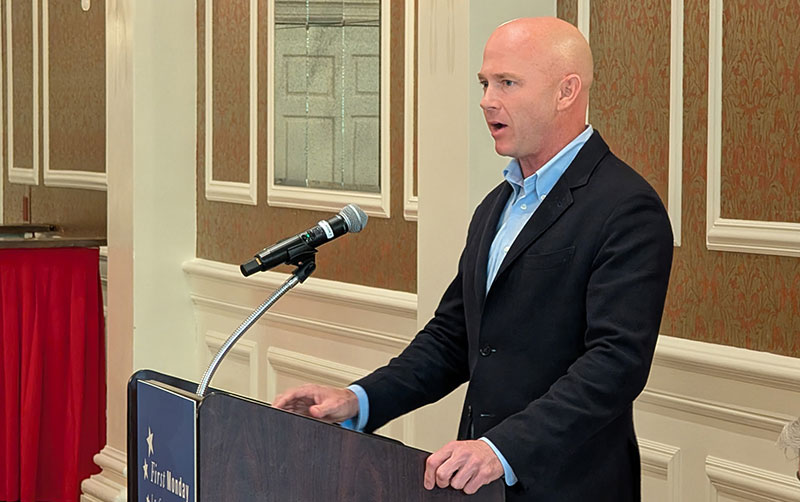
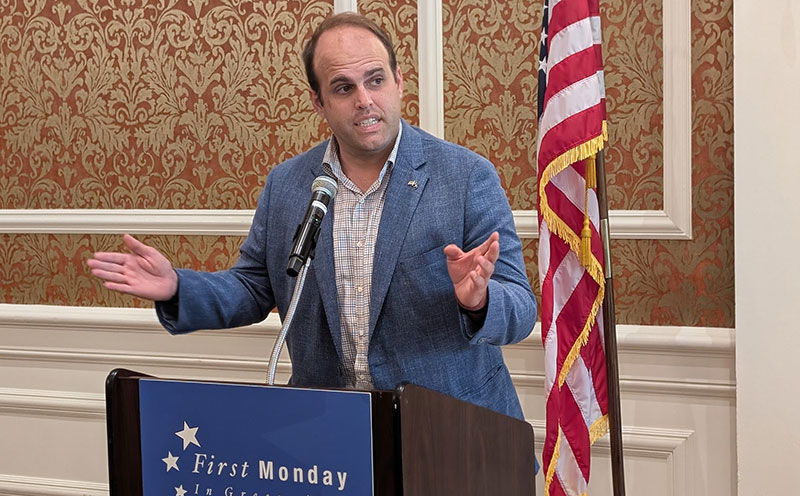
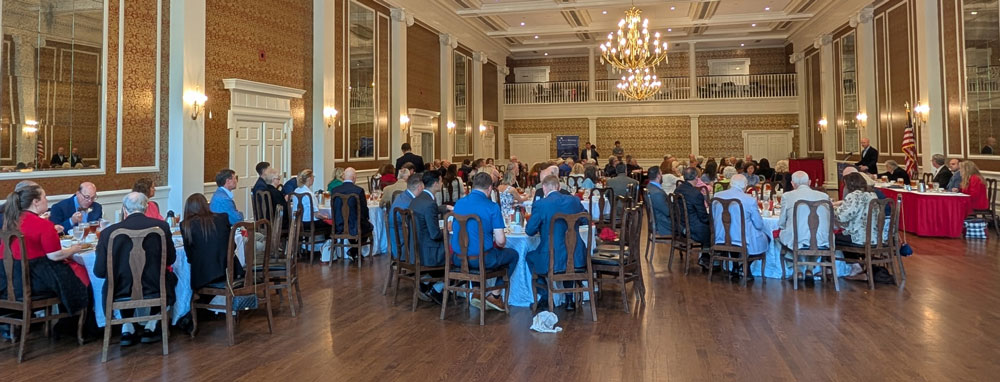
First Monday in Greenville brought together two speakers from different levels of government at its June 1 luncheon: U.S. Rep. William Timmons, who is seeking reelection in South Carolina’s 4th Congressional District, and Cody Simpson, a Republican candidate for South Carolina Commissioner of Agriculture. The monthly luncheon meets at the Poinsett Club in downtown Greenville and gives members an opportunity to hear directly from elected officials, candidates, business leaders, and party leaders.
The Republican Business Forum is chaired by Deb Sofield, with Paul Wickensimer handling logistics and Heather Currie overseeing membership. Their work keeps the luncheon moving in a conversational format where prepared remarks are followed by questions from the audience. Simpson recognized that role at the beginning of his remarks, describing the organization as a place where people from different walks of life can learn from elected officials and candidates while getting to know them on a more personal level.
The two speakers addressed different offices and different responsibilities. Yet their messages repeatedly met at a common point. Government should protect the public and remain accountable, but it should also be practical enough to understand the people, businesses, and communities affected by its decisions.
Targeted Oversight in Washington
Timmons opened with a broad congressional update that touched on President Donald Trump’s administration, international conflicts, energy prices, federal spending, and the approaching midterm elections. Some of his clearest examples, however, involved the everyday burden that government rules can place on institutions already trying to comply with the law.
He highlighted the Supervisory Modifications for Appropriate Risk-Based Testing Act, known as the SMART Act, which he introduced in Congress. The U.S. House unanimously passed the measure on May 12. The legislation would create a more streamlined examination process for qualifying community banks and credit unions with $6 billion or less in assets, while preserving the authority of regulators to conduct additional reviews when warranted.
Timmons explained the principle with a familiar comparison.
“A restaurant with an A grade doesn’t get inspected every week,” Timmons said. “A restaurant with an F grade gets inspected every week.”
The comparison was simple. Responsible institutions should not face the same level of repeated scrutiny as institutions with continuing problems. Timmons argued that government can protect consumers while also recognizing a record of compliance.
Timmons also discussed the Timely and Accurate Benefits Act, or TABS Act, which he said he had worked on for about two and a half years. The proposal would modernize eligibility verification for federally funded benefit programs. Timmons told the audience that the measure had remained stalled until he raised it during a dinner conversation with Treasury Secretary Scott Bessent. According to Timmons, Bessent later called the House speaker and asked that the bill receive a vote. The measure later advanced unanimously through the House Committee on Oversight and Government Reform, giving Timmons another example of how relationships in Washington can help move practical reforms through a complicated legislative process.
The two proposals address different problems, but the principle is similar. Government should use accurate information, modern systems, and focused oversight instead of imposing unnecessary burdens or relying on outdated processes.
From Restaurant Grades to Gas Pumps
Timmons’ restaurant analogy created a natural transition to Simpson’s remarks. The South Carolina Department of Agriculture now has responsibilities that reach far beyond farms and fields.
“If you eat or drink, this department regulates it,” Simpson told the audience.
He pointed to the inspection grade posted at the entrance of a restaurant, the gasoline pump at a neighborhood convenience store, and the produce scale inside a grocery store. Those examples helped explain why the Agriculture Commissioner’s office affects residents who may never have considered themselves closely connected to agriculture.
The department’s responsibilities support Simpson’s point. South Carolina Department of Agriculture inspectors check gasoline dispensers, commercial scales, fuel oil meters, and packaged food quantities. The agency reports that more than 64,000 gas pumps and more than 20,000 commercial scales are inspected annually.
The department also inspects approximately 24,000 retail food establishments statewide, including restaurants, grocery stores, food trucks, schools, and other institutions. Inspection schedules are based on the type of food preparation and an establishment’s compliance history.
That means the restaurant comparison was more than a convenient illustration for a federal banking bill. It also described how state government attempts to balance public protection with practical enforcement.
The Grocery Store Does Not Grow the Food
Simpson made the issue personal by recalling his teenage years working at a Piggly Wiggly while also completing chores on his family farm. He remembered when the Certified South Carolina brand was new and described the pride he felt placing the signs in the store.
His experience behind the grocery counter reinforced a larger point. Food does not simply appear on a store shelf. Behind every package of produce, gallon of milk, and cut of meat is a longer chain involving farmers, processors, distributors, retailers, and regulators.
“As much as I love Piggly Wiggly, we all know that the food doesn’t come from the grocery stores,” Simpson said. “It comes from our farmers.”
Simpson connected that supply chain to the continuing loss of farmland. He told the audience that development pressure and urbanization are steadily reducing the amount of land available for agriculture. Every acre lost, he argued, increases dependence on food produced somewhere else.
“Food security is a matter of national security,” Simpson said.
Coffee Cups and Supply Chains
Timmons offered another example of how policy decisions made in Washington can reach directly into the Upstate economy. As chairman of the Congressional Coffee Caucus, he said he worked with Keurig Dr Pepper to seek an exemption for coffee from the administration’s tariffs. Timmons told the audience that the company’s Spartanburg facility produces approximately 4.5 billion K-Cup pods each year, making the issue particularly relevant to the Upstate.
Timmons said he raised the issue directly with Treasury Secretary Scott Bessent.
“We don’t make enough coffee,” Timmons recalled telling Bessent. “We will never make enough coffee. It’s just not possible. So why are we going to put a tariff on it if we cannot ever possibly make enough?”
“He listened,” Timmons said. “That’s cool. So we no longer have tariffs on coffee.”
The anecdote gave Timmons another example of how relationships in Washington can produce practical results at home. His larger point was that trade policy should account for the realities of the supply chain. A national tariff decision can reach a Spartanburg manufacturing plant, a grocery store shelf, and a household budget.
Simpson expanded that discussion from imported coffee to South Carolina farmland. He argued that the state should consider stronger protections against agricultural land purchases involving countries considered foreign adversaries, particularly near military installations. He also called for the preservation of grazing land and productive farmland as development continues across the state.
His remarks connected agriculture to more than rural tradition. Farmland affects food availability, economic independence, property rights, national security, and the ability of the next generation to remain in agriculture.
“So I choose the next generation,” Simpson said. “I’m running to protect our farms, our families, and our future.”
Modernizing Government Without Losing Accountability
Simpson said the South Carolina Department of Agriculture should become more accessible and more responsive to farmers. He called for modernization of paper-heavy processes and greater attention to the way state resources reach producers.
He linked that goal to his previous work with the USDA Farm Service Agency. Simpson recently completed service as the South Carolina State Executive Director of the USDA Farm Service Agency after an appointment by President Trump. Before that, he served as an agriculture advisor and chief executive assistant to Gov. Henry McMaster.
Simpson argued that farmers need an Agriculture Department that understands both the field and the office. His message echoed Timmons’ earlier remarks about bank examinations and benefits verification. The purpose of reform, in both cases, is not to eliminate accountability. It is to make government more accurate, efficient, and useful.
Relationships Still Matter
Timmons also emphasized the value of constituent services. He shared the story of a Spartanburg man who faced imprisonment after inadvertently crossing into Mexico with firearms in his vehicle. Timmons said relationships with federal officials helped move the case toward a resolution.
He then described the case of a 96-year-old Korean War veteran who was close to eviction while waiting for VA benefits. Timmons credited his district staff with helping the veteran receive assistance before he lost his housing.
The stories reinforced a practical lesson. Government can seem distant until a family needs someone who understands the system, knows which office to contact, and is willing to follow through.
Simpson made a similar point when Sofield asked what distinguished his experience from the other candidates in the commissioner of agriculture race.
“I’m the only one that has the relationships from the farmhouse to the Statehouse to the White House,” Simpson said.
He argued that his farming background, state government experience, and federal service could help bring resources back to South Carolina producers while keeping the department attentive to the people it serves.
Audience Questions Bring the Discussion Home
The audience question period moved both speakers from prepared remarks into more direct answers.
Timmons was asked whether another term in Congress would be his last. He said it would be.
“I do not believe that we should have career politicians,” Timmons said. “And I’ve always supported term limits, but unlike many people who support term limits, I’m willing to term limit myself.”
When asked about the national debt, Timmons called it the nation’s largest national security threat. He said long-term progress would require economic growth, slower growth in government spending, and bipartisan cooperation.
Simpson was asked whether he would seek input from the other candidates after the primary. He said he would, noting that the candidates remain part of the same agricultural community regardless of the election result.
“Communicate, collaborate, cooperate,” Simpson said.
That answer fit the larger tone of the luncheon. Timmons spoke from Washington about federal law, regulatory burdens, spending, and constituent services. Simpson spoke from the farm and the campaign trail about food safety, fuel pumps, grocery stores, farmland, and the future of rural communities.
The two speeches came together around a practical question. Can government protect the public, preserve accountability, and still remain close enough to understand the people it serves?
At First Monday, the answer from both speakers was that government works best when it remembers the difference between oversight that protects the public and bureaucracy that gets in the way.