







- Ten Toes In: Why Trump Accounts Make Sense for North Carolina's Small Businesses
- Remnant Called -
- Former Moms for Liberty Chairs in South Carolina Address Massive Departure from Organization
- Same Job. Two Résumés. Graham and Norman Make Their Case for the US Senate
- Greenville County Holding Public Meetings on 1% Transportation Sales Tax Referendum
- Beyond the Monuments - Finding the Forgotten Grave of Dicey Langston
- The Myth of Voting for the Lesser of Two Evils
- AIPAC Lobbyists Grip on Congress
- Hunting Island's Lighthouse Was Built to Outsmart the Atlantic's Shifting Shoreline
- South Carolina Gas Tax Climbs From Near Bottom Nationally to 30th in 2026
- Equipping the Persecuted: Weekend Terror Alert Helped Avert Wider Massacre as Slaughter of Christians Continues to Ravage Nigeria Unchecked by Government
- Thurmond and Murkowski Won as Write-Ins. Is This Year’s Senate Race Really the Same?
- Briefing Notes from the Ukraine and Persian Gulf Wars
- Crime Stoppers Luncheon Remembers Greenville’s Fallen While Honoring Those Who Continue to Serve
- Trump Administration Announces $167 Million to Build Rural Care Sites, Upgrade Health Technology, and Strengthen Prevention Across South Carolina
Amnesty’s Catastrophic Multiplier Effect
- Details
- By Mike Scruggs
- Category: Mike Scruggs' Column
The Road to One Party Tyrannical Rule and National Destruction
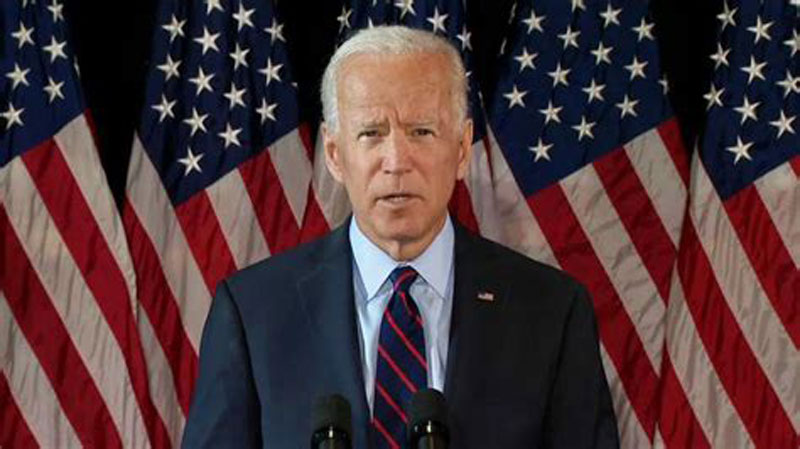
President Joe Biden, urged on by the radical leftist leadership of the Democrat Party in both Houses of Congress, a mainstream media subservient to leftist Democrat ideology and power, and globalist corporate elites wielding Orwellian oppressive power over American freedom of speech, plans to give 11 million illegal immigrants amnesty. Just as in the disastrous 1986 amnesty, the number of illegal immigrants now in the county is considerably and probably purposefully underestimated. According to FAIR (Federation for American Immigration Reform), there are at least 14.5 million illegal immigrants now in the United States, but some estimates range as high as 22 to 40 million of a U.S. total population of over 331 million. Of course, millions of additional illegal immigrants will soon be arriving in anticipation of an amnesty.

Georgia Elections and America’s Future
- Details
- By Mike Scruggs
- Category: Mike Scruggs' Column
An Instructive Historical Review of Georgia Politics
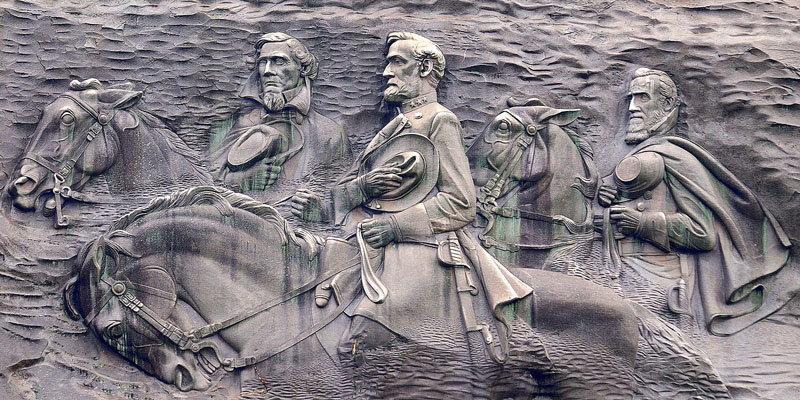
In 1944, Georgia gave its 12 Electoral College votes to Democrat Franklin D. Roosevelt, who had won 81.7 percent of Georgia’s vote. Roosevelt had carried Georgia with 91.6 percent against Republican incumbent Herbert Hoover in 1932 and carried the 1936 election with 87.1 percent. Although Roosevelt was liberal in many of his policies, Southern conservatives felt comfortable with him. He was a far cry from the radical leftist Democrats of 2020. Like other Southern States, Georgia was conservative socially and favored a blend of economic populism and traditional economic conservatism. Georgia was a Confederate State and had suffered greatly during the Civil War in 1861-1865 and even more during Reconstruction 1865-1877.

America’s Future under Siege
- Details
- By Mike Scruggs
- Category: Mike Scruggs' Column
Where Are We Going?
The Election of November 3, 2020 is at this date still not settled. It is obvious to those who will hear the evidence and can easily connect the dots that there was massive organized Democratic Party vote fraud in at least six states—Arizona, Georgia, Michigan, Nevada, Pennsylvania, and Wisconsin. The fraudulent results of those six states tipped the vote balance from Trump-Pence to Biden-Harris. This orchestrated fraud included illegal rule changes, illegal official actions, illegal voting, dishonest counting, bullying, and computer manipulation of voting machines. This is documented by over 1,000 sworn affidavits, appalling mathematical impossibilities, and a growing number of forensic analyses on the voting machines of Dominion Voting Systems and related companies.

Covid19 Reality versus Public Policy
- Details
- By Mike Scruggs
- Category: Mike Scruggs' Column
Political Agendas Are Distorting Public Perception and Policy
The Democrats made Covid19 one of the primary issues of the 2020 Election campaign. If you get your news mainly from ABC, CBS, NBC, CNN, MSNBC, NPR, the New York Times, the Washington Post, Atlantic magazine or their ilk, you may have a distorted perception of who gets Covid19 and how dangerous it is.

Horrifying Update on Vote Fraud 2020
- Details
- By Mike Scruggs
- Category: Mike Scruggs' Column
Will Establishment Media Collusion Crush the Truth?
 Last week, December 7, I published an article entitled, Vote Fraud and the Future of the American Republic—When Liberty in Under Attack. My conclusion was that there is unequivocally strong evidence that vote fraud and especially unlawful vote counting gave the margin of victory to Democrat Joe Biden in six swing states—Arizona, Georgia, Pennsylvania, Michigan, Nevada, and Wisconsin. In a fair election, Trump would have won all these states handily and have secured a substantial margin of victory in the Electoral College. This fraudulent victory for Biden has enormous harmful consequences for the future of the American Republic, freedom, national security, and a sound economy. Today, I reviewed the data and testimony from several state legislatures and other reports. My conclusions stand. In fact, the evidence is not just overwhelming; it is horrifying. We are on the brink of an unlawful coup to take over the Presidency by vote fraud, unlawful counting, and sweeping dishonesty. Yet the courts, including the U.S. Supreme Court, seem so oblivious to the facts and danger that they would stand by refusing even to hear the several substantive cases despite the great and almost inevitable nation-destroying chaos and peril that their refusal to hear and intervene portends.

 Mike Scruggs is the author of two books: The Un-Civil War: Shattering the Historical Myths; and Lessons from the Vietnam War: Truths the Media Never Told You, and over 600 articles on military history, national security, intelligent design, genealogical genetics, immigration, current political affairs, Islam, and the Middle East.
He holds a BS degree from the University of Georgia and an MBA from Stanford University. A former USAF intelligence officer and Air Commando, he is a decorated combat veteran of the Vietnam War, and holds the Distinguished Flying Cross, Purple Heart, and Air Medal. He is a retired First Vice President for a major national financial services firm and former Chairman of the Board of a classical Christian school.
Click the website below to order books. http://www.universalmediainc.org/books.htm.
Browse by the Top Tags ...