












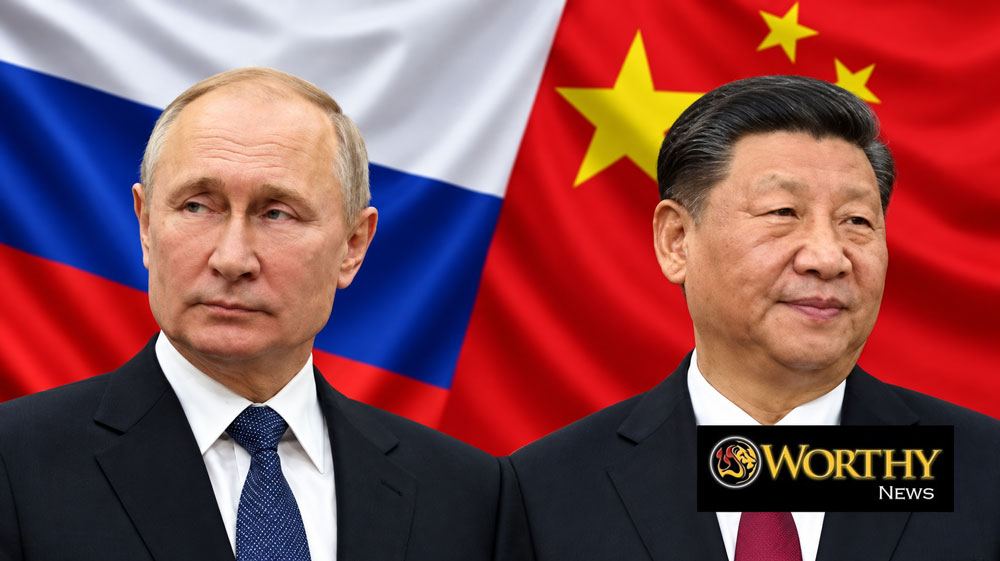
 (Worthy News) – Russian President Vladimir Putin has proposed a three-way summit with President Donald Trump and Chinese President Xi Jinping to negotiate an end to the four-year war in Ukraine, potentially placing the country’s future in the hands of three global powers while excluding Ukrainian President Volodymyr Zelensky from the discussions.
According to The Wall Street Journal, Putin raised the proposal during an October 9 telephone conversation with Trump, seeking to capitalize on improving relations between Washington and Moscow. The Kremlin has suggested holding the meeting alongside the Asia-Pacific Economic Cooperation summit in Shenzhen, China, on November 18–19.
Kremlin spokesman Dmitry Peskov acknowledged discussions surrounding a possible meeting but emphasized that no concrete arrangements or agenda had been established. Secretary of State Marco Rubio also confirmed that talks about a potential summit had occurred, although Trump has not formally agreed to participate.
Social media may not always show you what matters. Get Worthy News directly in your inbox.
The proposal comes amid a significant shift in Washington’s approach toward Moscow. Trump recently approved an arrangement allowing purchases of Russian diesel fuel and suspended implementation of certain sanctions, moves intended partly to ease energy prices as the United States approaches November’s midterm elections.
Meanwhile, Trump has intensified criticism of Zelensky, accusing the Ukrainian leader of undermining peace efforts through continued attacks on Russian oil infrastructure. The president has defended his diplomatic approach, arguing that keeping Moscow engaged in negotiations offers the best opportunity to end the fighting.
A New Yalta Conference?
The proposed gathering carries considerable historical significance. According to the Journal, Putin envisions a summit resembling the 1945 Yalta Conference, when American, British, and Soviet leaders negotiated arrangements that helped shape postwar Europe.
Such a meeting would elevate Russia and China alongside the United States as central architects of a potential settlement, while leaving Ukraine and European governments outside the initial negotiations.
Ukrainian Foreign Minister Andrii Sybiha rejected the prospect of negotiations conducted without Kyiv, warning that excluding Ukraine would embolden Moscow to continue its military campaign.
The proposal could also strengthen Beijing’s international influence by positioning Xi as a mediator in one of Europe’s most consequential conflicts since World War II. However, China’s leadership must balance its strategic partnership with Russia against its substantial economic relationships with European nations.
For Trump, the summit could represent a major diplomatic breakthrough in his longstanding effort to end the war. Yet the central question remains whether an agreement negotiated by the world’s leading powers could produce lasting peace without Ukraine’s direct participation.
The emerging diplomatic maneuver also raises broader questions about a changing international order, particularly whether powerful nations are moving toward arrangements that divide geopolitical influence into competing spheres. For now, the summit remains a proposal, and its potential consequences for Ukraine, Europe, and Taiwan remain uncertain.