








Economic, Energy, Religious, and Military Factors in the Iran War
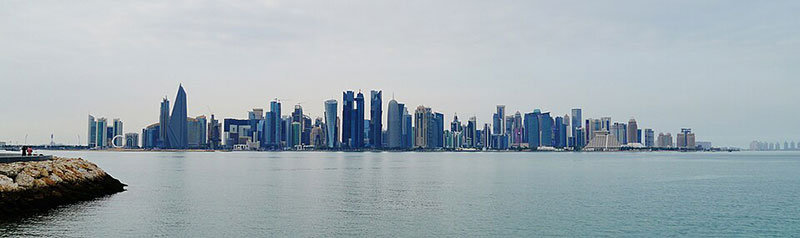
Part 2 – The United Arab Emirates (UAE), Bahrain, and Oman
United Arab Emirates (UAE)
The United Arab Emirates is a country on the southwestern coast of the Persian Gulf near the southeastern end of the Arabian Peninsula. It is bordered on its west by Saudi Arabia and on its southeast by Oman. The UAE consists of seven Emirates and is sometimes referred to as “The Emirates.” These are Abu Dhabi, Dubai, Sharjah, Ajman, Umm Al Quwain, Ras Al Khaimah, and Fujairah. Each is ruled by a hereditary male monarch (Emir or Sheikh). These are united into a Federation. The seven Emirates have complex borders, because several have exclaves in other Emirates. Each Emirate maintains its sovereignty, but functions under the Federal UAE constitution and government. The UAE is one of the most important American allies on the Persian Gulf.
The ruling Federal Supreme Council is made of the seven ruling Sheikhs of each Emirate. The Sheikh of Abu Dhabi is usually elected President, and the Sheikh of Dubai is usually elected Prime Minister and also serves as ranking Vice President. The Prime Minister appoints the 22 members of the of the advisory Council of Ministers. The lower legislative body is the Federal National Council of 40 members elected every four years. By Constitution, 50% of these must be women. The electorate is selective, consisting of only about 33% of the native Arab Emirate population hand-picked by each Emirate Sheikh. The current President is Mohamed bin Zayed Al Nayan, and the current Prime Minister and ranking Vice President is Mohammed bin Rashid Al Maktoum. Sheikh leadership at the Emirate level tends to be traditional and consultative.
The estimated population of the UAE in May 2026 is just over 11.6 million. Only about 12%, 1.4 million of these, are native Emirate Arabs. The UAE has experienced extremely high growth by immigration since 1970, when population was only 287,000. Immigrants from South Asia now make up 59% of the population. The largest proportion of these, representing 32% of the population, are Indian. Other South Asian immigrant populations are Bangladeshi, nearly 10%; and Pakistani, over 9%. About 10% are Egyptian and over 6%, Filipino. Moreover, European expatriates make up 8-12% of the UAE’s population. More than 240,000 are British and 50,000 are American. Financial, technology, engineering, managerial, and medical salaries are high, and there is no income tax. UAE government income comes oil and natural gas revenues and from a low 5% Value-added sales tax. Arabic is the official language, but English is common. The Emirates, once called the Trucial States, were a British protectorate from 1820-1892, and were given full independence in 1971.
About 75% of the UAE native and immigrant population is Muslim, of which 63% is Sunni and about 7% Shia, and 4% other Muslims. Surprisingly, 13% of the population is Christian, 6% is Hindu, 3% is Buddhist, and 3% agnostic or other.. However, the official UAE religion is Sunni Islam governed by Islamic Law (Sharia).
The GDP-PPP for the UAE is just over $1.0 trillion, 35th in the world, and per capita $87,774, 13th in the world. The UAE is the 114th largest country in the world, comparable in size to South Carolina or Austria.
Despite its relatively small size, the UAE’s enormous relative wealth is due to its huge proven oil reserves. At 113,000 million barrels of oil, it ranks sixth in the world. In actual production, it ranks eighth with 4.1 million barrels per day. It also has one of the lowest extraction costs at $12.30 per barrel. Low production costs are typical of the Persian Gulf. By comparison, the U.S. cost per barrel averages about $36.20, and U.S. shale oil ranges from $35 to $70 per barrel.
The UAE economy, however, is one of the most diversified in the Middle East, with oil and natural gas contributing only 26% of its GDP. Approximately 36% of government income comes from oil and natural gas. Banking, finance, transportation, telecommunications, and tourism have become major sectors of the economy. The UAE is often cited as one of best and easiest countries in which to do business. It attracts investment and wealthy people seeking tax relief. About 80% of native Emirates are employed in government or government related functions.
The UAE’s five largest cities are Dubai with 3.6 million people; Abu Dhabi, the capital with 1.8 million people; Sharjah with 1.4 million people; Al Ain, with 847,000; and Ajman with 490,000. Dubai has the highest airport traffic in the world. Due to the high percentage of guest-workers in the population, the ratio of men to women is 2.2 to one, the second highest in the world next to Qatar.
The UAE has an arid subtropical desert climate. High temperatures typically exceed 100 degrees F and sometimes exceed 118 degrees F from May through September. Pleasant temperatures are enjoyed in December through March. Dubai is slightly cooler but with more humidity in the summer, being on the coast. Fortunately, the vast majority of those living or visiting the UAE live, work, shop, school, and play in air-conditioned luxury.
The UAE has one of the lowest crime rates in the world, including its largest cities, Dubai and Abu Dhabi. This is because of strict enforcement and surveillance and favorable government and public attitudes toward public safety. Guest-worker rules and passport regulations are strictly enforced. Poor guest-worker and passport regulation in the United States has been a major source of illegal immigration.
The UAE has the second highest water use to natural availability index in the world. (Kuwait is first). Thus the UAE is highly dependent on salinization plants. Forty-two percent of its drinking water is desalinated, and more than 80% of its total potable water for all uses including industrial and commercial is desalinated. This is a significant vulnerability under wartime conditions. Iran is only 4% dependent on desalinization but would not destroy UAE desalinization plants unless the U.S. bombed desalinization plants in Iran. Unfortunately, President Trump recently threated to do that. Hopefully, he has since then been better advised.
There is only limited freedom of speech in the UAE. There is zero tolerance of any criticism of the government, government officials, or Islam . Moreover, Sharia Law is the foundation of UAE civic law, although civic law has been moderated enough to accommodate the success of guest-worker programs, and desirable investment, and visa issues.. Visitors should be aware that public demonstration of affection and open LGBTQ+ orientation or sympathy clash with Sharia Law. Unlawful or inappropriate critical speech is enforced by media and internet social media surveillance. Seventy British expatriates were recently arrested for photographing Iranian drone strikes on UAE targets and showing them on social media.
According to the Hindustan Times, Iranian drone and other strikes destroyed 228 high value targets in the UAE, Bahrain, and Kuwait, in their March 1 retaliation against U.S. bombing of Iran on February 28. These included high-value radars, aircraft on the ground, hangars, and other equipment. About 13 U.S. bases in the Gulf were rendered useless or had to moved out of Iran drone range. The loss in military assets exceeded $5.0 billion, but the economic losses could be many times that number.
According to Global Firepower 2026, the UAE has the 54th most powerful armed forces in the world out of 145 reported. They are second only to Saudi Arabia among the Persian Gulf states. The UAE has active Armed Forces of about 65,000 with another 130,000 in Reserves. The UAE Air Force has 139 fighter and attack aircraft, including French Mirage 2000s and U.S. F-16s. Former Secretary of Defense and Marine Commandant James Mattis has referred to the UAE as “Little Sparta.”
Before the Iranian attack following U.S. bombing of Iran, the primary U.S. military installation in the UAE was Al Dhafra Air Base, located near Abu Dhabi, hosting roughly 3,500–5,000 U.S. personnel and the 380th Air Expeditionary Wing. It was a critical hub for regional intelligence, surveillance, and air operations, featuring fighters and tankers.
While the UAE would seem to be America’s most loyal ally in the Persian Gulf, recent articles in Middle Eastern journals indicate that Saudi Arabia, Qatar, and now the UAE are beginning to re-access their military and defense relationship to the United States. See April 20 article by Abdulkhaleq Abdulla, in the Middle East Eye:
Senior UAE scholar says US bases are 'a burden and not a strategic asset' | Middle East Eye
The Kingdom of Bahrain
More than 83% of the Kingdom of Bahrain is the Island of Bahrain and smaller adjacent islands, which are just off the eastern Saudi Arabian shore of the Persian Gulf. The 15.5-mile King Fahd Causeway connects Khobar, Saudi Arabia, with Al Jasra, Bahrain, across the Gulf of Bahrain. The Island of Bahrain is about 21 miles northwest of the Qatar peninsula. Most of the beautiful Hawar island chain, making up about 17% of the Kingdom to the southeast of Bahrain belongs to Bahrain, although it is closer to Qatar. A planned causeway bridge between Bahrain and Qatar will be the longest in the world at 25 miles, exceeding the Lake Pontchartrain, Louisiana, causeway bridge at 24 miles.
Bahrain is a semi-constitutional monarchy headed by King Shaikh Hamad bin Isa Al Khalifa. The Crown Prince and Prime Minister is Salman bin Hamad Al Khalifa. The Bahrain legislative houses have limited authority.
The population of the Kingdom of Bahrain is approximately 1.6 million, of which about 740,000 or 47% are native Arabs. The other 53% are immigrants or guest-workers. The population of Bahrain is concentrated in the highly urbanized northern half of the island. Bahrain is the third smallest nation in Asia, being slightly larger than Singapore.
Approximately 70 % of the population of Bahrain are Muslims. This Muslim population, however, is quite different from most of the Muslim population of the Gulf States. Approximately 49% of Bahrain’s Muslims are Shia Muslims, which until recently were in the majority. The rulers of Bahrain are Sunni Muslims. From 1927 to 1971, Bahrain was under the control of Iran, and many of the Shia Muslims in Bahrain have Iranian origins. There have been intermittent tensions between Sunni and Shia Muslims in Bahrain, including a failed coup in 1981. Most of the non-Arab population are from South Asia, especially India. About 14% of the population is Christian, and 10% is Hindu.
The GDP-PPP of Bahrain is about $37 billion with annual per capita income at $27,433. Bahrain ranks 60th in the world in known oil reserves and 35th in production. Petroleum production accounts for 70% of government revenue but only 11% of GDP. Bahrain has become a financial and banking center, especially for Muslim banking. Moreover, aluminum is now its second largest export. Other important industries are construction materials, boating, and communications equipment.
The capital of Bahrain is Manama with a metro-population estimated at 743,000 in 2025. Its modern architecture rivals the wealthiest cities in the Persian Gulf.
Bahrain’s Armed Forces number 8,200 active Army, Navy, and Air Force members and are ranked by Global Firepower as 75th among 145. The Air Force has 20 F-16s and 12 F-5s.
Bahrain has been significant militarily in the Iran War, because the headquarters for U.S. Centcom—Central Command—was located in Manama, the capital of Bahrain, and also the headquarters the Fifth U.S. Navy Fleet. Until recently, 8,500 U.S. military and Defense Department were stationed in Bahrain. They have been largely withdrawn, however, because of extensive damage by Iranian missiles and drones from February 28 through early March. This included precise Iranian strikes on crucial U.S. radar installations, warehouses, satellite terminals, hangars, and important infrastructure. Extensive fires were reported. American defenses against Iranian missiles and drones were not successful. However, no American fatalities were reported.
The Sultanate of Oman
Oman lies in the southeastern corner of the Arabian Peninsula. It borders the UAE, Saudi Arabia, and Yemen. Its exclave of Musandam to the north of the UAE borders the Strait of Hormuz and the Persian Gulf. Oman faces the Gulf of Oman on its northeast and the Arabian Sea on its southeast.
The current population of Oman is 5.5 million. In 1970, the population was only 671,000. Arabic is the official language. Virtually all native Arab Omanis are Sunni Muslims. However, the natives make up just over 57% of the population. Nearly 43% are foreign expatriates or guest-workers. These come predominantly from Southern and Southeastern Asia. The total population is about 86% Muslim. About 7% are Hindu, 6% are Christians, and there are some Sikhs. The capital and largest city is Muscat, an important port on the Gulf of Oman with a metro population of over 1.7million. Oman’s increasingly urban population is concentrated along the Gulf of Oman in the northeast sector of the country.
The GDP-PPP for Oman is $231 billion, 76th in the world. Per capital annual GDP-PPP in 2025 was over $42,000, 53rd in the world. However, more than half of foreign workers earn less than $400 per week, of which they collectively send back home $10 billion annually. [However, adjusted for PPP price parity cost of living, a fair equivalent would be $888 per week.] About 80% of the Omani workforce is employed by large international companies. Maritime commerce is an important part of the GDP, and the tourist industry is the fasted growing industry in Oman.
Oman’s proven oil reserves of about 5.5 billion barrels rank 25th in the world. Oman ranked 19th in production with about 1.0 million barrels per day in 2025. The oil and gas sectors represent of 30% of Oman’s GDP. Oman’s natural gas reserves of about 850 billion cubic meters rank 28th in the world. Approximately 71% of Oman government revenue comes from oil and gas.
Oman’s present and future pipelines are becoming a more important way of routing oil and gas past the Strait of Hormuz for the UAE and other Gulf nations.
Oman spends nearly 14% of its government revenue on military and defense. However, this is predominantly addressed to defense and maintaining internal power rather than offensive capabilities. Active manpower is about 100,000.
Sultan Haitham bin Tariq Al Said is the current Sultan and Prime Minister of Oman, having reigned since 2020. Oman is an absolute monarchy. The word of the Sultan is law. Family related issues are usually handled by Islamic Sharia Law. Omani Arab Muslims tend to be fundamentalist in theology and conservative on social issues and dress.
Oman pursues a moderate foreign policy, and has expanded its diplomatic relations dramatically in recent years. Oman has a cooperative military relationship with the U.S. and is among the very few Arab countries that have maintained friendly ties with Iran. Hence they have been helpful to the United States in establishing intermediary contacts. The Sultan himself plays an active role in foreign affairs, but Yusuf bin Alawi bin Abdullah is the Sultanate Minister for Foreign Affairs.
Oman is one of the hotter countries in the world, with average high temperatures even in the coastal port of Muscat in the 90s F and reaching as high as 104 F some days from May through August. Oman is also one of the dryest. The very sparsely settled central plain in Oman is a gravel desert where high temperatures can run over 120 F in the summer. On the other hand, Oman has many stunning and popular recreational beaches near urban centers along the Gulf of Oman, and Oman has one of the five lowest crime rates in the world.
The Red Sea
In part 3 of this series, we will look at the nations on the Red Sea, starting with Yemen, where Houthi Rebels frequently threaten to block shipping and military assistance to Israel from passing through the narrow Bab-el-Mandeb Strait at its southern end.
 Mike Scruggs is the author of two books: The Un-Civil War: Shattering the Historical Myths; and Lessons from the Vietnam War: Truths the Media Never Told You, and over 600 articles on military history, national security, intelligent design, genealogical genetics, immigration, current political affairs, Islam, and the Middle East.