










- Ten Toes In: Why Trump Accounts Make Sense for North Carolina's Small Businesses
- Remnant Called -
- Former Moms for Liberty Chairs in South Carolina Address Massive Departure from Organization
- Same Job. Two Résumés. Graham and Norman Make Their Case for the US Senate
- Greenville County Holding Public Meetings on 1% Transportation Sales Tax Referendum
- Beyond the Monuments - Finding the Forgotten Grave of Dicey Langston
- The Myth of Voting for the Lesser of Two Evils
- AIPAC Lobbyists Grip on Congress
- Hunting Island's Lighthouse Was Built to Outsmart the Atlantic's Shifting Shoreline
- South Carolina Gas Tax Climbs From Near Bottom Nationally to 30th in 2026
- Equipping the Persecuted: Weekend Terror Alert Helped Avert Wider Massacre as Slaughter of Christians Continues to Ravage Nigeria Unchecked by Government
- Thurmond and Murkowski Won as Write-Ins. Is This Year’s Senate Race Really the Same?
- Briefing Notes from the Ukraine and Persian Gulf Wars
- Crime Stoppers Luncheon Remembers Greenville’s Fallen While Honoring Those Who Continue to Serve
- Trump Administration Announces $167 Million to Build Rural Care Sites, Upgrade Health Technology, and Strengthen Prevention Across South Carolina
Policy Council Advocating Title Insurance Reform
- Details
- By Dallas Woodhouse - The Nerve

Bills under consideration in the S.C. Legislature would remove a quirk in state law that unnecessarily regulates the relationship between title insurance agencies and their underwriters.
A recently filed state House bill along with its Senate counterpart would embrace the free-market system and allow the two parties to negotiate commission payments on their own terms.
South Carolina and Connecticut are the only two states that impose a cap on the commission paid to a title examiner (agent) when someone buys title insurance.
“This change will free small business owners (title insurance agencies) to negotiate commissions with big out-of-state insurance companies that do business here,” said real estate lawyer Nathan Galbreath of Greenville, managing partner of Nelson & Galbreath, which has offices statewide and in Atlanta. “The net result will be to immediately put over $45 million into small businesses throughout South Carolina every year.”

Growing Number of States Following Canada’s Lead With Lax Euthanasia Laws
- Details
- By David Kelly - The New American

Canada is a country led by liberals known for open-mindedness and tolerance, which has led them to allow the most permissive rules on euthanasia, or medical assistance in dying (MAID), in the world. Some U.S. states where assisted suicide is legal are now following Canada’s lead, making the practice much easier — even allowing patients suffering from eating disorders to receive prescribed lethal doses to end their lives.
Daily Mailshared that “euthanasia laws in the US are nothing like those of its neighbor to the north. But American acceptance of the practice has been growing for decades despite warnings that legalized suicide is a slippery slope toward a calamitous debasement of human life.”

Idaho Senator Risch and Colleagues Introduce Legislation to Protect Pro-life Centers Amid Rise in Violence
- Details
- By Christian Newswire
WASHINGTON -- U. S. Senator Jim Risch along with Senators Cindy Hyde-Smith (R-Miss.), Mike Crapo (R-Idaho), Ted Cruz (R-Texas), Marco Rubio (R-Fla.), and Josh Hawley (R-Mo.) introduced the Pregnancy Center Security Act to enhance security for pro-life centers and to protect staff and patients from potential violence and extremism.
The legislation would establish a grant program for pregnancy-help organizations to implement security upgrades, including the installation of security cameras and systems. Stanton Public Policy Center/Purple Sash Revolution applauds Senator Risch for leading the way on protecting life-affirming women's centers and encourages democrats in Congress and the Biden Administration to support it.
Anonymous Texts Target Rep. Magnuson and House Conservatives
- Details
- By Josiah Magnuson - SC House Representative for District 38
In the last two weeks, most of our SC Freedom Caucus members, including myself, have become the target of false and misleading text messages that attempt to confuse and misinform voters. This is a statewide effort by anonymous dark money groups who pretend to be conservative but are attacking the most conservative legislators in the House. It is the height of hypocrisy. Don't be deceived!
The first text message sent about me states that I voted to keep a pro-abortion judge on the State Supreme Court bench. This is false.
In reality, I voted No on a ten-year term for Gary Hill, a judge who I had reason to believe was likely not pro-life. Since he was the only option on the ballot (more reason why we need judicial reform), If he was defeated it would have meant a new judicial election would have to be held with new candidates, giving us another shot to elect a strong conservative as a Justice.
Erroneous Reporting by New Pro-Life Organization called "Equal Protection South Carolina"
- Details
- By Steve Lefemine - Christians for Personhood
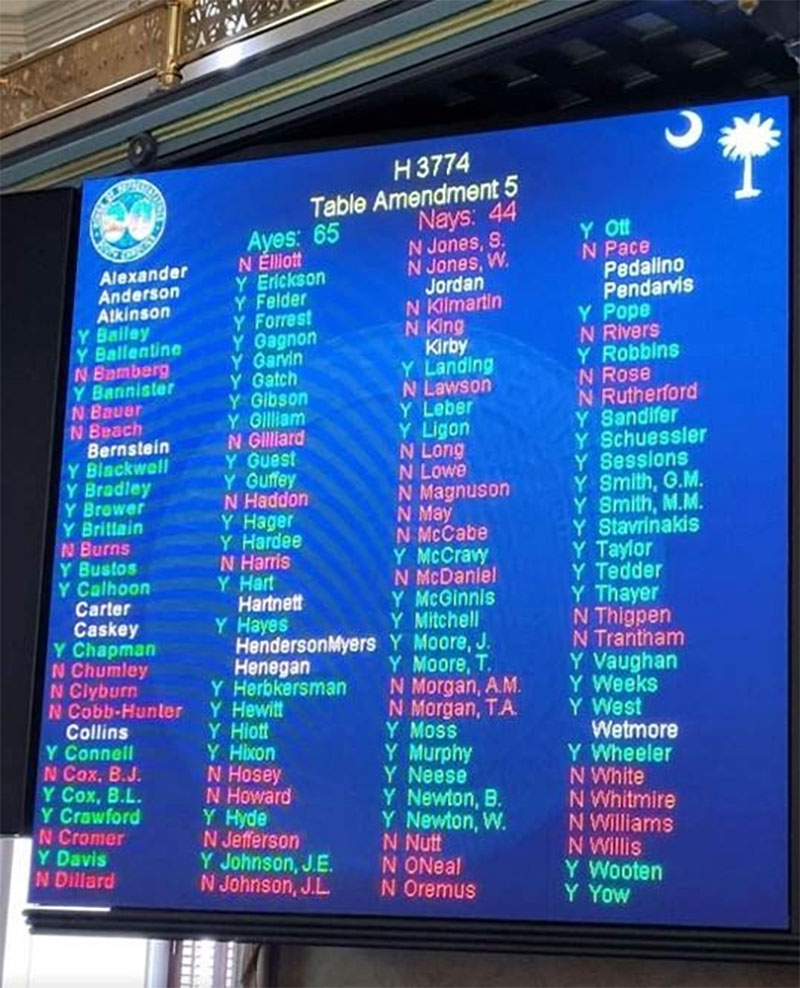
Last week on Feb 15, the so-called "Human Life Protection Act" [sic] H3774 was given Second Reading in the SC House (Third Reading, Feb 16).
SC House Journal for 2/15/2023 - https://www.scstatehouse.gov/sess125_2023-2024/hj23/20230215.htm
A personhood amendment was offered (Amdt No. 1) which would have supplanted the greatly flawed language of H3774, and would have instead established personhood at fertilization, thereby providing equal protection at fertilization, and therefore establishing justice, but it was tabled on a voice vote without a Roll Call vote record.

A Letter From SC Conservative Leaders in Support of the SC Freedom Caucus
- Details
- By Press Release
James Madison once said, “Wherever the real power in a Government lies, there is the danger of oppression.”
As Conservative South Carolinians, we understand Madison’s words more than most. From the ineffectual reign of “Republicans” for 30 years to now the recent attempt to suppress the 1st Amendment rights of a group of the most conservative Republicans in the State House through a loyalty pledge, we know firsthand the danger of oppression inflicted on conservative values by a government focused on only growing its own power. The loyalty pledge presents two particularly egregious problems. They are affronts to the dignity of the relationship between elected members and the constituents that put them in office within our state.

What’s Going On?
- Details
- By Nate Leupp, Chairman of the Fourth Congressional District
It’s been a little over a week since the First Quarter Executive Committee Meeting of the South Carolina Republican Party and many of you have questions about what is going on with the Precinct Reorganization and County Convention. There has been a lot of false information disseminated that is causing confusion. The correct information will be coming from the SCGOP. I am able to give you the information that we learned from the State EC meeting.
Let me start by saying that it is the duty of each county party’s executive committeeman to attend the quarterly meetings in Columbia and report back to his/her county what happens. It is not, nor ever has been, the job of the SCGOP to later contact each of the individual 46 counties and reiterate what was clearly stated or go over events that happened. Unfortunately, Greenville’s EC has done a poor job in relaying correct information and things that happen during the quarterly meetings.
Sweeping Transparency Reforms Proposed In House Bill
- Details
- By Rick Brundrett - The Nerve

Citizens would have far easier access to state and local government records and meetings in South Carolina under a wide-ranging S.C. House bill introduced Thursday.
The legislation was based largely on transparency recommendations released in December by the South Carolina Policy Council – The Nerve’s parent organization, said the bill’s sponsor, Rep. Rob Harris, R-Spartanburg.
“I had been gnawing on this idea and when I read it (the Policy Council’s proposals), I said, ‘There’s the kind of basic framework, the skeleton, of what needs to be done,’ and I just ran with it and got some other help,” Harris told The Nerve in an interview Thursday afternoon.

Senator Plans Bill to Ban ESG Factors in Private Loans, State Pension
- Details
- By Rick Brundrett - The Nerve

A state senator says he plans to again push legislation that would help protect borrowers from being denied credit because they don’t hold liberal “environmental, social and governance” views.
In an interview Monday with The Nerve, Sen. Josh Kimbrell, R-Spartanburg, who co-sponsored a similar bill last year with Sen. Sean Bennett, R-Dorchester, said he also would like a new bill to ban ESG factors from being considered in the state pension plan.
“It certainly is a priority of mine to see some movement on this,” said Kimbrell, who previously worked for years as a commercial banker. “I’m hopeful we can do something soon.”

SC Senate Expands School Choice Options for Parents
- Details
- By Rick Brundrett - The Nerve

The S.C. Senate on Tuesday gave key approval to a bill that would provide $6,000 scholarships to low- and middle-income students to attend private or other public schools.
The bill, sponsored by Sen. Larry Grooms, R-Berkeley, was passed after a lengthy floor debate that began on Jan. 18. Another compromise school-choice bill, which focused on low-income students, died in the 46-member Senate at the end of the last regular legislative session in June.
The Senate on Tuesday voted 28-15, mainly along party lines, to approve second reading of the bill, which Grooms initially filed in November and later was amended multiple times in committee and on the floor. The bill will go to the 124-member House for its consideration after the Senate gives it an expected routine third reading scheduled for today.

SC Families Deserve Education Freedom
- Details
- By John Warren - SC's Conservative Future
Every week it seems like states across the country are passing new school choice policies that expand opportunity for students. Now it’s South Carolina’s turn: this week, the Senate is considering a bill that would bring historic education freedom to our state. We have the chance to lead the way in expanding education freedom for families and ensure that kids in South Carolina have the best education possible.
Senator Wes Climer has introduced amendments to the bill (S.39) that would substantially increase the number of families eligible to participate. Our goal should be simple: expand school choice to include as many students as possible.
Kicked Out by the Columbia Swamp?
- Details
- By Josiah Magnuson - SC House Representative for District 38
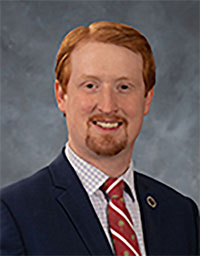 On Tuesday, January 10, members of the SC Freedom Caucus including myself were physically barred from entering the room where the House Republican Caucus was scheduled to meet. Because I won't be silenced, they have now said that I and the others who would not sign their loyalty pledge are not welcome in their club.
For several months, leaders of the House Republican Caucus have been trying to require legislators to pledge not to “campaign” against each other. They have demanded that we must “comply” and sign on the dotted line.
I take great exception to such a requirement. First, I went to Columbia to represent my district and try to bring about government reform, not to be part of an incumbent protection racket. Second, my constitutional right to free speech didn’t end with my election to office. Third, though the Freedom Caucus has made multiple proposals in good faith, House Republican leadership has refused to define "campaigning" in the rules, so I have no idea what I would be agreeing to. In fact, discussions surrounding the introduction of this rule centered around the view that my posting pictures of the voting board in the House is akin to “misinformation” that is threatening other members’ reelection and I was told publicly I needed to “search my heart” for why I was really doing so.

Support the South Carolina Sovereignty Act
- Details
- By The John Birch Society
ACT NOW: South Carolina lawmakers are seeking to enact a comprehensive nullification bill, a major step toward enforcing the U.S. Constitution and pushing back against federal overreach.
House Bill 3539 (H.3539), titled the “South Carolina Sovereignty Act,” is sponsored by Representative Josiah Magnuson (R-Campobello) and 22 other representatives. If enacted, this bill would create a robust and comprehensive process for nullifying unconstitutional federal laws and policies enacted after January 1, 2021.
Noting that “a long train of abuses and usurpations has been imposed by the federal government of the United States against the people of South Carolina,” H.3539 declares:
Restore Sound Money in South Carolina with H.3080 & H.3081
- Details
- By The John Birch Society

ACT NOW: Members of the South Carolina General Assembly are seeking to enact legislation helping restore sound money and enforce the U.S. Constitution’s monetary provisions.
House Bill 3080 (H.3080) is sponsored by Representative Stewart Jones and seven other representatives. If enacted, this bill would officially recognize gold and silver coins as legal tender; it states:
To the full extent allowed by Article 1, Section 10, Clause 1 of the Constitution of the United States, gold and silver coins minted foreign or domestic shall be legal tender in the State of South Carolina under the laws of this State.
Additionally, House Bill 3081 (H.3081) has been introduced. Sponsored by Representative Jones and four other representatives, this bill would exempt “gold, silver, platinum bullion, or any combination of this bullion” from capital-gains taxes. H.3081 is an important step toward treating gold and silver as money — as the U.S. Constitution requires.

Lawmaker Wants ESG Factors Banned in State Pension Investments
- Details
- By Rick Brundrett - The Nerve

State retirement funds could not be invested based on controversial environmental, social or governance (ESG) factors, under a House bill filed for the new legislative session that starts next week.
The Nerve in May revealed that two major investment firms that manage a substantial share of South Carolina’s pension plan – New York-based BlackRock and Boston-based State Street Corporation – are big supporters of the ESG movement.
As of fiscal year 2021, about $18.5 billion of the approximately $39 billion market value of all investments by the pension plan was managed by BlackRock and State Street, pension records show. The state Retirement System Investment Commission’s annual investment report for last fiscal year, which ended June 30, has not yet been publicly released.

House Bill Would Protect Short-term Rentals in SC
- Details
- By Rick Brundrett - The Nerve

S.C. municipalities and counties that ban short-term rentals would face the loss of state aid and property taxes under a House bill filed for the second time since last year.
Contacted this week by The Nerve, Rep. Lee Hewitt, R-Georgetown, who is the bill’s main sponsor, said his proposal has “got the attention of a lot of local governments that have reached out to me.”
“Everybody now is trying to come up with some solutions on how we can make this work … in trying to protect people’s property rights and maybe give the cities and counties some teeth in enforcement,” said Hewitt, the broker-in-charge of sales at Garden City Realty.

- S.C. Judges Could Get More Raises Under Senate Bill
- SC Founding Father at Center of U.S. Supreme Court Elections Case
- Senior Judges Getting Double-Dipping Perk; Records Secret
- Constitutional Amendments to Strengthen State Reserves Cruise to Passage
- Concealed Court Files Reveal Freebie Judicial Trips
Browse by the Top Tags ...